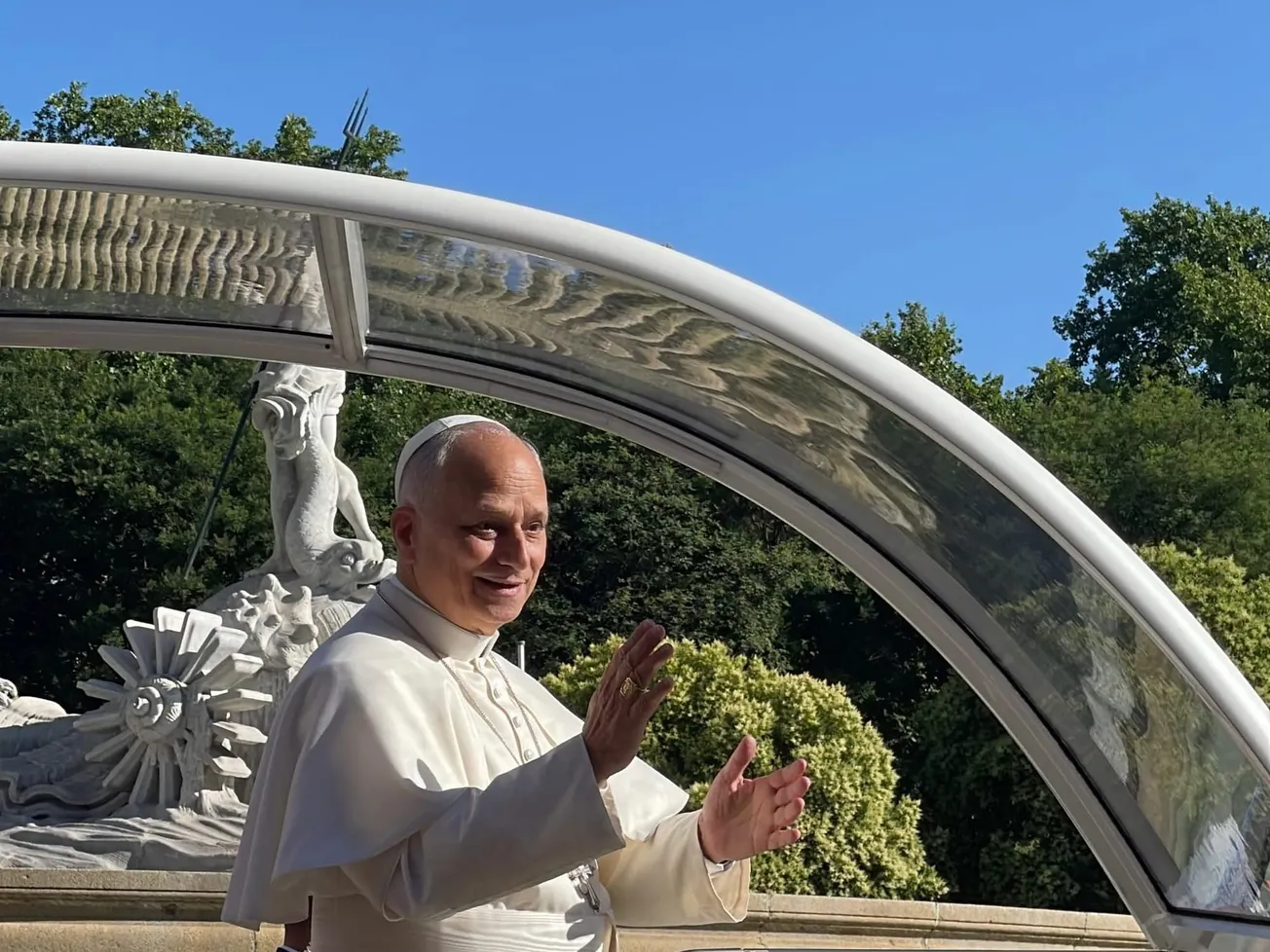
“This constitutes a wound in Christian memory, one from which we cannot consider ourselves detached. It is impossible not to feel deep sorrow when contemplating the immense suffering and humiliation endured by so many in stark contrast to their immeasurable dignity as persons infinitely loved by the Lord. For this, in the name of the Church, I sincerely ask for pardon.”
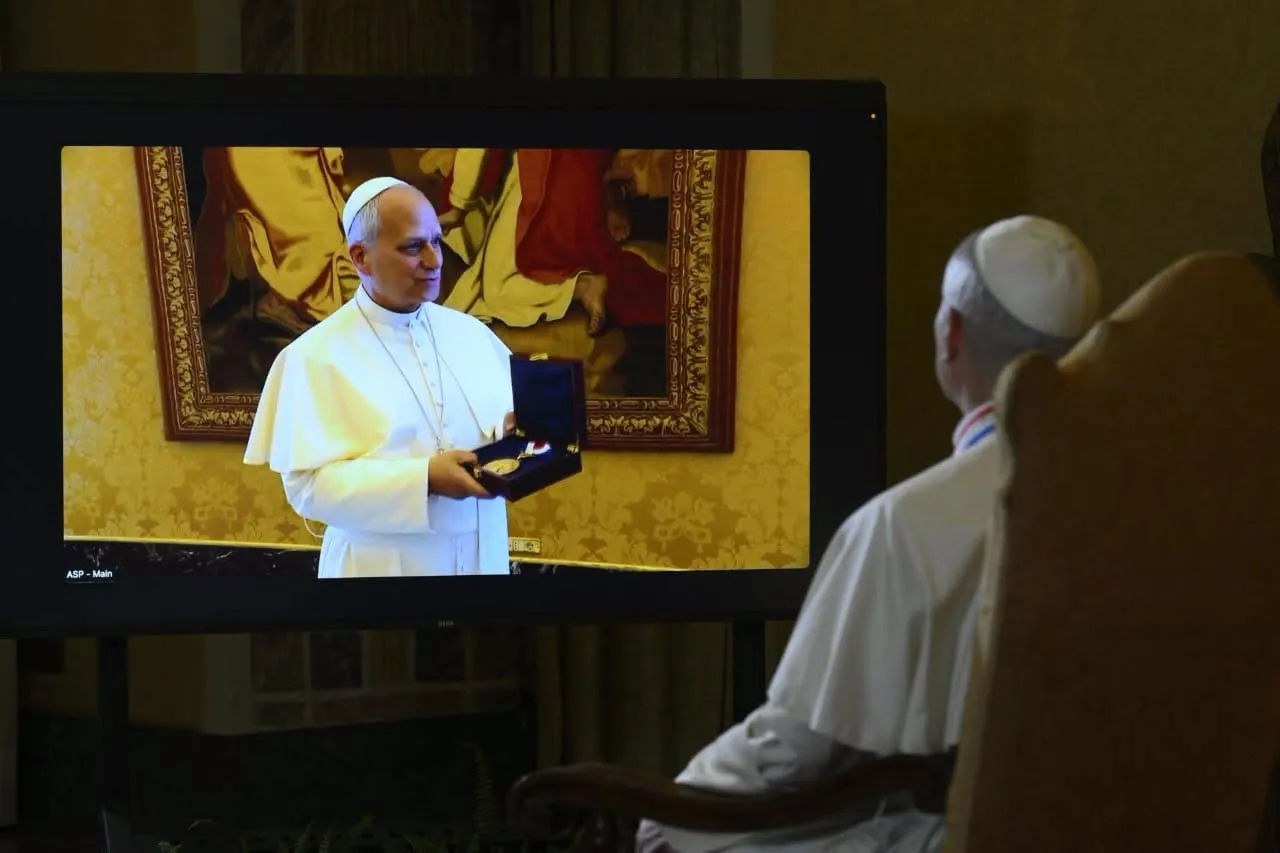
In May, Pope Leo XIV released his first encyclical, “Magnifica Humanitas,” on human dignity and artificial intelligence. There was much anticipation of the document, in which Leo made clear he is concerned about real-world issues rather than theoretical abstractions.
However, like most—and surely including the Black Catholic community—I did not expect to read in this letter words of sorrow and lamentation regarding the role of the Church during slavery. Indeed, in his first major work, Leo honestly addressed what has long been known among African-American Catholics and others: that the Church was slow and silent in her condemnation of the peculiar institution that was the transatlantic slave trade.
Slavery has been contentiously debated in the life of the Church from the time of antiquity through the 19th century. Today, it may seem obvious the Church would embrace and speak on behalf of those most marginalized and ostracised in society. Regrettably, that is not the history seen regarding slavery in the Americas. The U.S. Catholic Church in particular must come to terms with its failure to boldly condemn the practice. As Leo notes, the Church was inconsistent in her witness, which made the environment suitable for enslavers to justify their degrading and horrific activities.
As I continue my studies in greater detail on the history of African-American Catholics, I find it challenging, though I feel personally invested as a Black Catholic. I have read many stories of Black Catholics determined to maintain their dignity in the face of inhumanity. Slavery was a reality in the United States, Canada, Latin America, and the Caribbean; the Catholic Church had a presence in all of these areas. Church officials had the opportunity to intervene and eliminate such a dehumanizing practice experienced in the lives of enslaved Africans and their descendants. Given this, I am happy to hear a pope admit the harm the Church caused by its inaction.
 Nate Tinner-Williams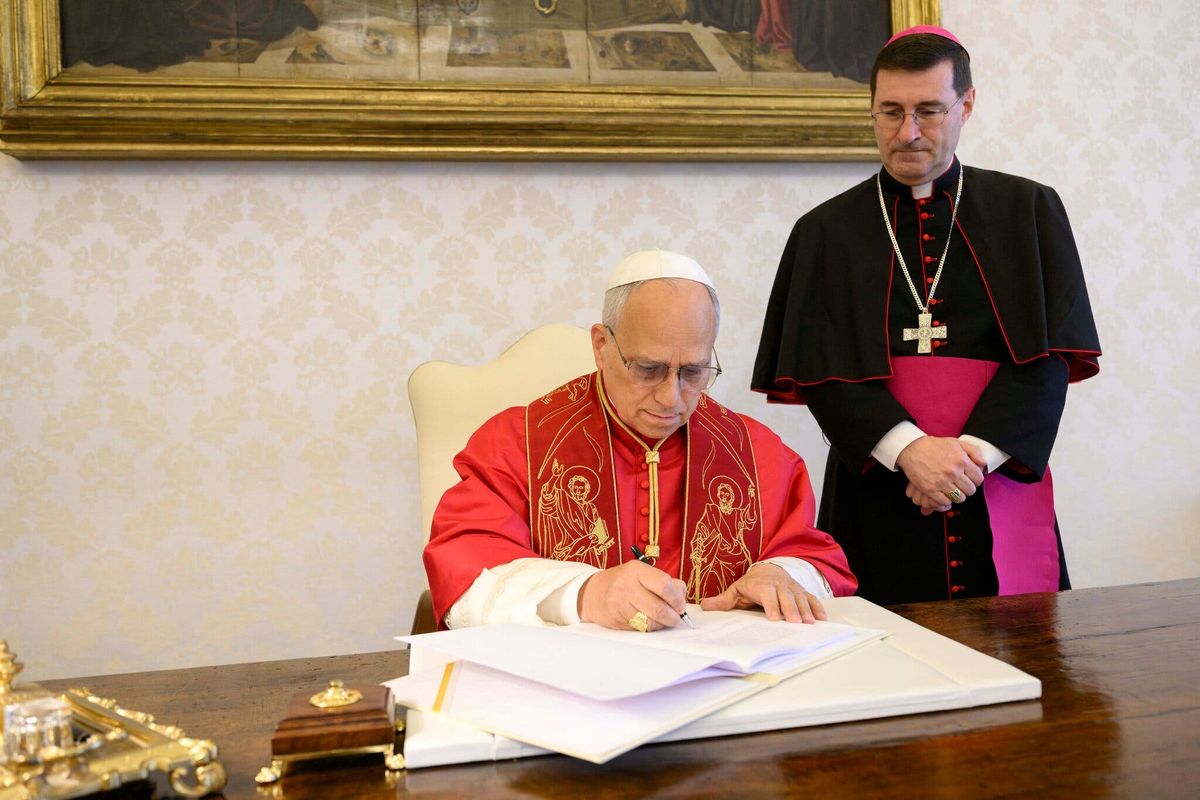
Black Catholics, scholars, theologians, religious educators, and African Americans at large have seen the words of the pope, which speak into the experiences of slavery and the social sin of racism. Additionally, Black Catholic communities may find that an apology begins a conversation regarding restoration and healing on the path of forgiveness. It does not, however, end the conversation. I do not think that this is the intention of the pope—although I obviously cannot speak to his personal intentions.
Instead, I think as an American, Leo is acutely aware of the legacy of anti-Blackness resulting from the existence of slavery in the United States. Further, the apology can be offered to all Afro-diasporic people whose ancestors experienced the “immense suffering and humiliation” of chattel enslavement.
The pope’s ability to make this statement in his very first encyclical should be seen as a significant moment in his papacy. Leo is willing to speak on issues of social justice both past and present, providing an example for other institutions and organizations to replicate.
It is my view that the moment has arrived to open the doors and address both the legacy of slavery and the presence of anti-Black racism, which persists in the Church. Black Catholics have decried the pain of exclusion and discrimination in the Church and in society. Fr. Bryan Massingale, an African-American Catholic theologian par excellence, has even described the scourge of anti-Black racism as a faultline of the U.S. Catholic Church.
The research found in Massingale’s work places an emphasis on the failure to address serious racism or anti-Black racism within our seminaries, formation programs, and catechetical institutions. One of his most important works, “Racial Justice and the Catholic Church”, makes a case concerning the continued shortcomings in the U.S. Catholic Church. One is that the bold words and conclusions of documents such as the U.S. bishops’ 1979 pastoral letter “Brothers and Sisters to Us” are largely unknown because they are mostly unspoken and unstudied.
A similar sentiment was expressed even before Massingale’s work, in 1968 when the National Black Catholic Clergy Caucus offered this indictment:
“The Catholic Church in the United States, primarily a white racist institution, has addressed itself primarily to white society and is definitely a part of that society.”(Statement of the Black Catholic Clergy Caucus, 1968).
Deeper study of the history of U.S. Black Catholics reveals even earlier insights from the first Colored Catholic Congress in 1889, where one of the concerns addressed was the treatment and experiences of Black Catholics. Prior to that, an African-American Catholic woman, Harriet Thompson, wrote to Pope Blessed Pius IX in 1853, also lamenting the poor treatment experienced by her people in the Church. Of course, the Black Catholic experience in America is centuries deep and Black Catholics have always been outspoken regarding racism.
Therefore, what can Black Catholics expect as a result of the words of Pope Leo? How will they impact our parishes and other Catholic communities? Can his message foster a greater pattern of institutions or organizations formally admitting their participation in and benefits received from the practice of slavery in America, Canada, Latin America, or the Caribbean? Will the Church, on the local level, acknowledge Leo’s bold mea culpa and begin conversations aiming to identify and dismantle practices of anti-Blackness?
It might be too early to expect sweeping changes in the wake of “Magnifica Humanitas.” Moreover, it’s entirely possible that Church leaders will avoid this section of the encyclical and continue the status quo. However, I think the most impactful use of this encyclical for Black Catholics will be the insistence that a necessary conversation has begun. Again, Black Catholics have been having such conversations among themselves for centuries.
The new dialogue fostered by Leo should involve taking the pope’s apology seriously and asking whether it should have any significance or pastoral impact at the local level. Can we have a mature and honest conversation regarding the social sin of anti-Black racism and its lasting effects? I am not so naive as to believe that Leo’s encyclical is the final word on any form of systemic social injustice in our world. Nevertheless, I welcome his words for one main reason: You have to admit guilt before asking for pardon.
Tamika Royes has 15 years of experience in the social services sector in various roles. She has been a tireless advocate for justice causes, beginning in high school. She has earned a graduate diploma in Catholic studies at Assumption University and is currently pursuing a Masters of Arts in Theology at Regis St. Michael's Faculty of Theology, University of Toronto.