
For a few years when I was growing up, I lived about 30 minutes from an Amish community in South Central Pennsylvania. I often stood out. My town was about 90% White, so in school and in church it was easy to find me.
My Southern Baptist church had very little diversity. I mean, it is a little tough to celebrate one’s Blackness in a church that was founded because they wanted to continue slavery. I didn’t have many places where I could celebrate my blackness, especially not in my church. The closest I got to a celebration of my Blackness was being asked to rap a part of Psalm 103 for the children’s spring musical in front of the congregation.
Due to the lack of racial diversity, in South Central Pennsylvania, no matter where I looked, there weren’t many people with my type of hair. There were several effects of this. First was that my White friends were interested in my unique hair. They called it bouncy like a trampoline, or just found it fascinating that my hair had coils unlike theirs. As a naive kid, I took it as simple interest, and I was happy to let people touch my hair like I was a zoo animal. It was one of the few times I really thought of my hair as a part of me.
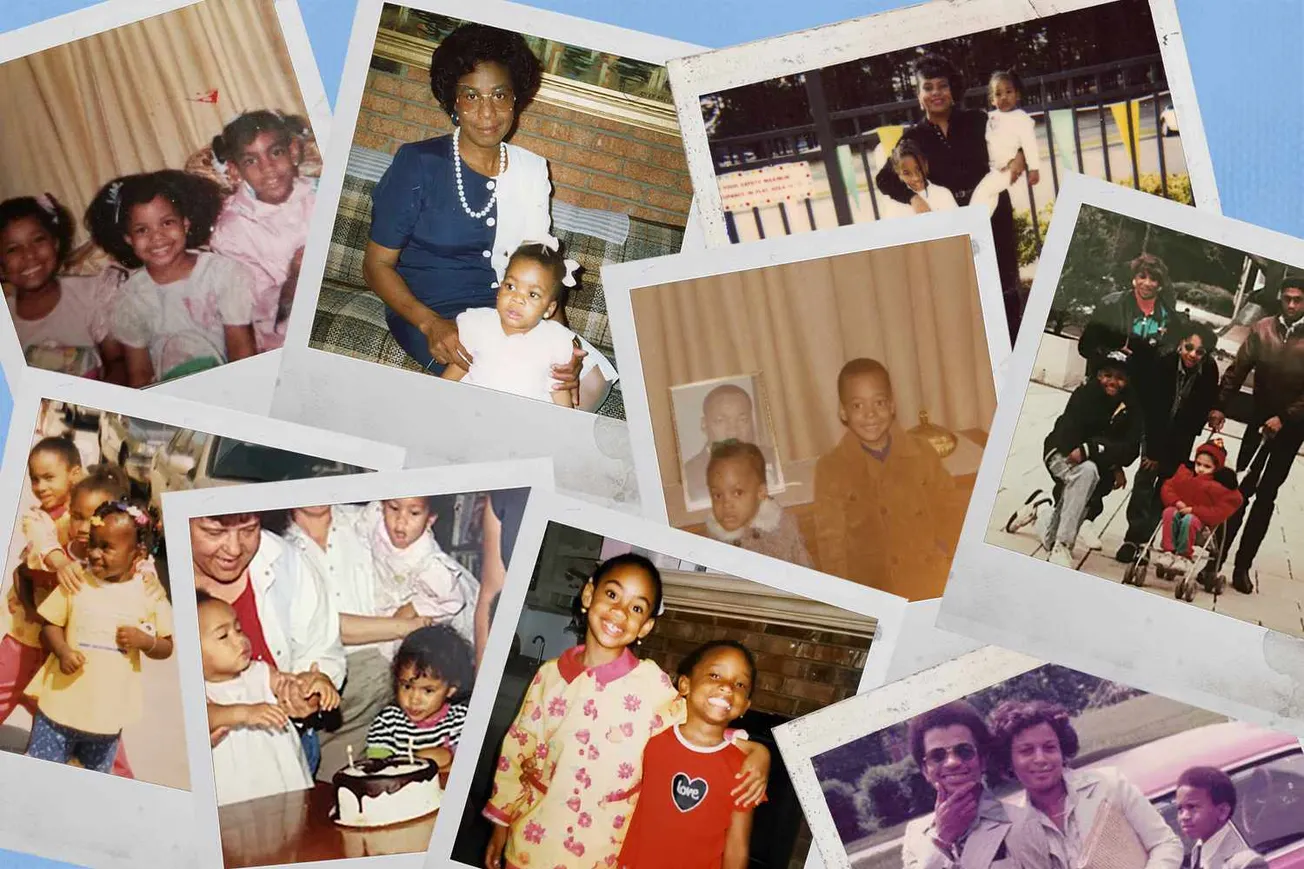
My hair was primarily taken care of by my father, who used his almost 30 years of military experience to give me a buzz cut fit for bootcamp. It wasn’t that he didn’t care about my hair; it was just the most efficient way of taking care of it, as I hated combing/picking out my hair daily for the Jackson 5 afro my father was so fond of. But as I grew older, and after a recommendation from my only Black classmate, I eventually made my first trip to a Black barbershop. It was one of the few times I was around other Black people, and the first time I was consistently taking care of my hair, getting styles other than the one that made me look like a sergeant.
Of course, there was still a disconnect between me and my hair. It was just something that grew on my head, and something I had to take to get cut every couple of weeks. All I cared about was whether I looked good or not. I think this is a common effect of living in predominantly White spaces that emphasize colorblindness over color consciousness. It made my Blackness seem like an insignificant part of who I was. I was supposed to be a Christian, but never a Black Christian. I was American, but not a Black American.
After high school, going to Dartmouth College was a surprising time as, contrary to the experiences of most Black students there, I encountered more Black people on campus than in my upbringing. By the end of my first term, I had been taught by a Black professor, made friends with other Black students, and had simply been around Black people—as a norm! I could see more people with my sort of hair, but away from home it was once again hard to take care of it effectively. New Hampshire isn’t exactly a bastion of Blackness, and after a horrendous Supercuts experience, I realized it was going to be harder to maintain my hair in college than in the suburbs of Harrisburg.
That next year, I started to take better care of my hair. It was 2020, and being back home during lockdowns meant I was with my family, including my older sisters who were also back from college. They helped me in my cosmetic mission, and even at one point pressed my hair so it was straight. I hated it, but I loved seeing my hair as an extension of myself, and not just something growing on my head. By the time of the George Floyd protests, I was reclaiming something lost in the midst of the racial colorblindness I grew up around.
It was around this time that I got my first durag, borrowing it from my oldest sister. It felt like I had gained access to a new part of my Blackness. In a time when our country was reckoning with what it means to be Black, I was too. Even so, I mainly wore it around the house and when I went to bed.
When I got back on campus at Dartmouth, with most things still shut down and classes taking place over Zoom, I started shaving my head like when I was a kid. I liked the buzz cut look. It reminded me of my dad, and again, the upkeep was simple. Every now and then, I would get a regular haircut at one of the places in town, but hair took a seat on the backburner for a couple of years.
There were, however, points when hair came back into focus. The first was in my senior year of college, after I had dealt with several incidents of racism and ignorance in the Christian living center I lived at. The center both housed Christians and hosted events for the Christian community at the school. I’d been active in that community and trusted it, so the sudden encounter with prejudice hit hard, and I felt betrayed. It again reminded me that Christian spaces are not immune to racism.
So, on a family trip down to my mother’s native country of Panama, I got braids. They were amazing, I felt BLACK. But I also didn’t like braids because of how much they itched. Plus, the price for braids were much cheaper in Panama than in the states, so I only had them for a little bit before I went back to growing my hair out and chopping it. Still, that time of reclaiming my Blackness through my hair provided a sense of agency after the hurt of betrayal.
My hair came back to focus again after Trump got elected a second time. Then, even after a full term of him—including the January 6th attack and the various displays of his pathetic character—people still thought he was more qualified than a Black woman. The majority of the American public treated the 2024 election as if he and Kamala Harris were equally bad candidates who had some redeemable qualities (as if Harris had also instigated a riot). Trump’s victory, these past two years, and the fact he still has at least a third of the nation’s approval showed me time and time again that many of my fellow Americans do not see my people’s concerns as nonnegotiables. It also showed me that if I let their version of reality shape mine, I’d be lost and go insane. So, I pushed back. I made myself and my reality known. I wore my durag again, to work, even a few times to Mass. Twice I lectored with it on.
Some might ask: Why wear a durag around? For starters, to acknowledge my own Blackness, first to myself. If God made me Black, I’m going to live out that reality. I want to bring my full self to God, honoring the work he created, to bring glory to God for the way he shines through my history and culture.
But also, I wanted others—especially those in the Church—to be confronted with my Blackness. I recall one time in my first year as a campus minister, a student from Los Angeles told me, “You’re the first Black Catholic I’ve met.” He said it positively, though I couldn’t help but wonder how he could live in one of the largest cities in the country (and the largest U.S. diocese) and his statement still be true. The Catholic Church in America, especially its leadership, has a lot of work to do to fully recognize its complicity with racism and slavery. And given the fact that about half of all Catholics voted for Trump in 2024, there needs to be a true reckoning of the Church’s complicity in modern White supremacy.
I don’t think it’s a person of color’s responsibility to always remind an institution of their need for reform. That said, as long as I am a Black Catholic in the Church, the Church should and will be confronted by my reality.
So, wearing a durag does that. I proclaim to both God and others that I am Black, and that I am a Black child of God. That not just in Mass, but all the time, I am loved by him, and that he is caring for me. I am reclaiming my Blackness in the name of Christ. The theology of the durag is a theology based on being seen. And to be loved, one must be fully seen.
Tulio Huggins is a writer and theology graduate student. You can follow his writing on Substack and Instagram at @tulioisreading.






.jpg?ref=blackcatholicmessenger.org)