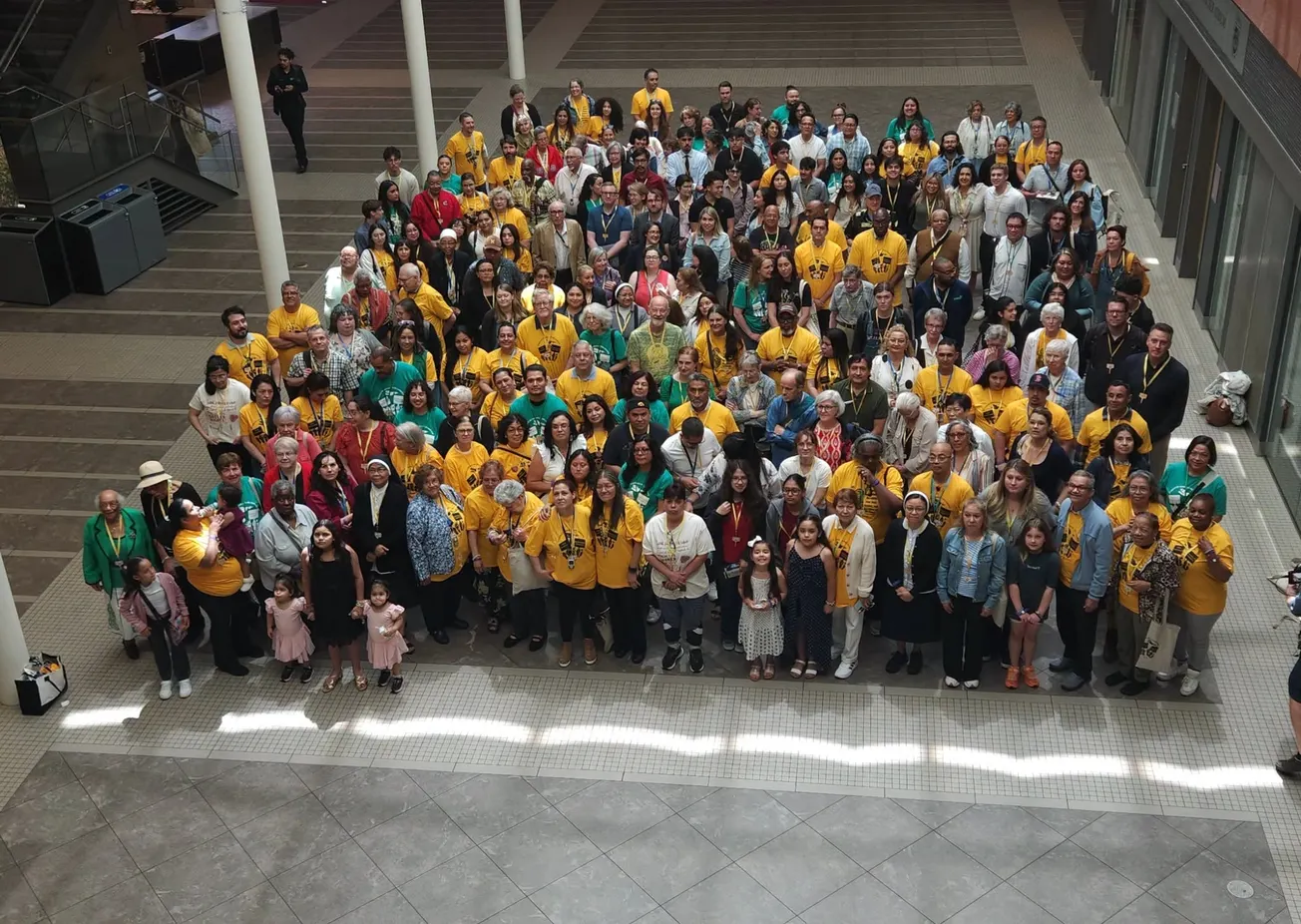
I recently had the profound honor of participating in the annual Congress of Chicago’s Coalition for Spiritual and Public Leadership. CPSL is a Chicago faith-based nonprofit whose aim is to “bring together Catholic and Christian people in Chicago and the western suburbs to build power and create thriving communities.”
The annual Congress gathers members and supporters to summarize the past year’s accomplishments, develop new skills, create new connections, and formulate strategies for the coming year. CSPL is ably led by its executive director, Michael Okinczyc-Cruz, and its director of training and formation, Joanna Arellano-Gonzalez. Their devotion, humility, community engagement and passion for justice are mirrored in the work of CSPL.
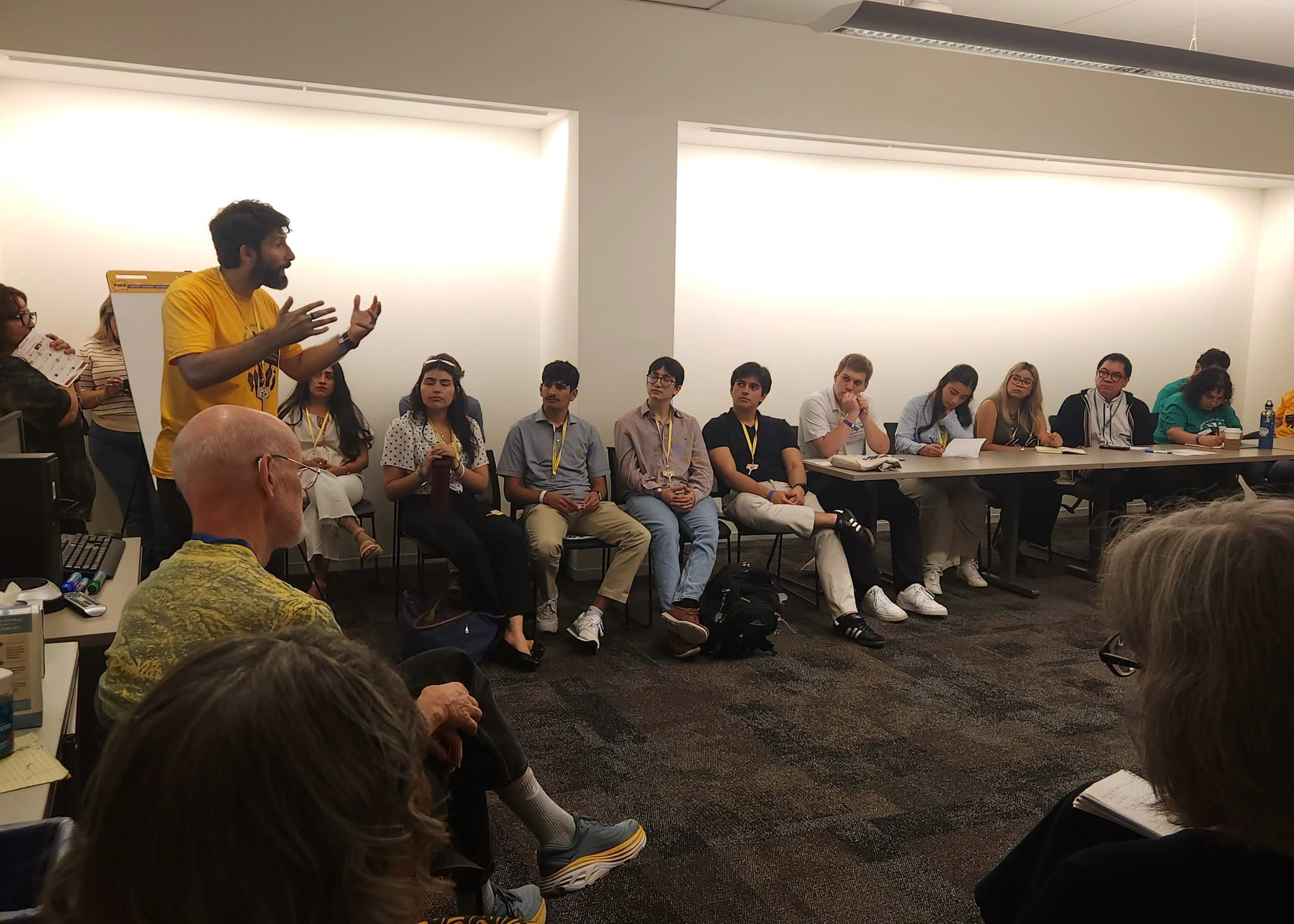
The 2026 Congress theme was “Holy Resistance” and the event was held at Loyola University Chicago, where one of the many supporters was the host, Loyola’s Institute of Pastoral Studies. I was honored to be a participant on the keynote panel, and to present a workshop on “The Spirituality of Holy Resistance.” It was truly inspiring to be among the attendees—all of whom are people of faith engaged in community organizing, racial justice, and support for immigrants and ICE detainees.
Hearing about the latter ministry was a highlight of the Congress for me. CSPL was on the frontline of resisting the federal government’s “Operation Midway Blitz” in Chicago. As masked, armed ICE agents flooded Chicago’s streets, immigration courts, and workplaces, and stalked churches, schools, day care centers and other places to arrest people, CSPL initiated a Pastoral Care for Immigrant Detainees Campaign.
This effort included protesting ICE arrests, demonstrating at the Broadview Detention Center, and advocating for entry into the facility to support, counsel, and celebrate Mass with the detainees. The Department of Homeland Security denied CSPL access to the Broadview and, fueled by a deep desire to support those forcibly detained without trial or cause, CSPL took legal action. Attorneys Patrick V. Dahlstrom and Thomas H. Geoghegan argued the case in federal court, and a judge granted a preliminary injunction granting daily access to the detention center in May.
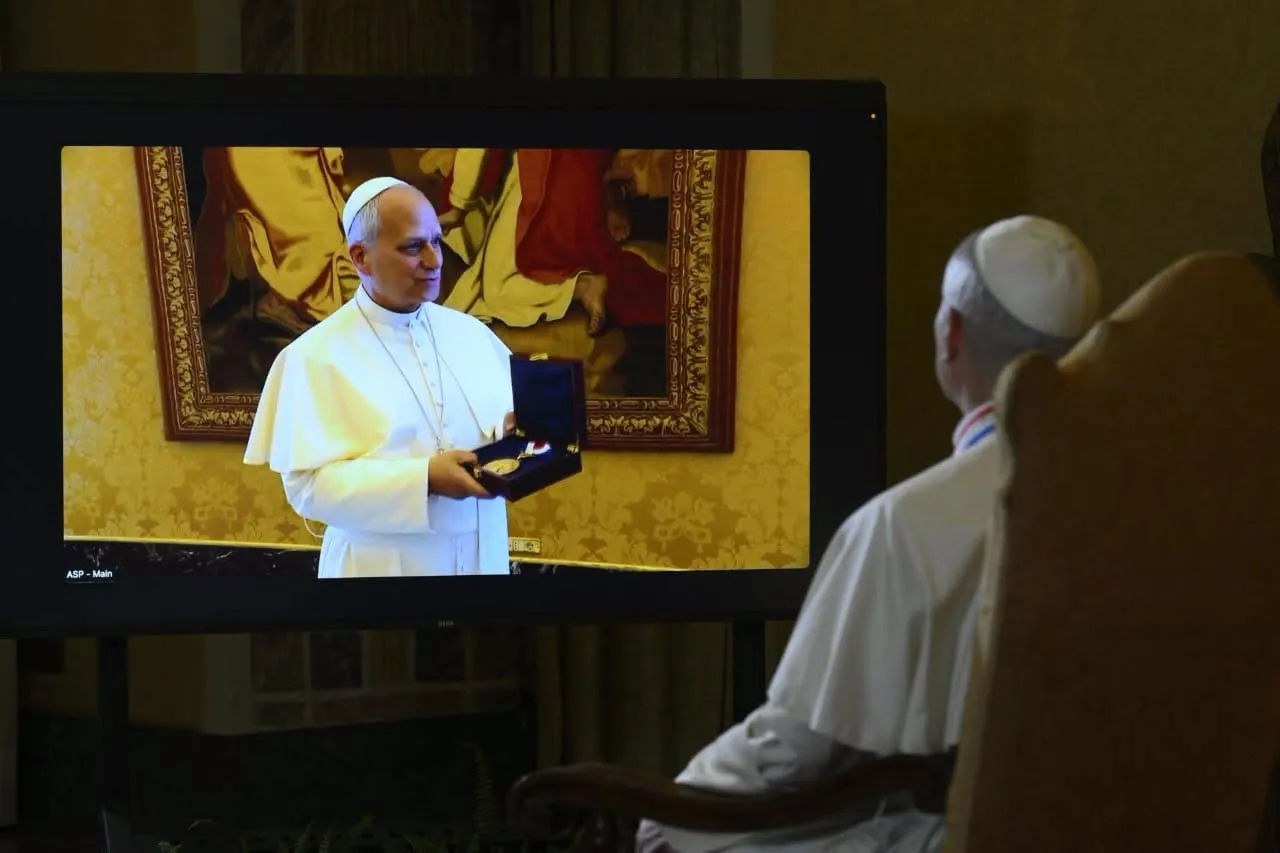
The Congress opened with a video presentation on the ICE raids and arrests, information on the lawsuit, and closed with inspiring scenes of a recent Chicago delegation meeting with Pope Leo XIV. The delegation was led by Chicago Mayor Brandon Johnson, and included CSPL’s executive director. The pope told Okinczyc-Cruz he was aware of their campaign and the lawsuit, and that he supports their work. The pope also blessed stoles to be worn by the ministers visiting detainees in Broadview. These images made me proud to be Catholic, to be part of a church guided by the Gospel and by Catholic social teaching.
Many of the Congress attendees participated in the CSPL protests, nonviolently faced ICE, and were part of a Eucharistic procession to Broadview. During the video shown this month, the room was a holy presence, with the attendees celebrating the legal verdict, while simultaneously mourning the broken families and destroyed lives.
Later that evening at the Congress, the two attorneys who fought for CSPL were awarded the Burning Bush Award, which occasioned a spontaneous standing ovation. During the acceptance speech, Geoghegan noted that the Trump administration is furious about the ruling and will appeal. He indicated that the judge’s decision undermines the administration’s central message that the detainees are less than human and have no rights worth respecting. He also acknowledged the courage of the protesters and CSPL.
“Early on, I learned as a lawyer [that] my job is not to tell clients what the law says,” Geoghegan said, “but to listen [to] clients about what the law should say.”
The keynote panel included myself, Sister of St. Joseph Kathy Brazda, the executive director of the Leadership Conference of Women Religious and head of her order; and Dr. Nicholas Hayes-Mota, a social ethicist and public theologian from Santa Clara University. We explored themes of holy resistance from our various perspectives: Brazda as a leader of women religious, Hayes-Mota as a theologian of Catholic social teaching, and myself as a Black Catholic author.
Nicholas-Mota noted that Pope Leo is asking us to make a choice about what kind of world we want to live in, either a divided, chaotic “Tower of Babel,” or a just, harmonious, and unified New Jerusalem. Brazda spoke of the need for personal rest, restoration, and even “fun” to balance the hard work of resistance. I offered that Black Catholic spirituality teaches us the gift of perseverance and the prayerfulness of song.
There were five workshops offered in the afternoon of the Congress gathering. My workshop was on the “Spirituality of Holy Resistance.” I offered lessons from “holy resisters” and highlighted the life and legacy of the Franciscan Catechist Sister Laura Vicuna Pereira Manso from Brazil; and the late figures Bishop Fernand Cheri III, OFM; Dr. Teresia Mbari Hinga from Kenya; and Carmen Santiago Alonso from Mexico. They each have much to teach us about the Catholic faith in the struggle for human dignity. I also drew from the wisdom of Dominican priest and theologian Gustavo Gutierrez, Servant of God Thea Bowman, and Pope Leo’s words of hope to the people of Cameroon.
The Congress ended with a beautiful Mass presided over by Fr Dennis Berry of St. James Catholic Church in Chicago. It was the vigil for the Feast of Corpus Christi, and his homily noted that our reception of the Body of Christ means we receive Christ “in his fullness,” and thus we are to “let it fill every portion” of us so that we “become Jesus.” In our collective experience of becoming Christ, he said, “the world is made new.” Before the homily, Kate Williams, vice president of sacred music at GIA Publications, sang a beautiful version of the sequence for Corpus Christi, “Lauda Sion.”
In a vivid display of the Catholic Church as a place of unity in diversity, other speakers at the Congress included outgoing CSPL board president Anthony Williams, an African-American Catholic; IPS interim dean Dr. Peter Jones; and Hispanic community member Irma Hernandez, who participated in the protests. Also, among the laypersons, deacons, priests, and religious present were Hispanic interns from the University of Notre Dame. Thus, among speakers, videos, panels, workshops, and table exercises, the energy of the attendees was most significant.
The community people, religious sisters, and college students, and the broad ethnic diversity of the attendees, reminded me of the words of the final document from the Synod on Synodality. Sections 32, 38, 39, 47, 52, 58, 109 and 120 all speak of a multi-cultural church, with members exchanging their gifts and finding new forms of ministry devoted to the common good. Their collective commitment embodies the words of “Gaudium Et Spes”:
“The joys and hopes, grief and anguish, of the people of the world, especially those who are poor and afflicted, are the joys and hopes, grief and anguish, of the followers of Christ as well.”
Daryl Grigsby is founder of a Black Catholic men’s gathering, is on the Board of Directors of Leadership Foundations, and is author of “Catholics For the Common Good: An Eternal Offering.”