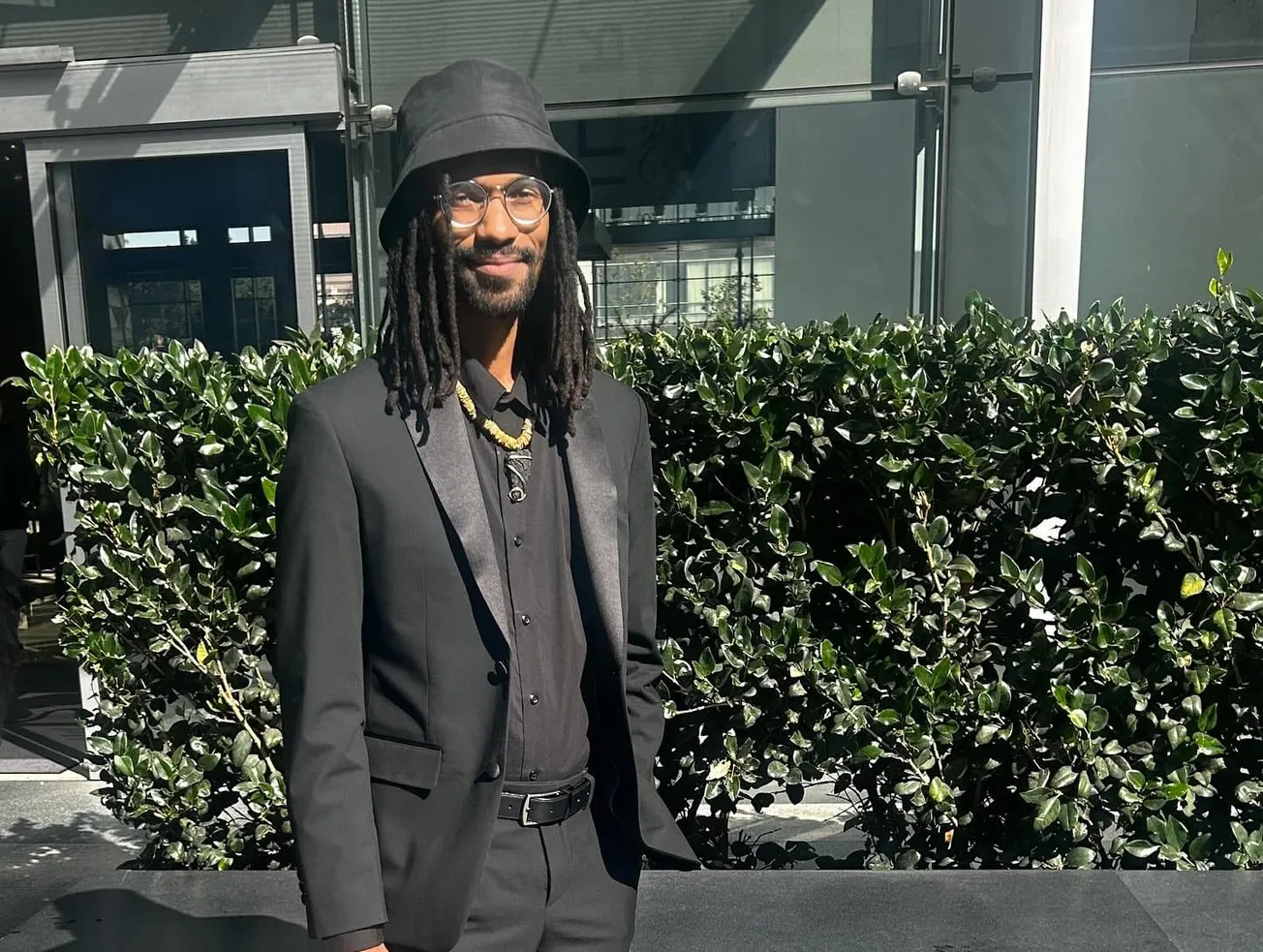
The sound of New Mexico in the early afternoon is a quiet, sun-baked silence, broken only by the wind moving through the canyon trees of the high mountains. For popular music producer Cameron “Cam” Obi, the mountain silence is a long way from the high-decibel studio sessions of Los Angeles.
Obi has worked with some of the biggest names in hip-hop and R&B, including Kendrick Lamar, J. Cole, Chance the Rapper, and SZA, just to name a few. His credits include tracks on several Grammy Award-nominated projects, including Chance’s Best Rap Album winner “Coloring Book” in 2017.
The 36-year-old Las Vegas native has not released new music of his own since 2021, leaving fans in anticipation of his debut solo album, which has been in the works for more than a decade.
As a creative outlet, so to speak, he has continued to engage fans on social media with viral snippets of new songs, as well as recaps of how he made some of his most famous beats.
What many fans don’t know is that the young husband and father has also been on a unique spiritual journey over the past several years, culminating in his conversion to Catholicism this year at the Easter Vigil.
Will that stop him from creating new music? Not a chance, he says, as he continues to prepare his maiden LP with a new perspective on what it means to be a popular musician in an age of increasingly complicated Black music culture.
On a recent afternoon, the modern world intruded on Southwestern quietude in the most ordinary of ways for Obi, who spends many of his days simply doing life as one does.
“I’m just leaving Costco,” he said during a recent interview with BCM, his voice competing with the clatter of plastic wheels on asphalt. “That loud noise is my cart.”
It was a perfectly mundane moment for a man whose life has recently undergone a seismic, quiet revolution. In 2021, Obi and his wife left the frantic energy of Southern California for the high desert. It was a move intended as a physical transition, but it became the staging ground for a profound spiritual migration.
For Obi, this sacramental shift is the resolution of a lifelong search for truth—which took him from the pews of Pentecostal and Baptist churches, through an intense labyrinth of New Age, Eastern, and Black separatist leanings, and finally into the deep, historic waters of Catholicism.
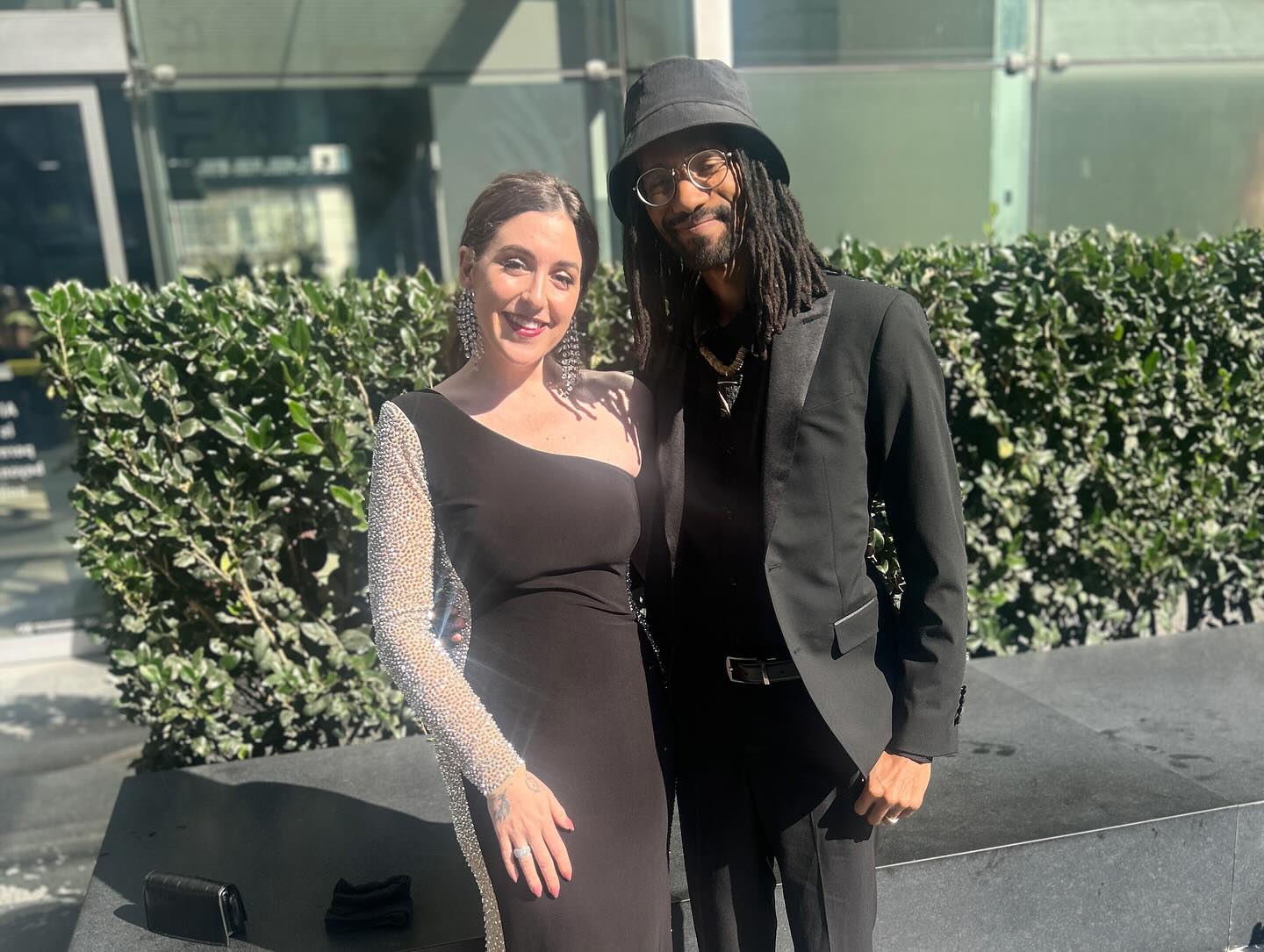
“I honestly hated the culture of evangelical Christianity as a kid and as a young adult,” he reflects. “I had mistaken Christianity for that culture.”
For more than a decade, the young musician lived without any relationship with Christianity, stemming from his family’s disconnection from the faith when he was in his early teens.
Around the same time, he became a DJ, learning the ins and outs of hip-hop composition and beginning his long journey into an industry that for many has made dreams come true. The world of hip-hop, of course, has also had complex reverberations within Black culture.
“Hip-hop culture, what it is and what it has become, it almost stands in opposition to what I now live for,” he said. “But at the same time, I have a unique closeness to hip-hop.”
Obi’s conversion story is perhaps like many others, but is also unique. His wife, who is of Greek and Italian heritage, was raised Catholic but had stopped practicing long before they met. Even so, she suggested they begin reading the Bible together, which led to an unusual conversation with a local acupuncturist.
The practitioner, as it turns out, was formerly a Catholic monk and had since married. Upon hearing of Obi and his wife’s burgeoning study of the Bible, the acupuncturist suggested they watch “The Chosen,” a modern television series about the life of Jesus.
“That show was my first time conceptualizing Jesus as a historical figure who really lived in our historical timeline," Obi said, noting that the show helped him realize he believed in the divinity of Jesus.
“I remember thinking to myself, ‘Wait, this is real.’”
His search for truth intensified, leading him to compare different Christian denominations. Almost out of the blue, his wife became a staunch defender of Catholicism in the new family debate. After visiting a local parish and receiving a warm welcome, they became regular attendees.
“They just took us in as their own. It was really, for me, unbelievable, because I had never experienced that kind of love from strangers in my life,” Obi said.
“Just that alone made me want to be Catholic, outside of even knowing that much about the faith itself.”
As he did learn more about the ancient Church, he says he quickly found a spiritual home that superseded his previous inclination toward various Black extremist groups, including the Nation of Islam and the Black Hebrew Israelites.
“I used to feel like as a Black American, I don't know my history, therefore I don't really have a history—like it's erased,” he explained.
“When I discovered Christianity, I realized, ‘No, wait: This is my history.’ I was able to look at Adam and Eve, Noah, Abraham, and Moses as if they were my own ancestors… It was such a joyful, moving reality.”
In his new spiritual era, Obi says his task is two-fold: navigating the hip-hop industry with a new perspective on the world, and continuing to produce quality music with a meaning.
Does that mean making “Christian rap,” as it is popularly understood today? Not necessarily, he notes, taking inspiration from a famous Christian creative of old, J. R. R. Tolkien.
“[He] wrote a Christian story, but it’s not obvious right away,” Obi explains, referring to the seminal “Lord of the Rings” series.
“He created something that infiltrates and bypasses our conscious mind, exposing us to the deeper themes of the Gospel through beauty.”
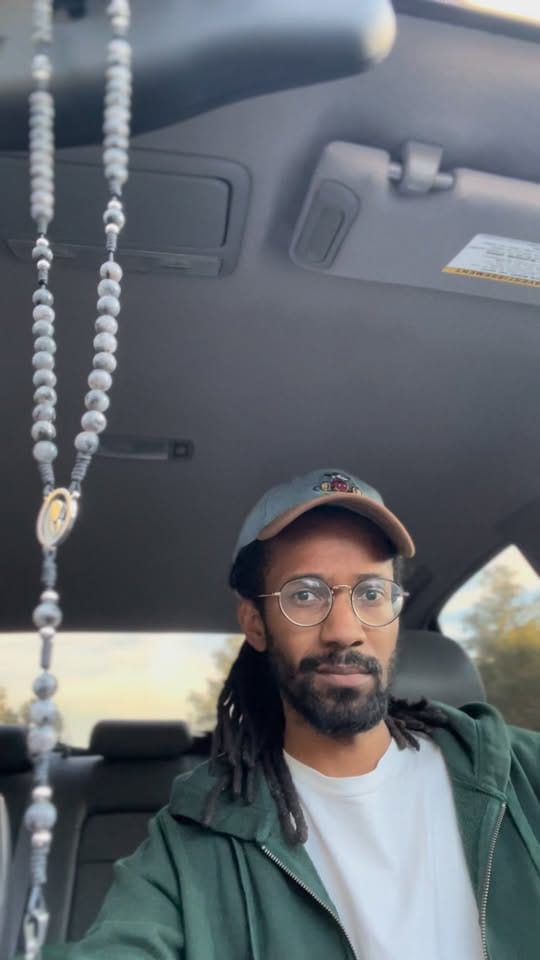
Obi also noted Pope St. John Paul II’s 1999 “Letter to Artists,” which encourages creating works that embody and inspire the true, the beautiful, and the good.
“Rise to the demands of art,” Obi said, summarizing the text, “not the demands of culture.”
Though the title of the forthcoming album, “Grown Ass Kid,” could immediately throw off some listeners—prospective or otherwise—Obi says the content of the music will follow the inspiration of Tolkien, JPII, and others who have dared to push for storytelling that points beyond the surface.
Described as a “whimsical” concept album, GAK follows a young character in his coming-of-age experience, backed by musical accompaniment in Obi’s distinct style. He also hopes for it to be part of a larger media release, including a companion comic book and animated film.
“[It’s like] Disney and Pixar made a musical that was scored with hip-hop," Obi said. “It's really the album of my dreams.”
The quest of the album’s protagonist involves a search for his ultimate purpose, expressed in a series of musical vignettes. The story itself, Obi says, is influenced in part by his spiritual journey to the Catholic faith.
“I realized I was searching for truth the entire time I was making this album, and I found it,” Obi explained.
“The character goes on this quest trying to find a certain kind of fulfillment in this world, only to realize that perfect fulfillment will never be found here.”
Obi cautions, however, that the realization reached by the fictional personality—and in the producer’s own real-life story—is not a tragedy but rather a new beginning, opening the door to cosmic revelation.
“It's not a sad ending—it's a point of release,” Obi said. “You realize you were created for another world."
Nate Tinner-Williams is co-founder and editor of Black Catholic Messenger.
Support BCM's 2026 summer fundraiser with a tax-deductible gift!
a.) click to give (fee-free) on Zeffy
b.) click to give on Facebook