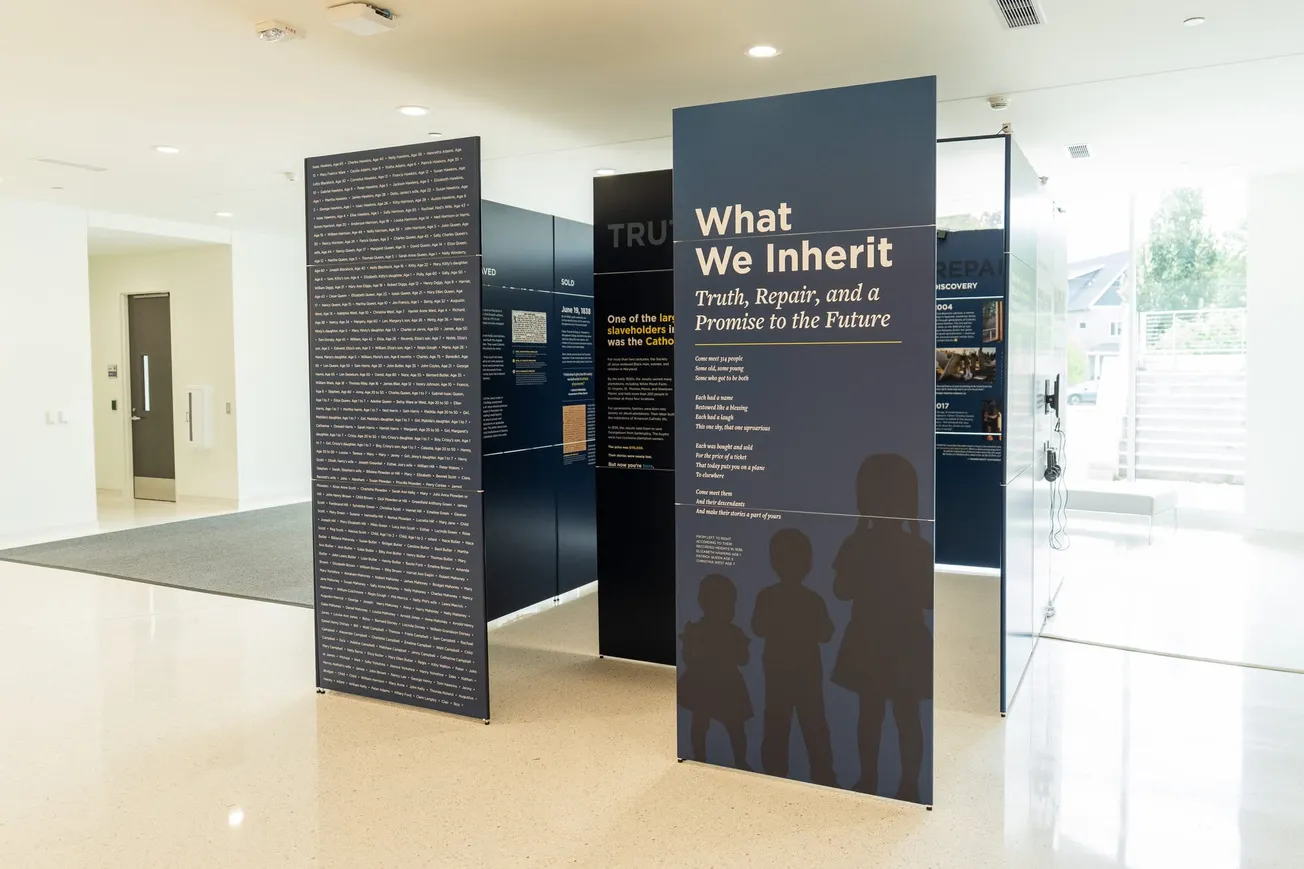
Since opening on October 5 at the University of St. Thomas, the What We Inherit: Truth, Repair, and a Promise to the Future exhibit has sparked deeper conversations and reflection on the importance of acknowledging the past and understanding what true reconciliation requires.
Launched by the Descendants Truth & Reconciliation Foundation (DTRF), with support from a private foundation in Minnesota, the traveling exhibit tells the stories of the 314 Black men, women, and children who were enslaved and sold by the Society of Jesus in 1838.
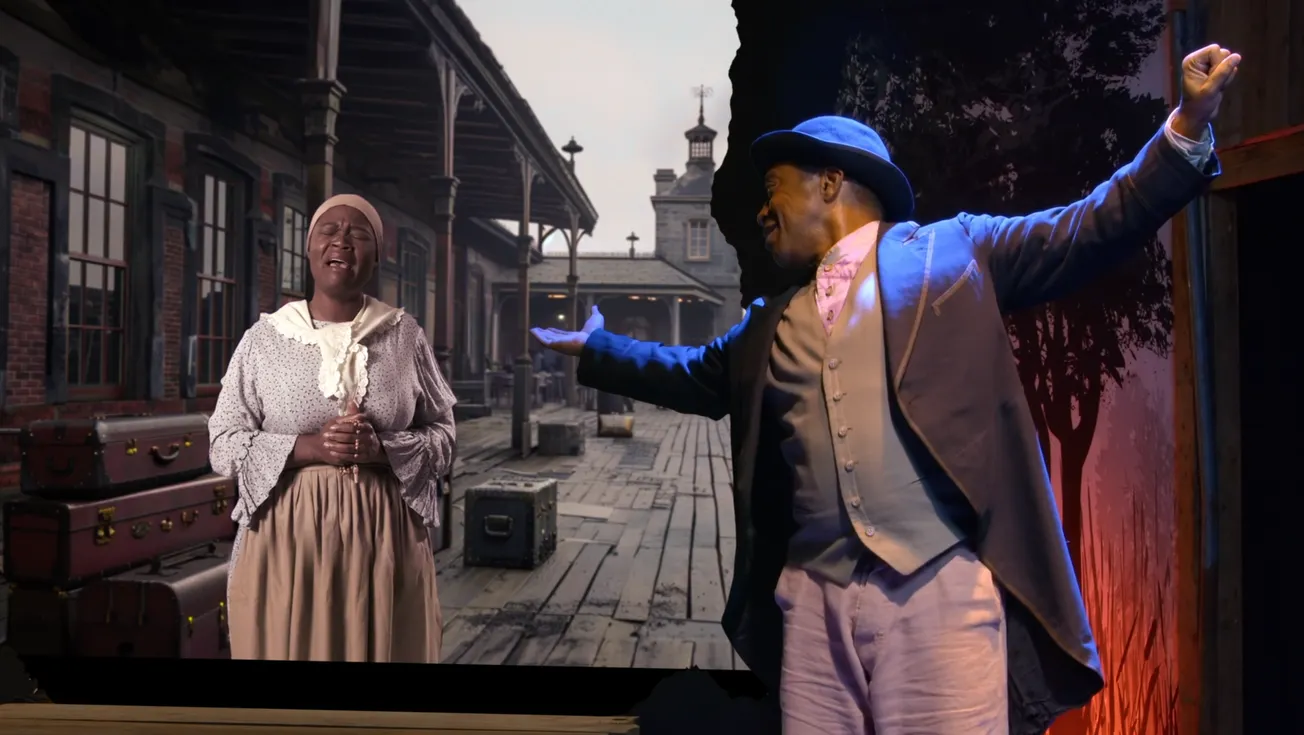
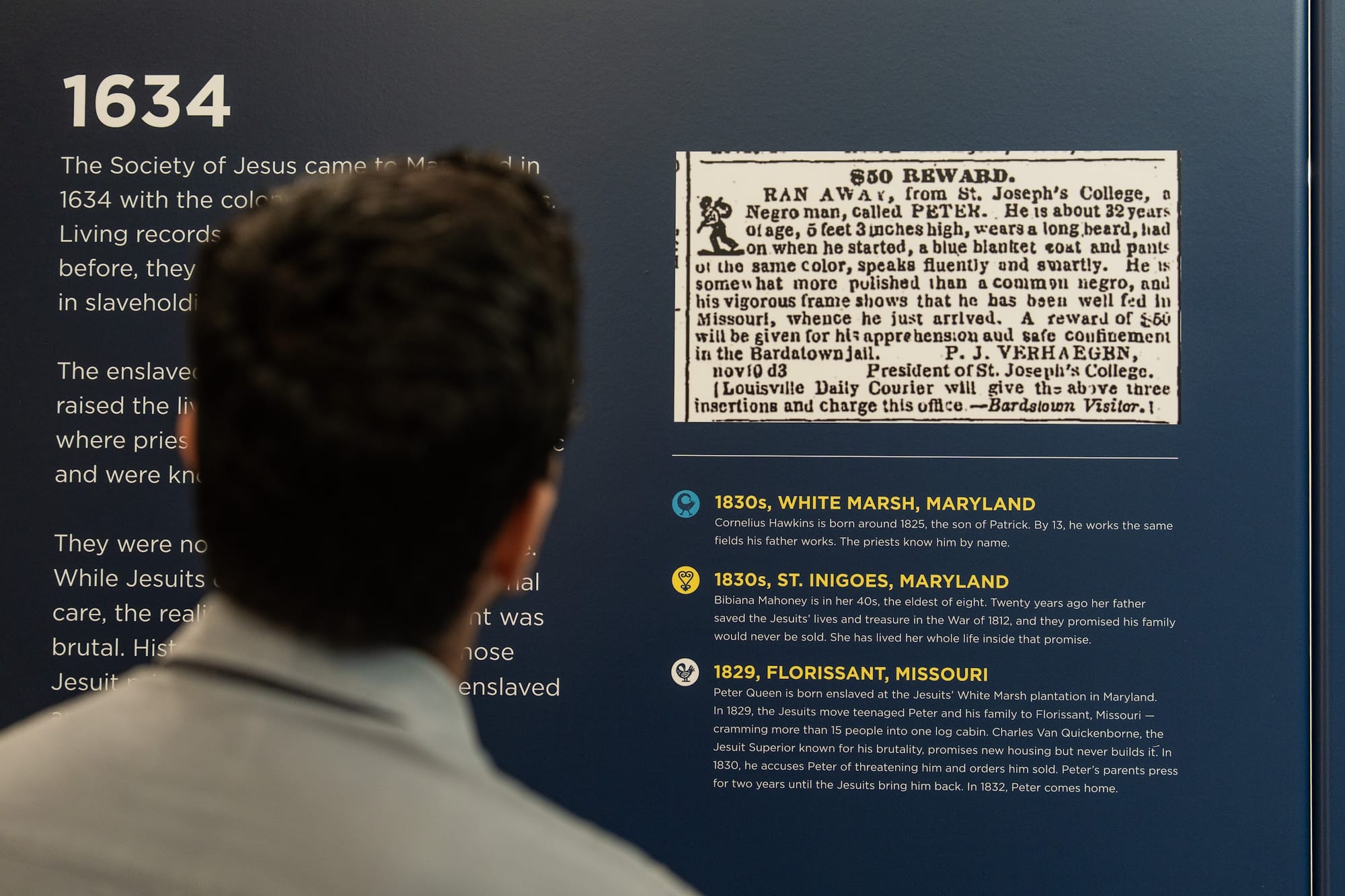
Through 28 panels featuring archival records, historical photographs, interactive media, and testimonies from descendants and Jesuits, the exhibit brings these long-overlooked stories to light.
For Monique Maddox, President and CEO of DTRF, the work is deeply personal. In 2016, she and others learned that they were descendants of people enslaved by the Jesuits. From the beginning, it was important to descendants that they help define what reconciliation would look like, working alongside the Jesuits to foster forgiveness and racial healing.
Having issued a public apology on behalf of the Jesuits in 2017, Father Timothy Kesicki, S.J. said he could not help but “wipe tears at every turn” as he moved through the exhibit. He recalled the many conversations he has had with descendants over the past decade, listening to them describe the trauma, pain, and sense of betrayal they experienced.
He admires how the exhibit acknowledges the difficult truth that the Catholic Church was among the largest slaveholding institutions in the United States while also inviting visitors to consider what comes next. Rather than simply presenting a path forward, the exhibit issues a challenge: “What am I going to do?”
Drawing on an analogy from Isabel Wilkerson’s book Caste: The Origins of Our Discontents, Father Kesicki invites visitors to see this history as something that concerns them personally. Even if they did not cause the cracks in the foundation of an old house, he explains, those who inherit and love that house have a responsibility to repair it.
“Anyone who says, ‘What does this have to do with me?’ If you live in the United States, it has everything to do with you,” said Father Kesicki. “It has everything to do with me…We all plant on the fertile soil that is America. Let us recognize why that soil is so fertile. Let us remember where our wealth came from. Let us remember what our true roots are.”
For Maddox, this approach to remembering the past offers hope that conversations about slavery do not always have to leave people feeling condemned or discouraged. Instead, genuine reconciliation can create an opportunity for the conversation to be a hopeful one about what the nation and a Church are doing to heal.
“We are showing how you can take something as traumatic as enslavement and show the hope and healing that can come out of this,” said Maddox. “That is what we hope people will take away: that this story can have a very positive ending if we all embrace it and talk about it and not try to bury history.”
Making the Past Present
Bringing this important chapter of Church and U.S. history to life—and modeling what reconciliation can look like—required extensive collaboration, discernment, and attention to detail.
After receiving funding in January, DTRF worked with Jesuits, descendants, Rise Strategy, Loyola Productions, and DPI Baton Rouge to develop the exhibit, a process that continued through October. From selecting life-sized images and ensuring that people of different ages were represented to highlighting ancestors with living descendants, the team made deliberate choices to foster what Maddox described as “human connection.”
For Nolan Stewart, a descendant of Isaac Hawkins, whose story is featured in the exhibit, seeing his own face displayed alongside images of his family and younger brothers came as a “big surprise.” The experience made the history feel less distant and more personal, reminding him that only a few generations separate him from his enslaved ancestor.
Although revisiting this history was difficult, Stewart said he was proud to see his family represented. For him, the exhibit demonstrates that people are working together to acknowledge and rectify past wrongs.
“I’ve always said there’s really no playbook on how to go about this because this is unspeakable, so I think everyone is honestly doing the right strides and the right steps in the right direction for making things right, and that alone gives me hope,” said Stewart.
He finds this work particularly meaningful in the current climate, when, in his view, there are few public examples of people coming together to address historical injustices and make amends.
Having witnessed the quiet learning and deeper conversations the exhibit has inspired in person, Stewart is especially excited that it will travel to other locations. Like a butterfly effect, he hopes its message will spread, offering hope to other communities across the United States that are also in need of healing and forgiveness.
A Place for Honest Dialogue
Dr. Yohuru Williams, distinguished professor of history, University Chair, and founding director of the Racial Justice Initiative at the University of St. Thomas, is honored to have helped bring the exhibit to campus. Although some have questioned why the exhibit is hosted at St. Thomas rather than Georgetown University, Williams believes its presence is fitting.
“We’ve had some people ask us questions like, ‘Well, shouldn't this be at Georgetown?’” said Dr. Williams. “Absolutely, but at the same time, if you consider what's happened here in the Twin Cities in the last six years, from George Floyd through Metro Surge, this is a perfect opportunity for us to revisit some of these issues and to talk about how when you don't honestly face history in the contemporary, you are going to pay the cost.”
Williams also sees a unique opportunity in hosting the exhibit at a Catholic university. Unlike a secular museum, a Catholic institution can invite the wider Church not only to learn about this history but also to reflect on how to repair broken relationships and build fellowship.
Overall, Williams has appreciated the conversations the exhibit has initiated on campus, describing the experience as “fun.”
“I use the word fun advisedly," explained Dr. Williams. "It’s nice to have it [the history] on the table in a way that people are invited into that conversation that is not immediately polarizing." “This is the history, and we’re simply asking people to face it and let’s have a conversation.”
As visitors encounter the exhibit, Williams hopes they will reflect on three questions rooted in the Jesuit tradition: “Who am I? Whose am I? And who am I called to be?”
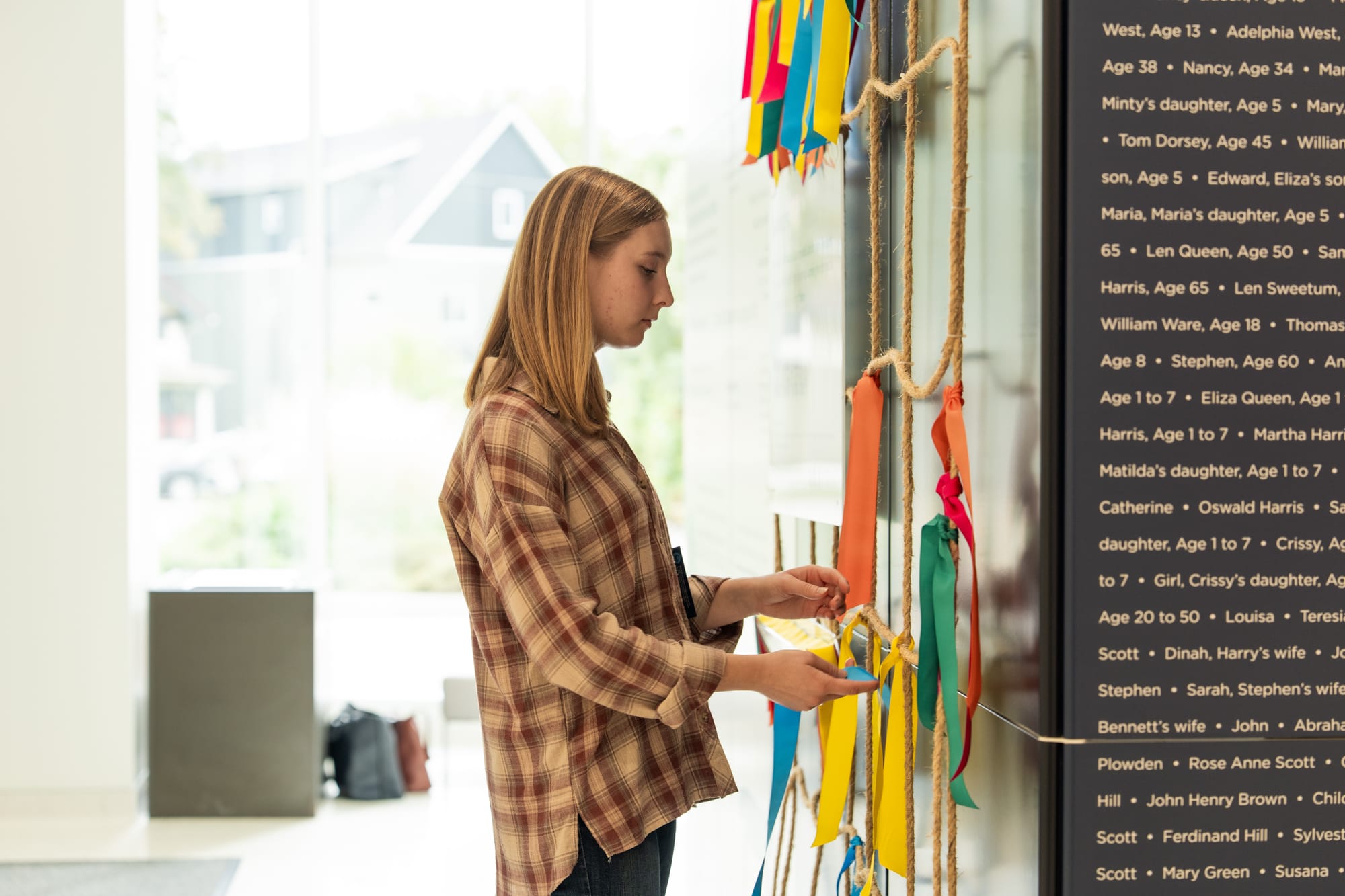
“I would love it if people, as they encountered this exhibit, would reflect on those questions, both at the start, in the middle, and at the end, when they ask you to tie the ribbon on,” said Dr. Williams. “Who am I called to be in this movement? Whose am I? What communities do I respond to? And if there’s harm or there’s hurting, whether we’re talking about descendants or whether we’re talking about assaults on immigrants today?”
Ensuring These Stories Are Never Forgotten
Looking to the future, the exhibit represents one step in the ongoing work of descendants and Jesuits, with the support of DTRF, to foster healing and ensure these stories are never forgotten.
“We are not going to let that happen again,” said Maddox. “We will forever tell our stories, and our children are going to tell it. Our grandchildren are going to tell these stories, so that it is never buried again.”
Through its founding partnership between descendants of people enslaved by the Jesuits and the Society of Jesus, DTRF will continue its work through racial healing programs, educational scholarships and opportunities for descendants, and financial support for elderly and infirm descendants.
Like seeds once buried in the earth, the stories of descendants that were once forgotten are now beginning to bear fruit. By bringing these stories into the light, the exhibit offers a living example of how truth-telling can open the door to repentance, forgiveness, and reconciliation—and how acknowledging the past can help shape a more just future one conversation at a time.
Sheila Hodges is the Editor of Black Catholic Messenger.