
Introduction: The Crucible of Black Catholic Culture
My identity as a church musician was forged in the rich crucible of the Black Catholic aesthetic. Growing up during the 1990s and 2000s at St. Paul the Apostle Catholic Church in Baton Rouge, Louisiana, I received all my sacraments of initiation within a parish community that remains the spiritual home of my parents, stepmother, and grandparents today. This era was arguably a contemporary golden age for Black Catholicism in the United States—a period marked by vibrant community growth and the prominent leadership of active African American Bishops presiding over their own dioceses. St. Paul’s was, and remains, a quintessential Black Catholic parish, staffed by the Society of the Divine Word (SVD), a missionary congregation historically renowned for producing the largest number of African American Bishops in the country.
It was within this deeply incarnational liturgical environment that I began playing the piano for Mass at the age of ten. My foundational understanding of liturgy was inextricably linked to Black cultural expressions: the rhythm of the drums, the embodied prayer of sacred dance, the visceral power of Gospel music, and the stylistic "Blackifying" of traditional hymnody. This environment cultivated a simple yet profound faith, undergirded by an intimate, personal relationship with Jesus Christ. The lessons learned and the relationships cultivated at St. Paul’s did not merely shape my spirituality; they defined my vocation as a Catholic musician.
The Paradox of Higher Education and the Pastoral Reality
Despite pursuing this vocation through the highest levels of academia—earning four degrees in music, culminating in a doctorate—my formal education left a glaring gap in my knowledge of the foundational music of the Western Church. While Gregorian Chant was mentioned within its coverage of the Canon of Western Music, I was not given the chance to study it in depth. Thus, I emerged from years of graduate study with only a minuscule academic understanding of what Gregorian chant is and how it functions structurally within the liturgy. This limited me as a musician, for I soon learned that to have a career in Catholic Church Music, regardless of the type of music one’s parish employs, it is imperative to have a basic understanding of what Gregorian Chant is and how it functions in the liturgy.
Today, I serve as the Director of Sacred Music at St. Mary’s Catholic Church and School in Temple, Texas. Our parish is a beautiful microcosm of the universal Church, comprising European, Hispanic, Asian, and African American congregants. Liturgically, the parish leans toward what the laity terms "traditional" worship, desiring more traditional elements to be incorporated into the liturgy, such as Gregorian Chant. We regularly sing four-part hymnodies alongside the prescribed Entrance and Communion antiphons. Even our schoolchildren have memorized the Salve Regina and Regina Caeli chants, and there is a burgeoning pastoral interest in establishing a male Gregorian schola. Recognizing the deep piety of this community and their desire to see Gregorian chant more fully integrated into the liturgy, I realized that my existing academic training was insufficient. I needed a deeper, more rigorous study of chant.
The Academic and Spiritual Metanoia at St. Patrick's
When my pastor first suggested I attend a summer course at the Catholic Institute of Sacred Music, hosted at St. Patrick’s Seminary & University in Menlo Park, California, I was deeply skeptical. I was reluctant to allocate my limited continuing education time and resources to a genre I felt disconnected from. However, choosing to acquiesce proved to be a transformative moment, both intellectually and spiritually.
My week in California transcended mere professional development; it became the spiritual retreat I did not realize my soul required. Under the brilliant and infectious pedagogy of Dr. Jennifer Donelson-Nowicka—founding Director of the Institute, whose distinguished career spans faculties from Dunwoodie to Lincoln, Nebraska—we moved far beyond the mechanics of square-note notation. We immersed ourselves in the history, vocal production, and chironomy (conducting) of chant, but most importantly, we studied its profound theology. We analyzed how chant embodies the attributes of sanctity, beauty, and universality, and how it is perfectly calibrated to achieve the "noble simplicity" envisioned by the Roman liturgy.
This intense study was contextualized by a series of liturgical milestones. For the first time in my life, I attended a Traditional Latin Mass (Missale Romanum of 1962). I witnessed the remarkable inculturation of a Spanish Mass where the Gregorian propers were sung in the vernacular while maintaining strict Gregorian modality, and I prayed Vespers from the 1960 Gregorian Breviary in Latin.
Reconciling the Scholar and the Song: A Liturgical Synthesis
As a scholar specializing in Black Catholic Congregational Song, I initially felt like an outsider in this setting. I did not know the Latin responses by heart, and I found myself reading a notation system I had only glanced at twenty years prior in graduate school. Yet, as the week unfolded, the intellectual pieces fell into place. I began to understand with crystalline clarity why the Second Vatican Council asserted that Gregorian chant should be given "pride of place in liturgical services" (Sacrosanctum Concilium, 116).
The Latin language is uniquely symbiotic with Gregorian chant; text and melody were composed organically together, creating an unparalleled liturgical drama. Unlike modern hymnody, which often imposes a rigid metrical structure onto worship, chant bends itself entirely to the rhythm of the sacred action.
For example, the Offertory antiphon features highly melismatic passages. This is not arbitrary musical ornamentation; rather, the music expands structurally because it accompanies a prolonged liturgical action (the preparation of the altar). It is a profound marriage of sound and ritual movement—a manifestation of transcendent beauty that has largely been obscured by the sweeping shift to exclusively vernacular, strophic hymnody.
A Call to the Liturgical Peripheries
Stepping completely out of my comfort zone allowed me to shed the mantle of the expert and re-enter the classroom as a vulnerable student. In doing so, I absorbed centuries of Roman musical tradition that now informs and enriches my pastoral ministry.
I strongly recommend that every Catholic musician, regardless of their cultural background or parish style, undertake a serious study of the Church's proper music. Even if you operate in a pastoral setting where chant is rarely utilized, the study of this repertoire provides a vital aesthetic anchor. It cultivates an appreciation for a musical form that is simply beautiful, inherently sacred, and deeply universal—unifying the diverse expressions of our global faith.
Toward an Integrated Liturgical Praxis: A Vision for Mutual Enrichment
Moving forward, my objective is to intentionally synthesize these two seemingly divergent musical realities within my ongoing liturgical praxis. Rather than viewing the Black Catholic musical tradition and Gregorian chant as polarized or incompatible ideologies, I recognize them as complementary expressions of a truly catholic—that is, universal—faith.
I am convinced that Black Catholic Congregational Song can be profoundly enriched by the structural, modal, and theological principles inherent to Gregorian chant. This synthesis does not diminish the vital cultural authenticity or prophetic fire of Black Catholic worship; rather, it elevates it. By grounding the kinetic, emotional, and relational power of Gospel-based music in the timeless, ritual-centric architecture of the Church's proper song, we forge a sturdier bridge between cultural inculturation and ecclesial tradition.
Ultimately, the more intimately Black Catholic Congregational Song is informed by the formal integrity and "noble simplicity" of Gregorian chant, the more faithfully it realizes the Magisterium's highest vision for sacred music. This integration yields a sacred soundscape that is at once deeply rooted in the lived historical reality of the African American experience and perfectly attuned to the universal heartbeat of Mother Church.
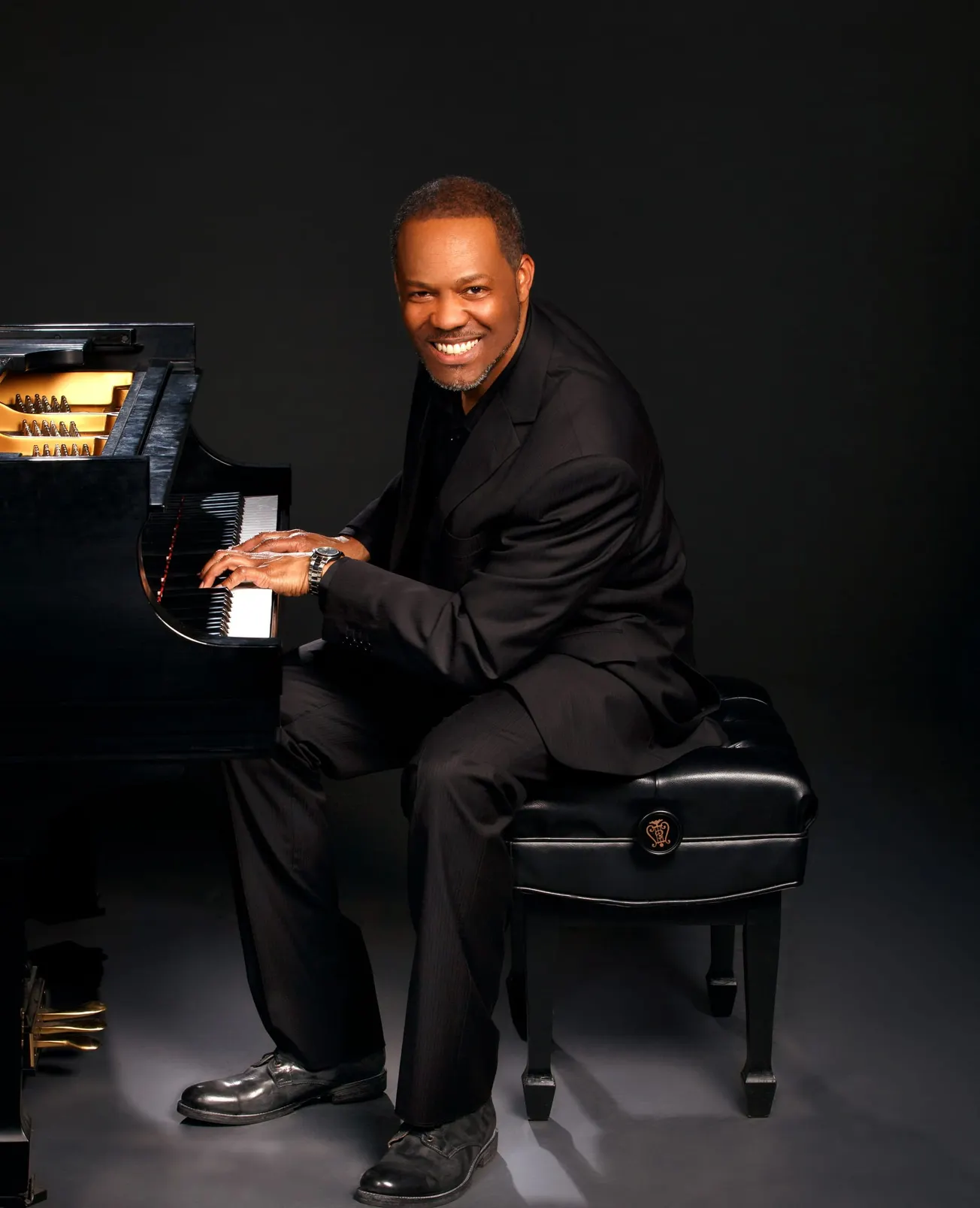
Darrell Anthony St. Romain is a published author, scholar, and organist. He recently completed the Doctor of Pastoral Music degree at Perkins School of Theology at Southern Methodist University and is the Director of Sacred Music at St. Mary Catholic Church in Temple, Texas. His research interests include Black Catholic congregational song and inculturation, especially the engagement of multilingual and multiethnic worship services. He has been published in “The Hymn” and “The Canterbury Dictionary of Hymnology” and holds organ performance and sacred music degrees from Louisiana State University and SMU.