I recently took note of reports concerning a new national prayer service text from the U.S. Conference Catholic Bishops, intended to honor the nation’s 250th anniversary and also call attention to what it calls “the many journeys that shaped America.”
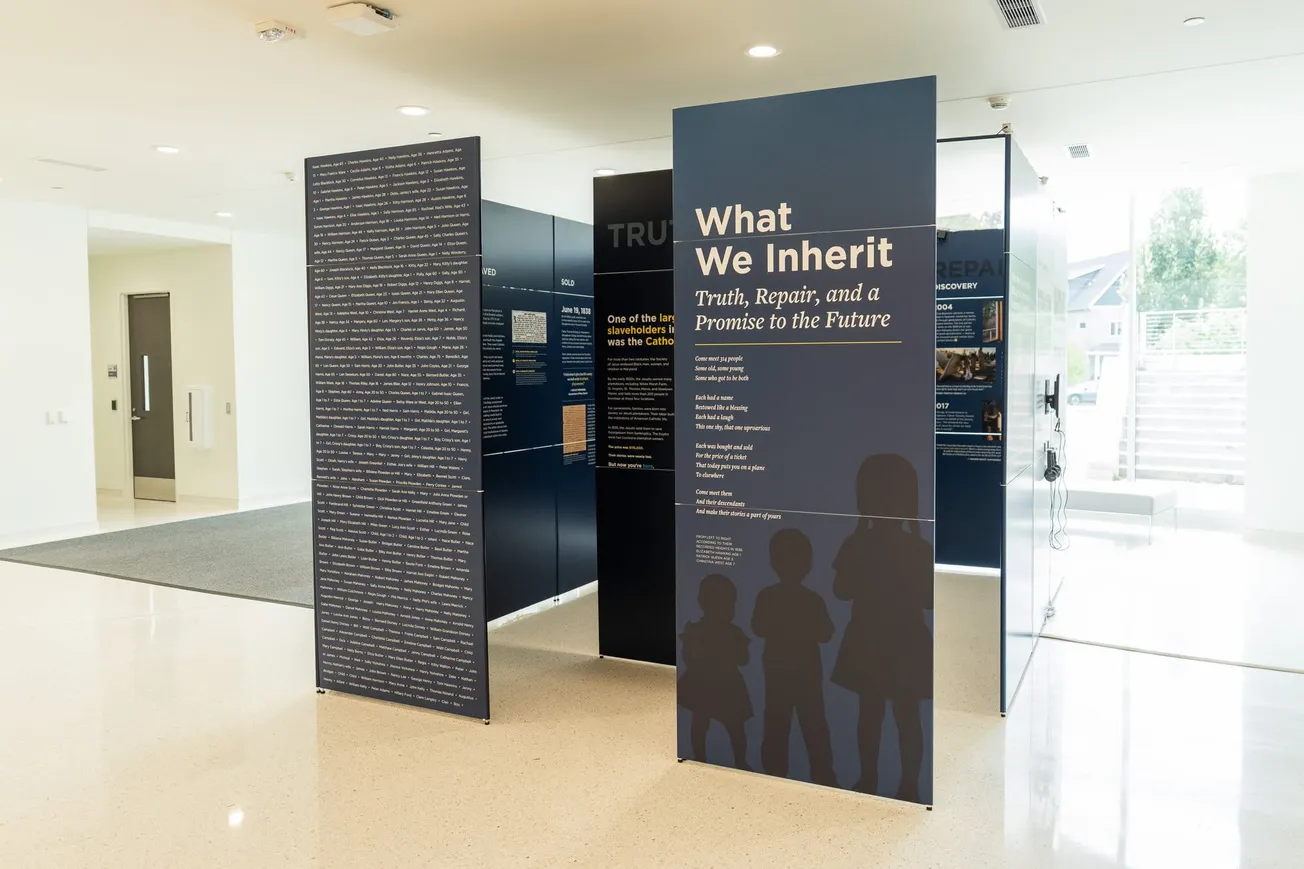
I was heartened by headlines that suggested the prayer service included odes to the suffering of Africans in the Middle Passage and in chains throughout these usually disunited states of America. This would have been a welcome turn, and one quite timely for the national moment in which we find ourselves.
There’s just one thing: The prayer service doesn’t talk about any of that.
Despite an opening introduction that initially touts the importance of “recognizing the voices, sufferings, and enduring contributions of those who were forcibly brought to this land”—a clear reference to African Americans—the actual texts of the service itself are entirely devoid of such references.
Indeed, the very next sentence after the aforementioned quote says the prayer service is “for immigrants.”
The service is structured as a celebration of the Liturgy of the Word, and also comes with a "call to action" inviting the faithful to assist immigrants and refugees in concrete ways.https://t.co/bwHQfCRDAb
— OSV News (@OSVNews) June 2, 2026
Now don’t get me wrong. Immigrants are being mistreated at historic levels in our country at present, and those willing travelers unfortunate enough to have come on the wrong boats after the nation’s founding have generally not had a good go of it throughout U.S. history. The scourge of American racism has hardly spared immigrants—sometimes even White ones—and there is no sugarcoating that.
Add to this the more recent White supremacist jingoism of President Donald Trump, the MAGA movement, and Republicans more broadly, and you have quite the quandary facing anyone today in the United States who is without the badge of citizenship.
Even so, one wonders how exactly the nation’s Catholic bishops managed to print and, theoretically, promote a liturgical text purporting to honor immigrants and the enslaved while giving full energy only to one.
My first question is this: Why mention African Americans at all? Had the USCCB simply published a prayer service for immigrants, no one would have batted an eye. Again, it would be entirely welcome and nothing less than timely. To add descendants of U.S. slavery in theory but not in actuality only cheapens the overall message.
The bare bones of the text are innocuous enough. An opening prayer to St. Frances Xavier Cabrini, the patroness of immigrants. Relevant readings from Scripture about welcoming the stranger. A suggestion for personal testimonies (from “migrants, immigrants and refugees”). A call to action (for “migrants, immigrants and refugees”). A moment of silence and a closing prayer (both “for migrants”).
What sense did it make, then, for the bishops to suggest as an intermediate hymn “Lift Every Voice and Sing,” the African-American national anthem? What does that song, and our experience, have to do with immigration? And the added appendix from Dr. Martin Luther King Jr.’s “I Have a Dream” speech: Was he talking about migrants and refugees?
Perhaps the icing on top is the intercessions, a la the Prayers of the Faithful at Mass. In a break from the other themes of the prayer service, the section has four headings: slavery, migrants, refugees, and government officials. Inexplicably, though, each of the six petitions concerning slavery are about modern human trafficking. You would never know there are descendants of chattel slavery alive today, or even children of enslaved African Americans who were around as recently as 2022.
I am reminded of a remarkably disappointing statement recently issued by Cardinal Blase Cupich of Chicago, following President Trump’s anti-Black caricatures posted in February on social media mocking the Obama family as monkeys. The obvious racist overtones were not lost on any African Americans, and the posts were immediately derided on all sides as wicked and vile.
Cupich’s special statement, however, used the controversy as a jumping-off point for a commentary on anti-immigrant sentiment. The archbishop, a noted and principled progressive among his peers, lamented the historic mischaracterization of various groups in cartoon attacks throughout American history, naming “Chinese, Irish, Italians, Slavs, Jews, Latinos and so on” as the victims. As commenters rightly pointed out, apparently African Americans were the “and so on.”
Now, just weeks from the nation’s sestercentennial, my people seem to have again been deemed by Catholic leaders to be an afterthought in the story of a nation they built with the blood, sweat, and tears of unpaid and coerced labor. 250 years in and we are still rehashing the basics.
So, then, a reminder: African Americans, the victims of U.S. slavery and their descendants, were not and are not immigrants. We retain solidarity with our suffering siblings, likely to a degree unfathomable by the wider American public, but we are not the same as those who traveled freely—even if under duress—to these shores. We have our own stories, our own legacy, our own grasp of pain and resilience and overcoming.
We do need prayers, and perhaps a prayer service. Our community continues to suffer, in many ways unabated, from the reverberations of slavery, the lack of reparations for its economic extraction, and the systemic racism built on the foundation of its immoral logic. We are not healed simply because we are “still here.”
But still here we are, a quarter of a millennium into this American project, still fighting for what is ours with all the help God gives us. As sad as it is, though, we are often stuck at square one with making clear that we are not to be forgotten—or relegated.
Nate Tinner-Williams is co-founder and editor of Black Catholic Messenger.