The reality in this country is that our prisons and jails house humans in the harshest conditions. Depictions of this have been seen in award-winning shows like “Oz” and “Orange is the New Black.” Unfortunately, conditions in American psychiatric hospitals are similarly bleak. In the article “Boundaries of Autonomy: Exploring Parallels Between Mental Hospitals and Prisons in the United States,” Benjamin J. Boldt explores four themes they share: custody, restraint (restriction), isolation and surveillance.
In his conclusion Boldt writes:
“Analyzing research through the topics of custody, restraint(restriction), isolation, and surveillance asserts a parallel between these institutions converges… Looking at existing research alone on mental hospital practices, clearly, certain policies directly harm mental health. Further research can clarify a path forward to identify and solve these issues.”
Mass incarceration
The nature of prisons and jails have been disputed for centuries throughout the world, but mass incarceration in the United States is uniquely harrowing. Add to that the caging of the mentally ill and it is clear that our nation imprisons a disproportionate amount of such people and treats them inhumanely. The mentally ill are slighted as well when it comes to policing, as seen in incidents like the killings of Miles Hall, Lavall Hall, and Taylor Ware.
These are the tragic statistics, according to the Prison Policy Initiative:
- People in state prisons who have been diagnosed with a mental disorder: 43%. In locally run jails: 44%+
- People in state prisons with chronic mental illness who have not had treatment since admission: 33%
- People in federal prisons who reported not receiving any mental health care while incarcerated: 66%+
- Police shootings in 2015 that involved a mental health crisis: 27%+
- People jailed 3 or more times within a year who report having a moderate or serious mental illness: 27%+
Revised sentencing and other criminal justice policies have helped address some disparities. Despite that, Black adults are still roughly 5 times more likely to be imprisoned than White adults in the United States. Mass incarceration has become a major society-altering quandary, destroying lives and communities. Therein, African Americans and Latinos have suffered at disproportionately high rates. Imprisonment in these communities correlates with high crime and neighborhood deterioration. This can be credited to historical policies created by a dominant White culture that insists on the suppression of minorities and poor people.
The atrocities of mass incarceration have been the focus of many organizations, works of art, and publications. They include, among many others, the Oscar-nominated film “13th” by Ava DuVernay and the Sentencing Project’s four-part series “One in Five” by Dr. Nazgol Ghandnoosh and Luke Trinka.
Even with the attention given, more action is required to end the chronic racial disparities. The current pace of criminal justice reform has been too slow to reach goals in time to save lives. There must be an acceleration that incorporates the goal of racial justice, which will lead to a system that is needed and should be expected. Urgency confronts these socioeconomic injustices that pervades the entire criminal legal system.
Psychiatric hospitals
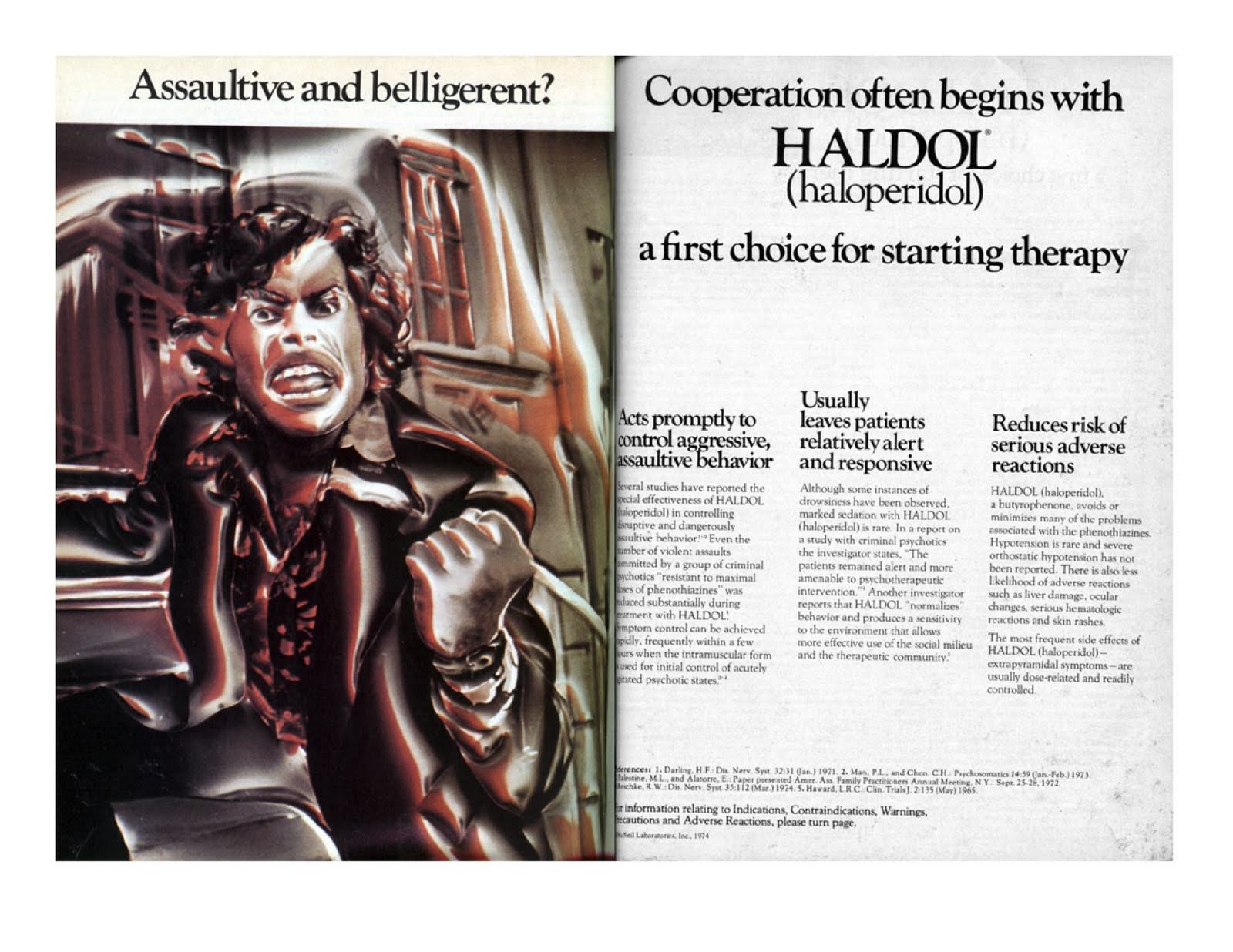
“Slavery and Its Afterlives in US Psychiatry,” an article from Drs. Elodie Edwards-Grossi and Christopher D. E. Willoughby, explains how the racist practices victimizing Black patients over the centuries have contributed to today’s crisis in mental health care.
They highlight how modern American medicine and psychiatry have their roots in slavery and Jim Crow. This shows how carceral logic underpins the present politics of Black mental health. For example, eugenics and lobotomies—long used in the practice of medical racism—were once accredited ideas but are now highly discredited. In their conclusion, Edwards-Grossi and Willoughby note:
“The disentanglement of carceral logics and Black mental health will only come at the price of a careful assessment and acknowledgment of past and present injustices in psychiatry and medicine.”
The information provided in the article is in line with what is shared in “On the Legacy and Future of Mental Health in Black Communities” by Dr. Altha Stewart—the first and, to date, only Black president of the American Psychiatric Association. In response to the question, “What do you see in the field of psychiatry now that gives you hope for better representation?”, Stewart responded:
“I am very impressed with the generation of young people who are in training now. They have brought a spirit of energy and enthusiasm for justice in the health care system that I think was way overdue and very much needed… While we still don’t have enough psychiatrists. There are more entering the field today and choosing to work in the Public Sector.
To understand the historical issues in American medicine and psychiatry, some other good works to read are “The Peculiar Institution and the Making of Modern Psychiatry, 1840-1880” by Dr. Wendy Gonaver, “Madness: Race and Insanity in a Jim Crow Asylum” by Antonia Hylton, and “The Protest Psychosis: How Schizophrenia Became a Black Disease” by Dr. Johnathan Metzl.
The NAACP’s 2023 memorandum “Racial Disparities in the Involuntary Commitment and Hospitalization of Children” advocated for the decriminalization and prohibition of mental illness discrimination. The organization has also been urging Congress to pass legislation to provide equitable access to culturally tailored mental and behavioral health care across various care settings and the lifespan. The proposed bills include the Pursuing Equity in Mental Health Act, the bill to amend Title VII of the Public Health Service Act (to strengthen the mental health workforce), and the Improving Mental Health in Schools Act.
Catholic perspectives
We can all learn from what Bishop John P. Dolan of Phoenix stated in a recent Vatican News interview on mental health. Dolan has one of the most robust diocesan mental health ministries and has shared of his personal mental health struggles, as well as those within his family. In his interview, he said:
“We don’t want to compete. We want to go down the same road together, faith and science… Invite them to the place of Church, and at the same time encourage them to go to counselors or psychiatrists or psychologists.”
US Catholic dioceses have debated for decades what should be the relationship between Catholicism, and the professional practice of mental health care. When thinking about mental illness, we should remember what St. John Paul II said:
“Whoever suffers from mental illness always bears God's image and likeness in themselves, as does every human being. In addition, they always have the inalienable right not only to be considered as an image of God and therefore as a person, but also to be treated as such. It is everyone's duty to make an active response: our actions must show that mental illness does not create insurmountable distances or prevent relations of true Christian charity with those who are its victims.”
The Dominican priest Mannes Matous wrote the following in “Approaches to Mental Health by US Catholic Dioceses: A Narrative Review and Commentary”:
“Ultimately, Catholic thinkers—psychiatrists, neuroscientists, theologians, philosophers, and other members of the Church—must think more deeply together about the nature of mental illness and then work more closely with dioceses and parishes to help the Church care for her flock.”
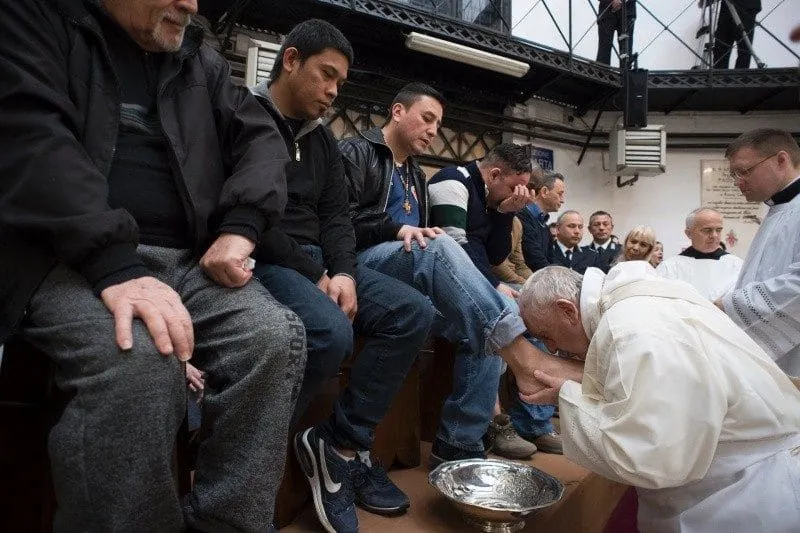
On incarceration, we should also take heed of what Pope Leo XIV said in December at a Mass for the Jubilee of Prisoners:
“While the close of the Jubilee Year draws near, we must recognize that, despite the efforts of many, even in the penitentiary system there is much that still needs to be done… There are many who do not yet understand that for every fall one must be able to get back up, that no human being is defined only by his or her actions and that justice is always a process of reparation and reconciliation.”
Harlan McCarthy is Miami metro-born and a St. Louis native. He is also an alumnus of Cardinal Ritter College Prep.