
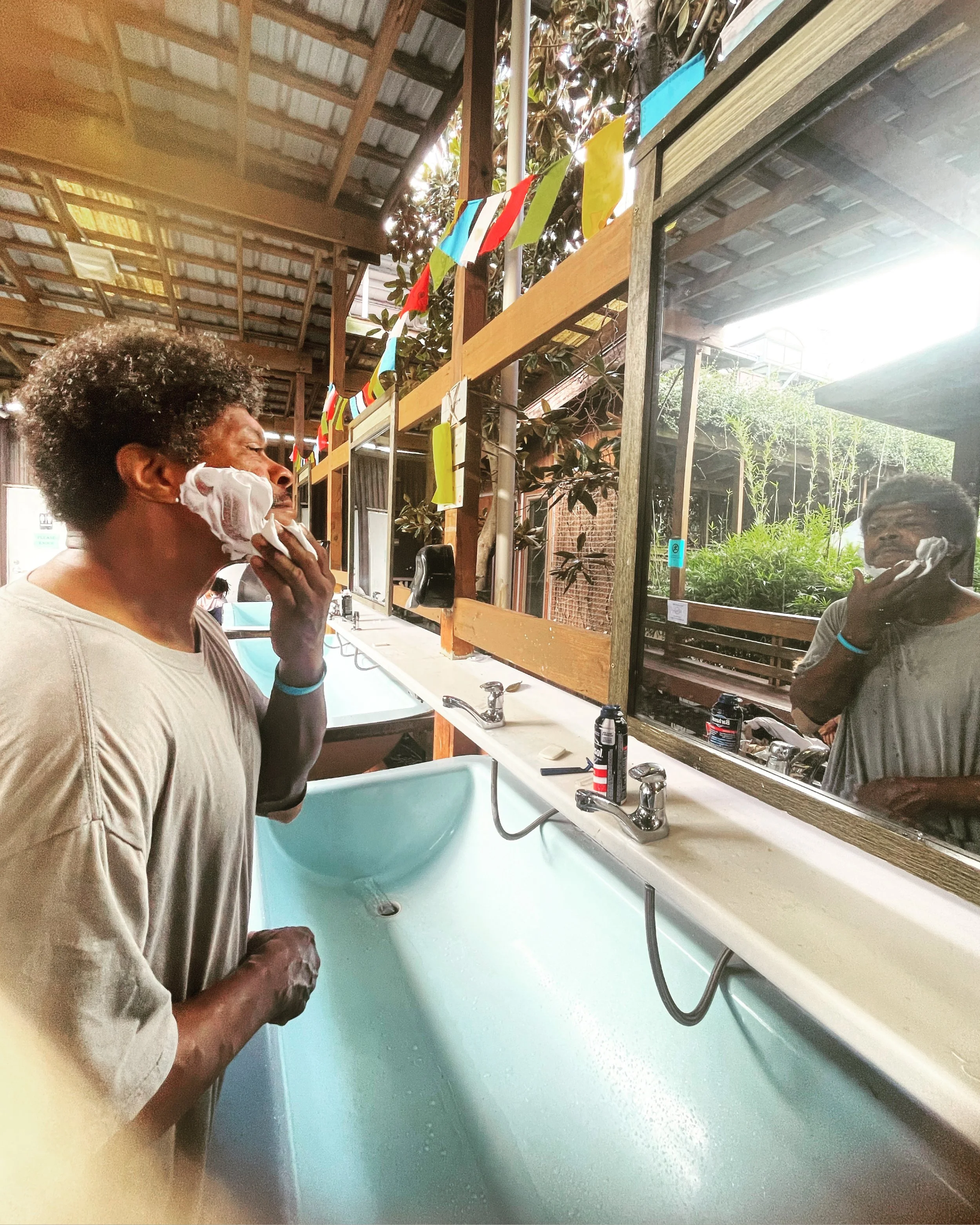
On a recent visit to New Orleans, I was deeply moved by some of the work being done at the Rebuild Center by the Daughters of Charity and by the Vincentians at St. Joseph Catholic Church, along with many collaborators who quietly and faithfully serve the poor every single day. The Rebuild Center is a place specifically for the unhoused, a place where people can come inside, sit down, rest, talk, exist, and be treated like human beings. It is not just a place for services. It is a place for dignity. A place where people who live most of their lives outside can come inside and simply be.
As I watched people come and go, sit, talk, rest, meet with staff, and just exist in a safe space, I found myself thinking a very uncomfortable thought: What am I doing? And not only what am I doing, but what more could we be doing? And even deeper than that, why are we not doing more?
That visit stayed with me. Not because I saw anything new, but because I was reminded of something very old, something at the very heart of the Gospel. The Church exists for the poor. Not as a slogan. Not as a mission statement. Not as a line in a document. The Church exists for the poor because Christ identified himself with the poor.
But after returning from that visit, I found myself thinking more and more about the Church and the poor. Not in the abstract sense, not in the way we speak about the poor in theology classes or in official Church documents, but in the real, lived sense. The poor who live in neighborhoods where parishes are closing. The poor who cannot afford Catholic schools. The poor whose churches are merged, whose communities disappear, whose neighborhoods are left behind. And I have found myself wrestling with a difficult question, one that I do not ask lightly, and one that I ask as someone who loves the Church deeply: Does the Church truly place the poor first, or do we mostly speak about the poor while structuring our institutions around stability, numbers, and money?
This is not an accusation. It is a question. But it is a serious question.
The Catholic Church speaks constantly about the poor. The phrase “preferential option for the poor” appears in Catholic social teaching, in pastoral letters, in seminary classrooms, and in homilies. We know the Scriptures. “Blessed are the poor.” We know Matthew 25. “Whatever you did for the least of these, you did for me.” We know the early Church cared for widows, orphans, and the forgotten. We know saints like Vincent de Paul, who organized entire systems to serve the poor. We know Servant of God Dorothy Day, who lived among the poor and refused to separate faith from justice. In his time as Bishop of Rome, Pope Francis constantly reminded the Church that it must be a poor Church for the poor.
So, the teaching is clear. The tradition is clear. The Gospel is clear. The poor are not an optional part of Christianity. They are at the center of the Gospel. And yet, when I look at the Church's practical life in many places, I see something that troubles me.
I see parish closures, and very often those closures happen in poor neighborhoods, in inner cities, in rural areas where people do not have money, in historically Black Catholic parishes, and in immigrant communities that struggle financially. I see Catholic schools closing in poor neighborhoods while schools in wealthy areas continue to expand. I see dioceses struggling financially, and I understand that buildings must be maintained, priests must be supported, and institutions must survive. I am not naïve about finances. The Church exists in the real world, and the real world requires money, maintenance, insurance, salaries, and budgets. I understand that completely.
But I also notice a pattern that is difficult to ignore. Where there is money, parishes survive. Where there are numbers, parishes survive. Where there are donors, parishes survive. Where there is stability, parishes survive. But where there is poverty, instability, and struggle, parishes often close, merge, or disappear. This creates a very uncomfortable tension. The Church loves the poor spiritually, theologically, and rhetorically, but institutions must survive financially, and in that tension, the poor are often the ones who disappear.
Again, I am not blaming bishops, pastors, or diocesan leaders as individuals. Many of them are trying to make impossible decisions with limited resources. This is not about blaming individuals. This is about examining structures. Structures often do not intentionally harm the poor, but they often unintentionally disadvantage them. And this is where the Church must be very honest with itself.
If we truly believe in the preferential option for the poor, then that option cannot exist only in documents, homilies, and theology books. It must exist in budgets. It must exist in parish planning. It must exist in priest assignments. It must exist in deciding which parishes we fight to keep open and which ones we allow to close. It must exist in where we send our best priests, where we invest resources, where we build schools, and where we are willing to lose money in order to remain present among the poor.
 Nate Tinner-Williams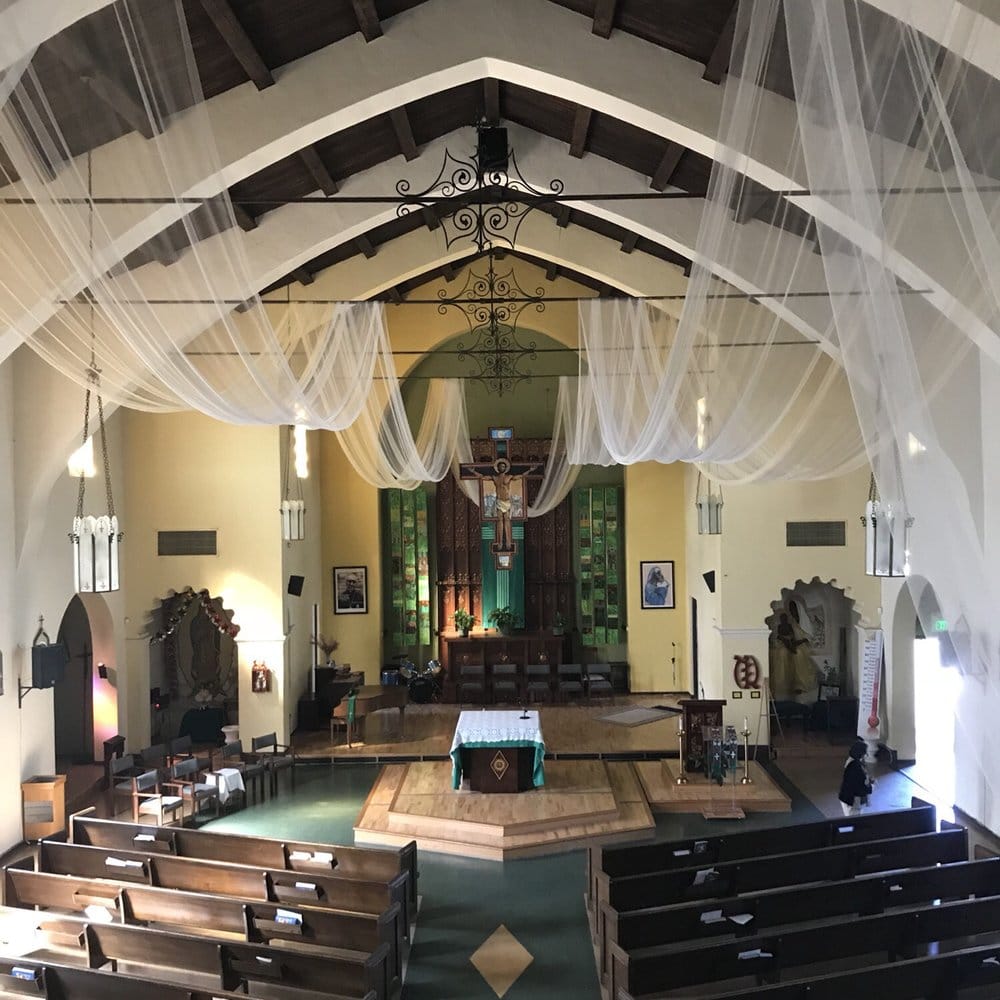
Here is the uncomfortable truth: If the Church were a business, many poor parishes should close. But the Church is not supposed to be a business. It is supposed to be the Body of Christ. Jesus spent very little time with the wealthy and stable, and a great deal of time with the poor, the sick, the sinners, the outcasts, and the forgotten.
Sometimes I wonder what it would look like if the Church truly structured itself around the poor. What if wealthy suburban parishes intentionally subsidized poor inner-city parishes? What if dioceses decided that certain parishes would remain open, not because they were financially sustainable, but because they were spiritually necessary? What if the best priests were sent not to the largest parishes but to the poorest ones? What if we measured parish success not by the size of the collection but by how many poor people were helped, how many families were supported, how many prisoners were visited, how many immigrants were assisted, and how many broken people found hope?
What if we actually organized the Church around the Gospel instead of around sustainability?
These are not easy questions, and I do not pretend to have easy answers. But I do think we must ask the questions. Because if we do not ask these questions, then the preferential option for the poor risks becoming something we talk about rather than something we actually live.
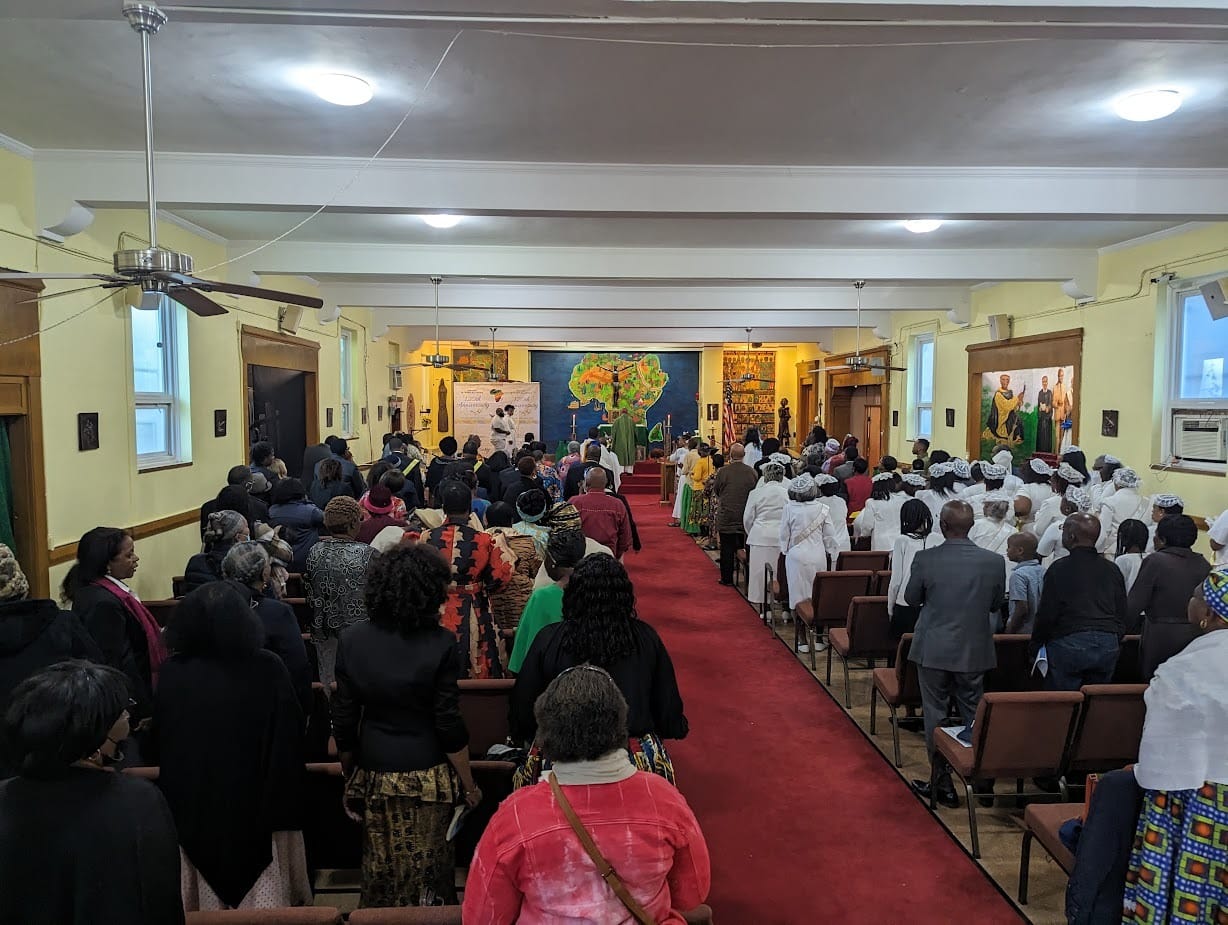
There is also something else that troubles me. It stems from the fact that poor communities often have the deepest faith. In many poor parishes, people come to church not because it is convenient, not because it is comfortable, not because the music is perfect or the building is beautiful, but because they need God. They need hope. They need community. They need strength to survive life. In many poor communities, the Church is not just a place of worship. It is a place of survival, a place of community, a place of dignity, a place where people are known, loved, and remembered. When those parishes close, it is not just a building that disappears. A community disappears. A history disappears. A spiritual home disappears. We lose a community of people who often had nowhere else to go.
I keep returning to Matthew 25 because it is both very simple and very frightening. Jesus does not ask how many parishes we built, how balanced our budgets were, how many programs we ran, or how many committees we formed. He asks whether we fed the hungry, gave drink to the thirsty, welcomed the stranger, clothed the naked, visited the sick, and visited the prisoner. The judgment scene in Matthew 25 is not about institutional success. It is about how we treated the poor.
So perhaps the question we need to ask is not whether the Church loves the poor. I believe the Church does love the poor. The real question may be this: If we asked the poor whether the Church loves them, what would they say?
Would they say that the Church fought to keep its parish open? Would they say that the Church invested in their neighborhood? Would they say that the Church sent them its best priests? Would they say that the Church stood with them when no one else did? Would they say that the Church knew their names, their struggles, their children, their stories?
Or would they say that when money became tight, and decisions had to be made, they were the ones who disappeared?
Again, these are not comfortable questions. But the Gospel has never been comfortable. The Gospel is demanding. The Gospel always pushes us to examine ourselves, our priorities, and our structures. The Gospel always asks us whether we are truly living what we claim to believe.
The Church has a beautiful teaching about the poor. Truly beautiful. But the time may have come for us to ask whether our structures, our budgets, our parish planning, and our decisions reflect that teaching. Because the poor cannot only be part of our theology. They must be part of our decisions.
The Church does not exist only for the strong, the stable, the educated, the wealthy, or the comfortable. The Church exists for everyone, but especially for those who have nowhere else to go. If we ever become a Church that works best for people who already have stability, money, and options, then we risk becoming something very different from the Church that Jesus founded.
So, I return to the question that has been on my mind for some time now. I do not ask as an outsider criticizing the Church, but rather as someone who loves the Church deeply, who has been formed by the Church, who has been fed by the Church, and who has given his life to the Church. Precisely because I love the Church, I believe we must be honest with ourselves. The question is simple: If the poor are truly first in the Gospel, are they first in the Church?
The question for me is not simply what we are doing, but what more we can do? What can we do differently? How can we become more faithful to the Gospel we preach? How can we become more faithful to the Christ who identified himself with the poor, the forgotten, and the abandoned?
These are not questions for bishops alone, or priests alone, or religious alone. These are questions for all of us. Because the Church is not just an institution somewhere else. The Church is us. And if the poor are to be first in the Church, then they must be first in our decisions, our priorities, our time, our resources, and our lives.
Perhaps the real question is not whether the Church has a preferential option for the poor. Perhaps it is whether we do.
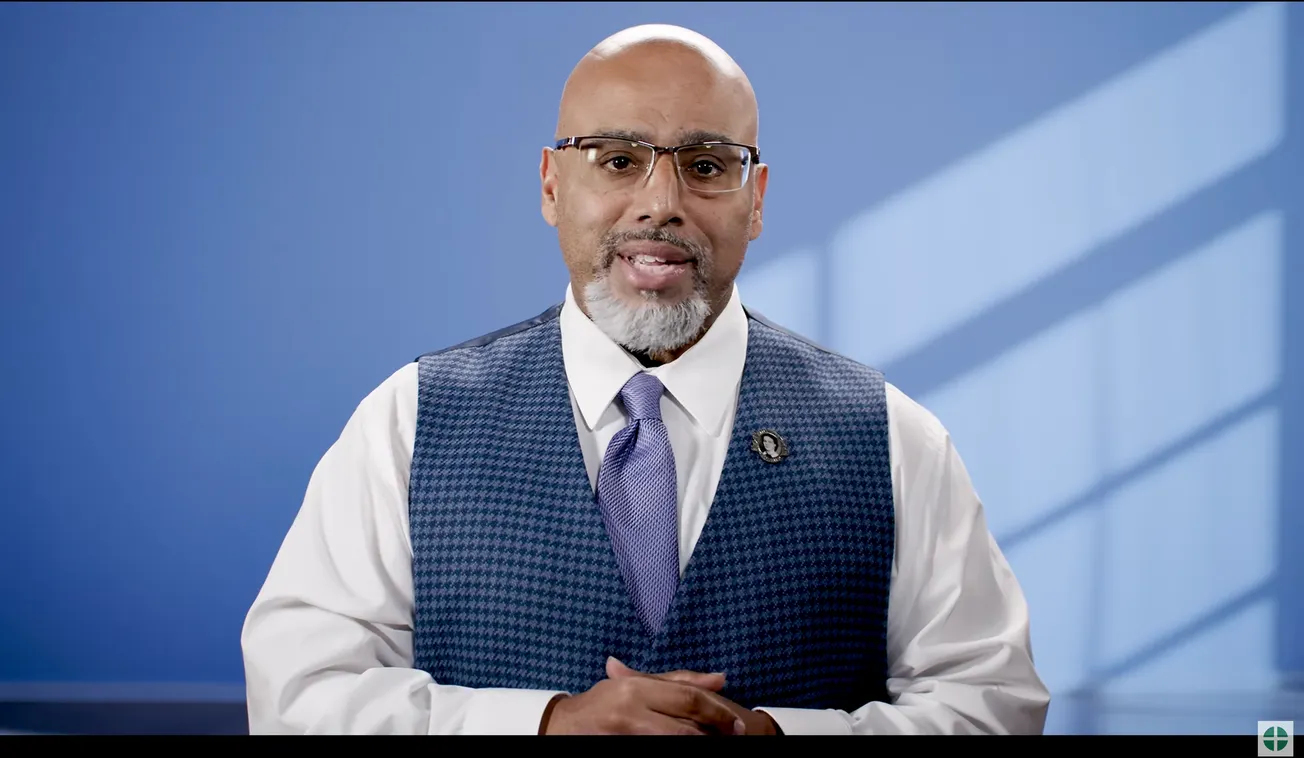
Fabian S. Adderley is a contextual theologian and pastoral minister originally from the Bahamas. He holds a B.A. in Pastoral Ministry and Philosophy, a Master of Divinity, a Master of Arts in Theology, and is currently pursuing a post-graduate Master of Theology (ThM). His work explores vocation, suffering, and the lived realities of faith within marginalized communities, engaging the intersection of Black Catholic experience, social structures, and the Church’s pastoral imagination.