by Tammy C. Barney, Verite News
New Orleans
June 5, 2026
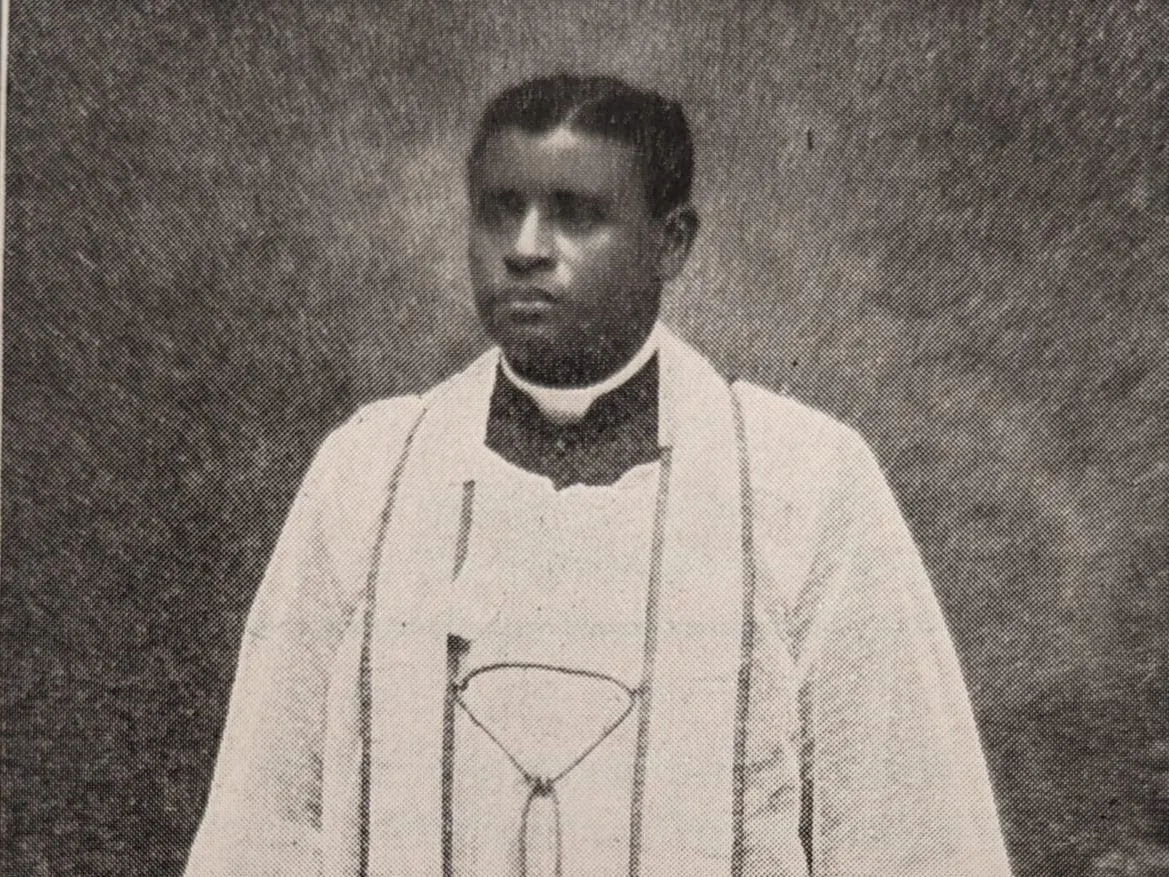
In New Orleans, the Catholic Church would not allow a man of color to celebrate Mass in the early 1900s. As a result, Fr John Joseph Plantevigne died “a broken man with a broken heart.”
“The story of Plantevigne is the story of religion in the time of Jim Crow,” the Chicago Tribune wrote.
“It offers insight into the desperation that drove many Creoles to abandon their community, and their heritage, in pursuit of opportunity… where their dark skin could easily be mistaken for the olive complexion of Greeks or Spaniards or Italians.”
Born in Pointe Coupée Parish in 1871, Plantevigne was a Creole who graduated from Straight University (now Dillard University). He was ordained in 1907 in Baltimore with the St. Joseph’s Society of the Sacred Heart, known as the Josephites, becoming Louisiana’s first Black Josephite priest.
A 1909 issue of Extension magazine described Plantevigne as “a splendid preacher with a voice as musical and far-reaching as a bell.” The magazine also quoted a statement he made at a conference in Washington, D.C.: “The Negro shall be treated as a man and not a problem.”
Two years later, he learned that New Orleans’ Catholic leadership saw him as a problem.
Plantevigne looked forward to celebrating Mass at St. Dominic Catholic Church, but the pastor, Fr Peter Labeau, refused to allow it.
Labeau thought it was inappropriate to give a person of color access to the pulpit, the Chicago Tribune wrote. “Plantevigne protested to Archbishop James Blenk, who responded by forbidding Plantevigne from celebrating Mass anywhere in New Orleans.”
Plantevigne relocated to Palmetto, Louisiana, hoping to lead Mass there. This time, however, Blenk banned him from celebrating Mass anywhere in the archdiocese.
With no other options, Plantevigne returned to Baltimore, where he died in 1913 at the age of 42.
This article first appeared on Verite News New Orleans and is republished here under a Creative Commons Attribution-NoDerivatives 4.0 International License.

Tammy C. Barney is an award-winning columnist who spent most of her career at two major newspapers, The Times-Picayune and The Orlando Sentinel. She served as a bureau chief, assistant city editor, TV editor, specialty sections editor, and was the first Black woman to lead the newsroom at the Daily Comet in Thibodaux, LA. Tammy has won several writing awards, including the prestigious Vernon Jarrett Award for Journalistic Excellence in 2006 for a series of columns regarding the aftermath of Hurricane Katrina in New Orleans.