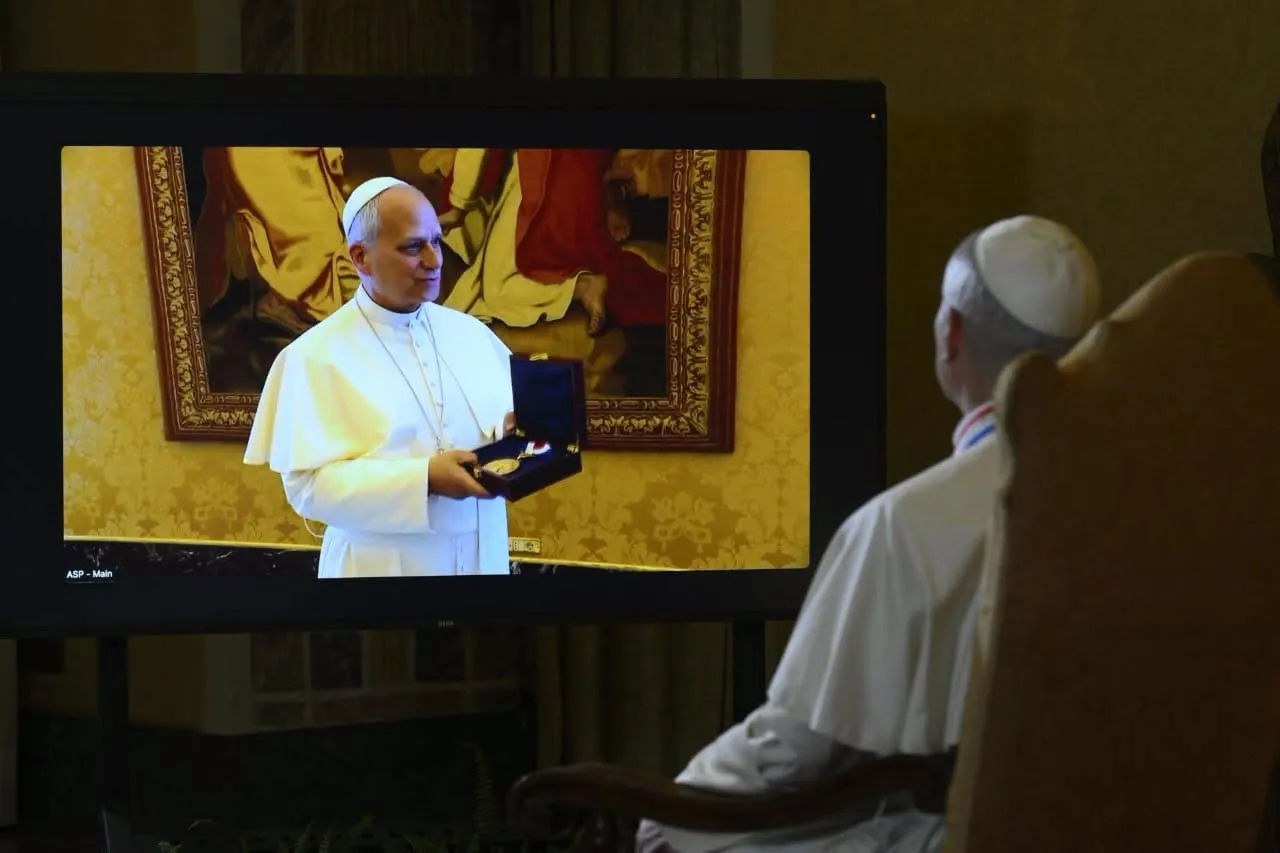
Earlier this month, Pope Leo XIV was honored by the National Constitution Center with the Liberty Medal, in recognition of his commitment to religious liberty and to mark the 250th anniversary of the United States. Although Leo did not appear in-person, he delivered remarks virtually to those assembled in Philadelphia.
Leo spoke of peace, liberty, and the basic fundamentals of Catholic social teaching. In an unsurprising move, given the themes of his papacy so far, he also made a point to focus on the need for peace. He encouraged Americans to recall the “high ideals” of America’s founding and the need to continue on a path of peace-building within American society. Additionally, he noted that an American witness to peace inherently involves supporting the dignity of all people.
 Black Catholic Messenger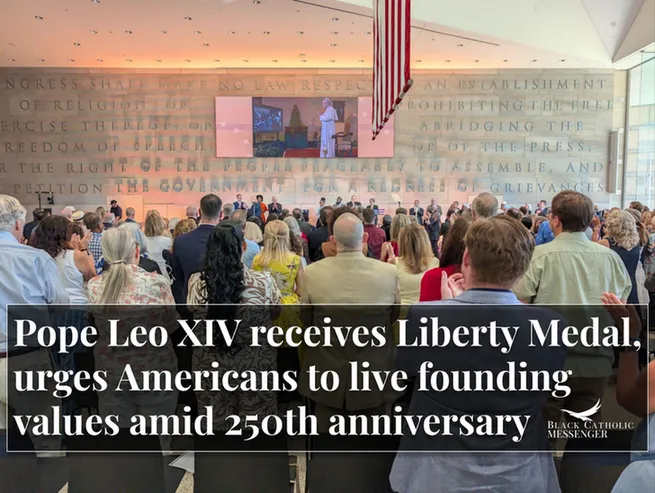
Listening to his words, I had mixed emotions. As an African-descent woman, I am very aware that upon the writing of the U.S. Constitution, my own rights and those of African Americans and others were not included in the “high ideals” found in this document. The scars of Indigenous dispossession and chattel slavery are embedded into the founding of what is today called America. Black and Indigenous people were not included in the nation’s founding promises and were instead suffering many indignities that went unanswered.
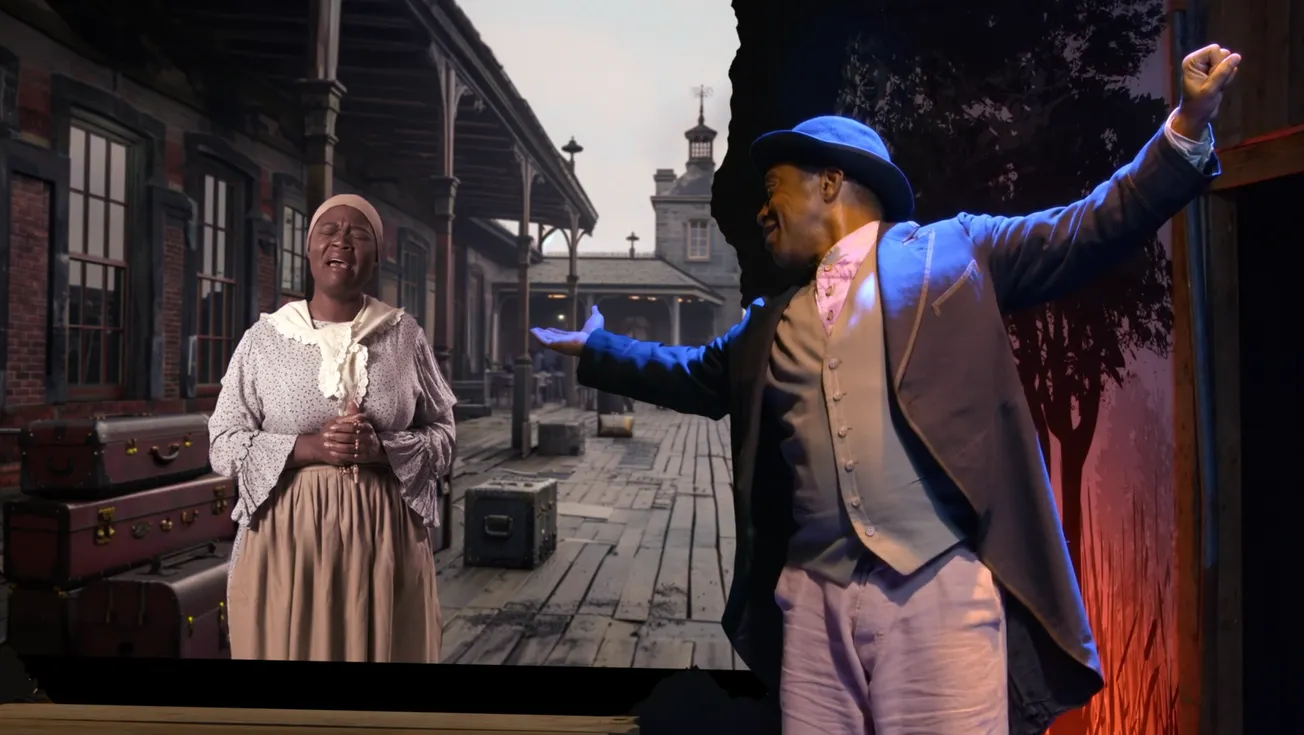
Britain, in losing the Revolutionary War, realized that its days of ruling the colonies had come to an abrupt end. Those therein who came to be called “Loyalists” received a promise of land and the opportunity to build a new life in other territories of the British Empire. Men and women, both White and Black, emigrated to British North America (Canada) seeking a new life. While the British made promises to all Loyalists following the end of the war, they were often not kept when it came to Black Loyalists. Even so, they continued to seek the freedom that was denied to them in the nascent United States.
African Americans would have to wait centuries—and some may say they are still waiting—before the dignity of Black life was protected and respected by the law in the United States. They would also continue to flee to British North America even as the U.S. was celebrating victory and freedom from Britain. The paradox is evident: There was an inability to see African Americans, or any other non-White persons as worthy to be included in the new vision, new nation, and new republic.
In short, fully reckoning with the “high ideals” of the U.S. Constitution has been a challenge for America. This reality is present even now, especially when the legacies of enslavement and Indigenous dispossession barely receive mention in public addresses. Once more, we shamefully ignore the history of those Americans who fought and continue to fight for the value of their inherent human dignity.
As Catholics, we should be aware that our Church was hardly the engine of the anti-slavery movement. Historically, the White Catholics in the U.S. and Canada remained silent regarding the ongoing violations of Black bodies within their own communities. More disturbingly, Catholic religious orders also owned enslaved persons as a source of labour and economic viability (e.g., the Jesuits who sold 272 enslaved Africans to save what was then Georgetown College). Thankfully, however, there were some Catholics—bishops, other clergy, and laypeople—who were devoted to the pursuit of the “high ideals” for all. African-American Catholics in particular were establishing themselves and would eventually become the founders of historic Black Catholic Canadian communities.
Overall and in spite of it all, Black Catholics continued to persevere in their faith while building community. The existence of Black Catholics in the United States and Canada reflects the determination of a people adamant in seeking the values Pope Leo extolled in his words to those gathered in Philadelphia. Black Catholic communities are very aware that historically, the U.S. Constitution—while using religious and idealistic language—did not extend equally to all persons.
The values of America’s founding documents can only be celebrated in the light of those who fought for their own human freedom and agency. Facing such tribulations, African Americans demanded their dignity and Black Canadians also battled for freedom by insisting the British live up to their commitments.
In North America, Black Catholics are aware of the struggle they have endured to survive and find recognition within the Church and in society. It is through the courageous witness of Black Catholic women and men who insisted on the promises of the Constitution and their inherent human dignity. Daniel Rudd, Dr. Norman C. Francis, Venerables Henriette DeLille and Mary Lange, Mary Ann Shadd Carry, and many others are representative of those who fought for the value of Black life.
As Americans celebrate their nation’s founding virtues, they must acknowledge the failures in the mission to achieve America’s “high ideals” for all people. Pope Leo reminded us of the meaning and worth of the human person. Black Catholics, irrespective of their location on the North American continent, were long denied this promise and the hope of freedom. In celebrating the U.S. Constitution, it is important to remember and celebrate those who fought for liberation, as well as the modern freedom fighters who continue the just pursuit of liberty today.
Indeed, it is good to find reason to celebrate and elevate the words of the Constitution. In doing so, for us as Black Catholics, we can still remind our leaders of the paradox that slavery presented and that the earliest African Americans received none of the nation’s founding protections or guarantees. It is important to hold both traditions, the values of liberty and the struggles for freedom. Together, they reveal a fuller history of the United States.
Tamika Royes has 15 years of experience in the social services sector in various roles. She has been a tireless advocate for justice causes, beginning in high school. She has earned a graduate diploma in Catholic studies at Assumption University and is currently pursuing a Masters of Arts in Theology at Regis St. Michael's Faculty of Theology, University of Toronto.