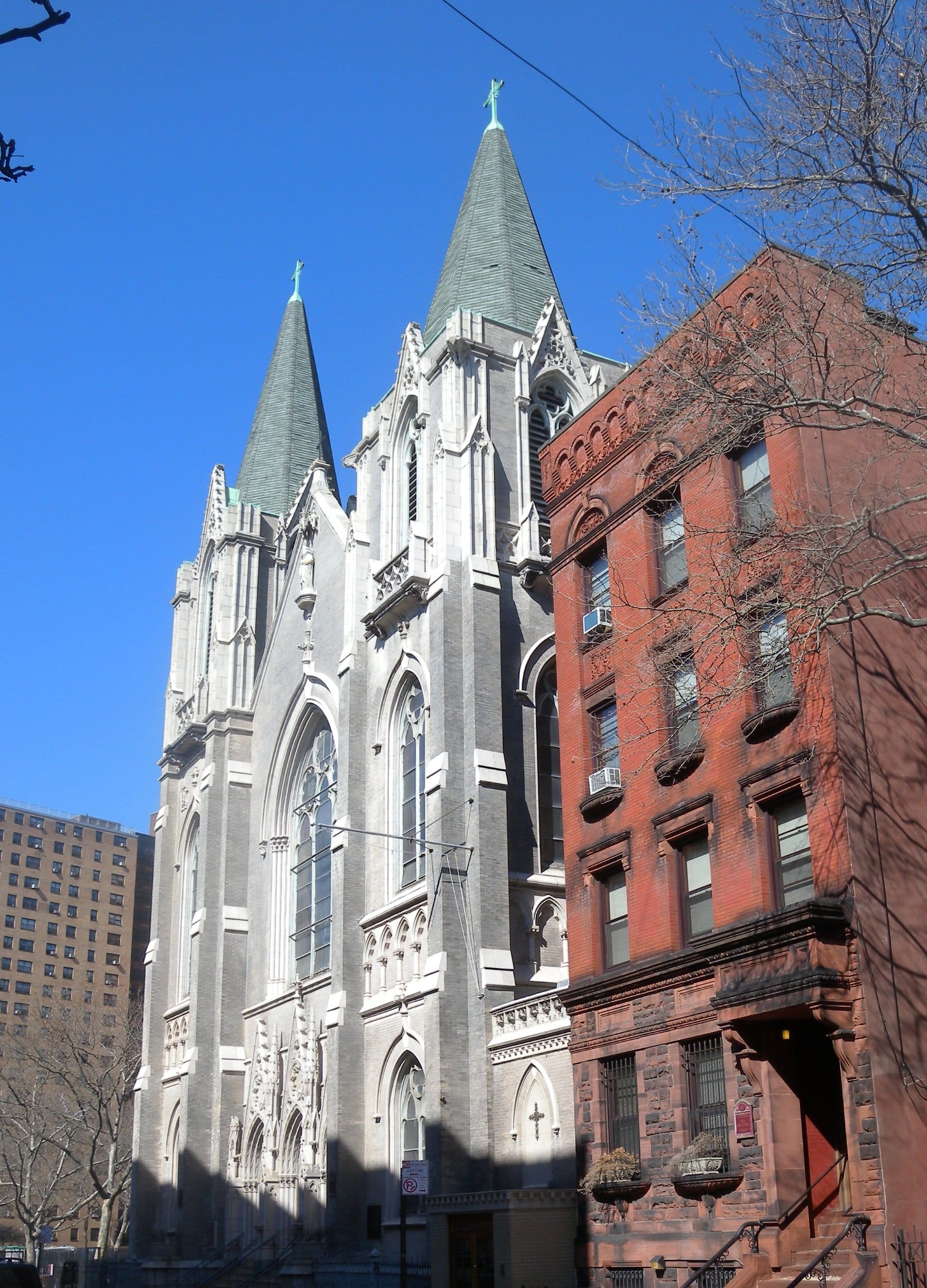
In the autumn of 1979, Pope St. John Paul II visited New York, including a stop at St. Charles Borromeo Church in Harlem, one of America's most prominent Black Catholic parishes. Among those present was Msgr Emerson J. Moore Jr., a pastor and pioneer who, as this moment would reveal, was destined to become a bishop.
“When the pope embraced him publicly like that,” said Jesuit priest Gregory Chisholm, who would later serve as pastor of St. Charles, “that changed everything, I think.”
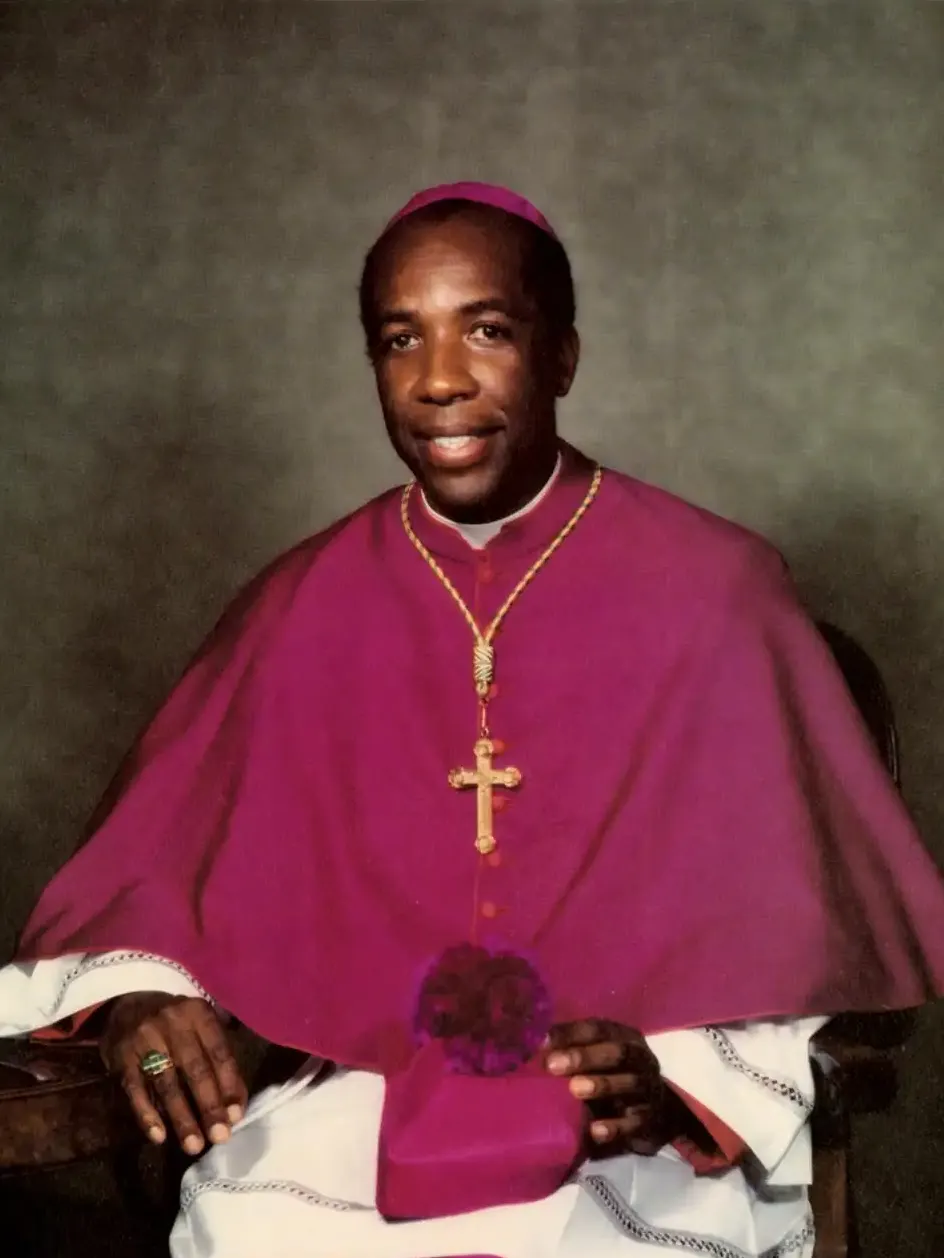
Three years later, Moore was named Auxiliary Bishop of New York, becoming the first (and, as of this writing, only) Black American to hold that title. It was, by any measure, a recognition long overdue and hard-won.
Chisholm, who grew up in Harlem, and Dr. Diana Hayes, who crossed paths with Moore during the Black Catholic Movement, offer a nuanced portrait of the late prelate. As a Baptist-born priest who achieved unprecedented prominence among Black Catholics in New York, he bore significant responsibilities.
Yet Moore's story does not end in triumph. He died at age 57 from AIDS-related complications. His final years were marked by addiction, isolation, and a suffering that those closest to him sensed but could not reach.
A statement that changed everything
Hayes asserts that understanding Moore’s rise necessitates examining the events of 1968, when the National Black Catholic Clergy Caucus was founded and directly declared that the Church is a “white racist institution.” Moore was among the members of the founding group that issued the open letter.
“Everybody was a bit nervous about them doing that,” Hayes recalled, “because they were afraid they were going to get excommunicated or whatever.”
In the end, they were not excommunicated. Instead, an unexpected development followed: Several of the men who had signed the letter, previously considered by Church insiders as unlikely to be promoted within the hierarchy, became some of the first Black prelates in U.S. Catholic history.
“Everyone had said the ones who signed that letter would never become bishops,” Hayes said, “and they were the ones that [the Vatican] picked to make bishops… I would argue it’s directly a result of that letter.”
Bishop Emeritus J. Terry Steib, SVD of Memphis, who would be elevated to the episcopacy a year after Moore, recalls the intense internal debate surrounding the document, particularly its provocative opening line. Although Steib was not present at the drafting meeting, he learned from participants such as fellow Divine Word priest Charlie Burns that the language was heavily contested. Needless to say, the letter was extraordinarily bold for its time.
“It needed to be said back then,” Steib said. “People began to understand and to take it for what it meant. That’s where the clergy caucus came alive.”
“It was almost [like] saying that we’ve come of age, that we needed to begin to speak on our own.”
The NBCCC open letter also initiated a broader awakening. Black women religious established their own group, the National Black Sisters’ Conference; seminarians and deacons soon followed. At that time a theology student, Hayes found kinship among priests and sisters who were also navigating new territory.
“We really spoke up,” she said. “We fought with them at the bishops’ conference. And we were listened to.”
Harlem and the weight of the only
Chisholm, who first met Moore as a teenager, observed the Archdiocese of New York’s approach to pastoral assignments in Black Catholic parishes over many years. He noted that these decisions were sometimes motivated by cynicism and other times by genuine intent. In Moore’s case, Chisholm considered the assignment appropriate.
“He seemed comfortable doing administrative things, living among Black people, saying Mass,” Chisholm said. “I think he was comfortable with that.”
Bishop Steib shares that same impression of Moore’s fundamental groundedness, even as the glare of the spotlight grew brighter.
“I think he, Bishop Moore, was himself throughout it,” Steib noted. “Even being a bishop, he was himself. He knew where he came from, he knew what he was about, and he kept that stance.”
The assignment at St. Charles Borromeo Church represented a pivotal moment in Moore’s life. Made the pastor there in 1975, he led the parish during the era following its reconstruction after a major fire in 1968, and by the time John Paul II visited in 1979, the community was thriving. The pope’s public embrace of Moore was a more compelling endorsement of his promotion than any internal advocacy.
Priests of the Archdiocese of New York, Chisholm says, have never been particularly progressive. He recalls that after Black Catholic priests first entered Harlem beginning in the late 1920s, their own confreres called them “the n*gger priests.” The same language was likely used concerning Moore, a full generation later.
“You could imagine what it was like,” Chisholm said, “being a bishop over all of these guys.”
Moore’s elevation to the episcopacy in 1982 did not resolve the tensions inherent in his position as a prominent African-American in a largely White and often racist U.S. Catholic Church. Rather, it intensified them. Also at play was a certain level of fascination.
Hayes understood the latter dynamic personally. When she became the first Black woman to earn a pontifical doctorate, invitations arrived from institutions she had never heard of, from people who had never imagined such a person existed. She would sometimes accept, sometimes decline, but the novelty—and the burden—never fully lifted.
Likewise, for Moore and the small cohort of African-American Catholic bishops who emerged in the 20th century, the demands were relentless.
“They were the only Black bishops in the United States. Their diocese basically was the whole country,” said Hayes.
“They had to travel and did travel, because they were invited. Everybody wanted to see them.”
Steib watched this dizzying national schedule unfold from his own postings as an auxiliary bishop for the Archdiocese of St. Louis and later as Bishop of Memphis. He observed that as Moore took to the national stage, he carried the heavy mantle of advocacy without losing his essential nature.
“The national levels were coming to the fore, and my impression was he was not afraid to speak about those things, and to address them as needed,” Steib said.
“Yet he had a gentle way of doing it. He was a gentle person. He just did the ministry and served the folks he was called to serve,” Steib said.
Black Catholic parishes across California, Texas, and Louisiana extended invitations to Moore for Confirmations and other Masses, so many that Moore almost certainly could not accept them all. The visibility that established him as a symbol also contributed to his exhaustion.
“For many Black Catholics, to see a Black priest, let alone a Black bishop, was like the second coming almost,” Hayes said.
“It was so important to them. You can see how they had to work overtime in many ways to make sure that they were seen in a good light.”
Superman and his limits
As a bishop, Moore assumed a public role that extended well beyond the Archdiocese of New York. He became a prominent voice in the National Black Catholic Congress, advocating for the recognition and inclusion of Black Catholics in an institution that had historically marginalized them.
Moore also collaborated closely with Catholic Charities of New York and engaged with the state government on social justice issues. During Rev. Jesse Jackson’s presidential campaigns, Moore publicly offered his support and took heat from many, all while emphasizing his conviction that the Church’s mission was inseparable from the Black freedom struggle.
“It seemed like he was a Superman when it came to being involved, when it came to speaking,” Chisholm said.
That expectation was likely something all Black Catholic bishops experienced during that time, magnified by an institutional gaze that measured them using unattainable standards. At Moore’s funeral, Cardinal John O'Connor of New York remarked that it was not enough for a Black Catholic bishop to be ordinarily intelligent; he was expected to be extraordinarily intelligent. If he spoke with pride about being Black, he was labeled a racist. If he supported civil rights, he was viewed as a threat.
Additionally, Chisholm observed that Moore’s broad range of commitments was both his greatest strength and a source of personal strain, ultimately demanding more than any individual could sustain over time.
Hayes identified a similar pattern among the broader generation of pioneer African-American Catholic bishops.
“They were selected because they were so charismatic with people around them, welcoming and very conscious of their impact on people of faith,” she said.
Another more subtle and institutional challenge also persisted: With few exceptions, Black Catholic bishops of Moore’s generation served as auxiliaries, assistants who were rarely granted full authority over a diocese.
“That hurt people a lot,” Hayes said, “because they felt they were qualified enough.”
This systemic frustration, combined with his own deep convictions, may have led Moore to take a remarkably solitary stance in 1990. That year, he became the only Catholic bishop to sign Call To Action’s public appeal demanding sweeping structural reforms in the Church, including the ordination of women and the end of mandatory clerical celibacy.
To Steib, the radical move was entirely in character for the Harlem prelate.
“Yep, that was Emerson Moore.”
A quiet end
By the late 1980s, the ongoing demands of ministry began to take a toll on Moore. His health declined, and many who knew him recall his final years with sorrow.
“He was a beautiful, tortured man, a man who didn’t seem to have any real idea how great he was,” a source told The New York Times in 1993.
“He struck me as a stranger in a strange land. I often thought he was the loneliest man I had ever met.”
Because the struggles of his final years were closely guarded, many of his fellow bishops could only observe from a distance, recognizing the weight he carried but unable to alleviate his solitude.
“I suppose he probably had a lot of stuff on his plate that we weren't even aware of,” Steib reflects, noting the geographical and cultural distance between his own ministry in the South and Moore's in the North.
“That’s a lot of things that he probably kept to himself.”
The NYT source in 1993 was a fellow patient with Moore at the Hazelden Foundation in Minnesota, a facility specializing in the treatment of drug and alcohol addiction. Moore died there in 1995, reportedly from AIDS complications, after battling alcohol and cocaine addictions.
Chisholm is direct about what the arc of Moore’s life suggests.
“Looking at the indicators,” he said, “I’m surprised he lasted as long as he did.”
He also identifies a direct connection between Moore’s institutional experience and his own. Working within a Church that, as he describes, can “let you down” requires a particular kind of resilience and self-awareness.
“You always have to sort of remember why you’re doing this.”
The verdict of memory
Chisholm and Steib unequivocally place Moore among the foremost trailblazers in Black Catholic history, alongside figures such as Venerable Augustus Tolton, the Healy family, and the African-American Josephite priests who served freed people after the Civil War. According to Chisholm, these individuals are united not by triumph, but by the personal cost of their service.
“How do you be a Black priest when the White men around you hate you, and the Black people around you can’t get enough of you?” he said.
“You look at the lives of those guys, and a lot of it is tragedy.”
Hayes, who has spent her career mapping the theology of Black Catholic witness, observed similar patterns. The bishops who emerged in the 20th century were courageous men. They were also men who were exhausted by their service. The Church to which they dedicated themselves, despite the progress achieved, has not fully reckoned with this reality. It also has not increased their numbers in the years since.
“I wish we would do more of that now,” Hayes said of the Vatican’s response to the Black Catholic Movement’s demand for representation in the episcopacy. “They need to appoint much more than what they have.”
On the suffering that African-American Catholic bishops have faced, Chisholm suggests that tragedy may simply be what authentic discipleship appears to be from an external perspective.
“Maybe the disciples that Jesus calls us to be,” he says, “are always going to be men and women who have to give their lives for what they believe, and what they want.”
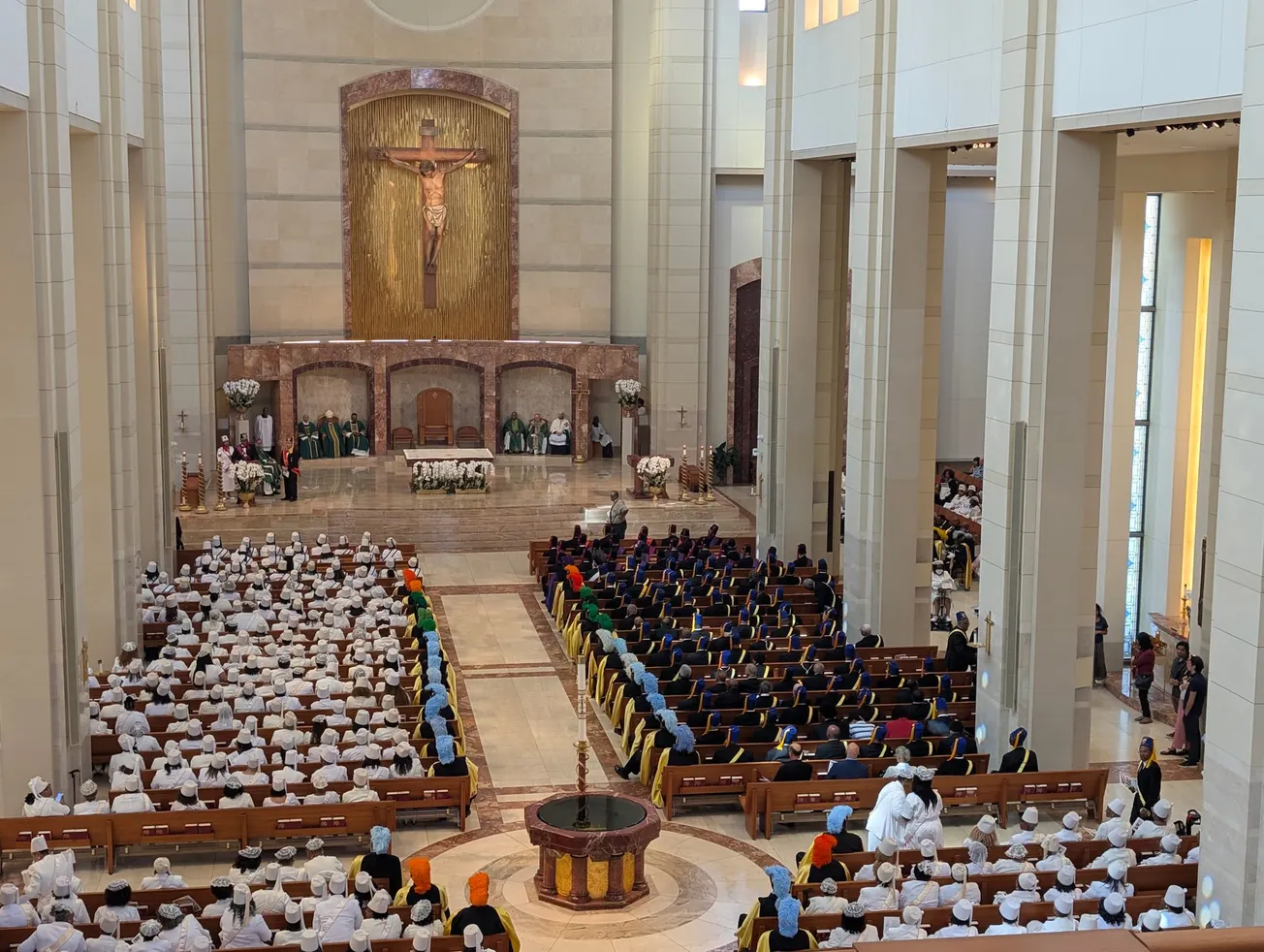
Moore’s legacy is preserved in a tangible way at the parish he once led. In 2021, Chisholm invited the Knights of Peter Claver and Ladies Auxiliary to St. Charles Borromeo, leading to the first Claver unit in the Archdiocese of New York. When the Ladies selected a name for their court, they drew upon their own history. Moore’s sister Patricia was among the 21 founding members; the decision to name the court after him represented a reunion of memory rather than a simple tribute. Thus, Bishop Emerson J. Moore Court and Council 404 was established.
“Many of us founding members believed that it was our responsibility to keep his name alive,” said Grand Lady Stacey Hodge.
“The formation of Court 404 in Harlem was an opportunity to honor his name. It was the right thing to do and our responsibility to remember him.”
It is, perhaps, the kind of answer Chisholm has been seeking throughout his reflections, the one he would have suggested to Moore himself if he’d had the opportunity: “Where do you find your joy? Where do you find the joy that is so important in order to do the work that you do?”
If Moore and his fellow pioneers could look at the state of the Black Catholics today, Steib believes their message would be one of resilient joy, unfinished business, and the encouragement to “keep moving.”
“Keep being who we are, and keep developing the Church, keep the evangelization within the Church going, and to not be afraid to say who we are and speak who we were and speak God's words to others.”
Hayes, for her part, spoke of Moore with something more simple, indeed durable, than biography, the kind of judgment that can perhaps outlast the details of any one life.
“He was a good man,” she said. “He was a good man.”
Matt Memrick is a North Carolina-based journalist with 25 years of newspaper, TV and digital experience. A graduate of Belmont Abbey College, he currently works as a freelance writer for QCityMetro.com and writes about diversity issues with an unofficial alumni group called Conscious Alumni of BAC. His blog is at consciousalumniofbac.substack.com.