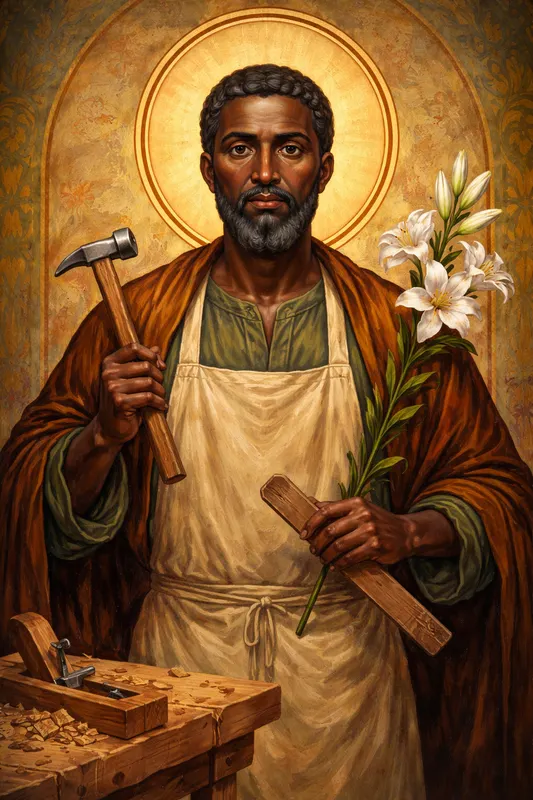
In the quiet strength of St. Joseph, the Church encounters a model of labor not as mere survival, but as participation in God’s creative and redemptive work. Scripture does not record any of Joseph’s words, yet his life proclaims a Gospel truth, that work often unseen, uncelebrated, and burdensome is sacred when united with love, responsibility, and fidelity to God.
For African-American Catholics, this truth resonates deeply. The history of Black labor in the United States—including enslavement, exploitation, exclusion, and resilience—reveals both the distortion of work under sinful systems and the enduring dignity placed within the human person by God. To reflect on Joseph the Worker, then, is to reclaim a theological vision of labor that affirms what is too often denied: Black work is dignified, Black labor is sacred, and Black lives exist fully in the imago Dei.
In 1891, Pope Leo XIII issued “Rerum Novarum” (or “Rights and Duties of Capital and Labor”), inaugurating modern Catholic social teaching. Confronting the upheaval brought about by industrialization, he boldly articulated that, rather than a commodity, work is an expression of the human person. He insisted on the dignity of the worker, the right to just wages, the legitimacy of worker associations, and the responsibility of society to uphold the common good.
For Black Catholics, “Rerum Novarum” offers both affirmation and challenge. While the document speaks universally, its application must be read through the particular history of a people whose labor built economies while their dignity was denied. The encyclical becomes, in this light, a call to repair.
To proclaim “Rerum Novarum” in Black Catholic communities today is to ask: What does a “just wage” mean in the face of persistent racial wealth gaps? What does solidarity require in communities shaped by systemic exclusion? How do we honor the dignity of workers whose contributions have long been undervalued?
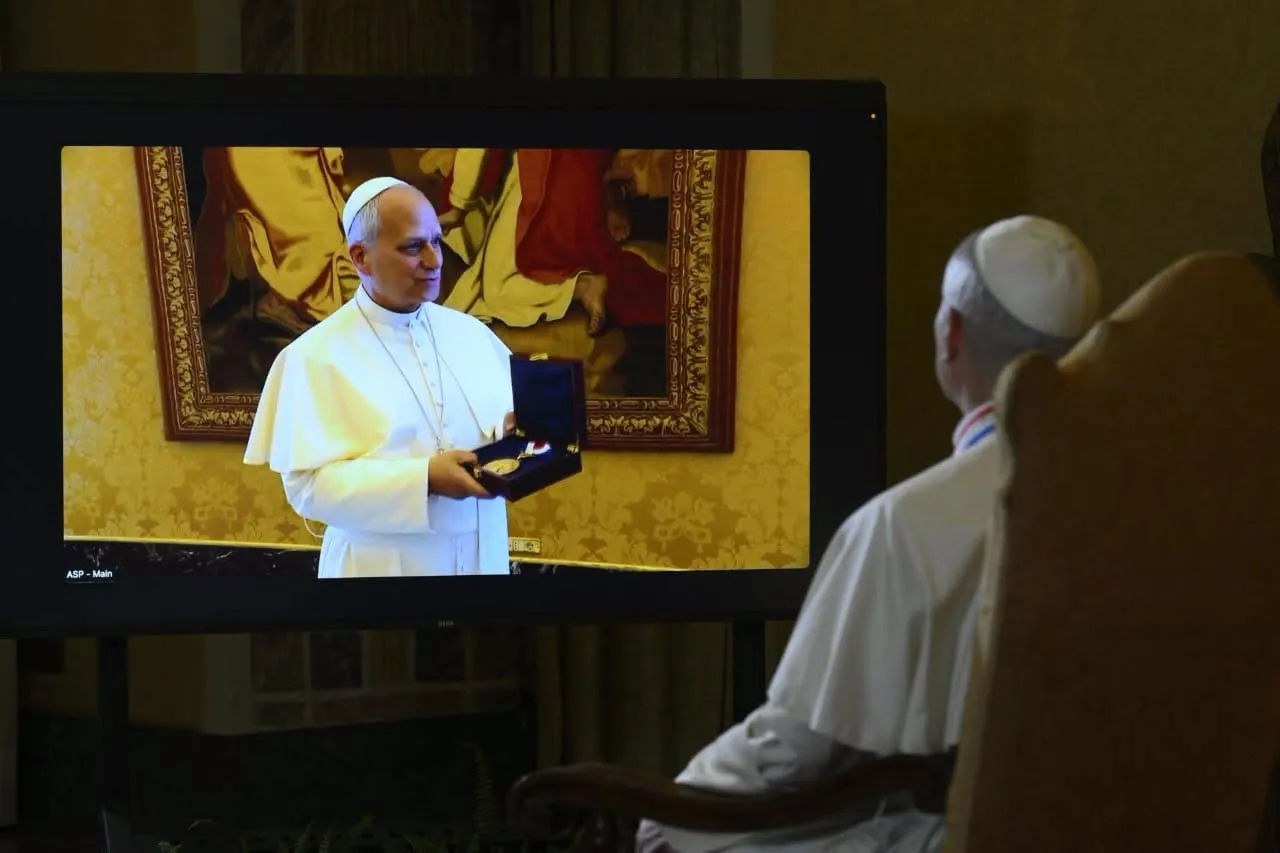
134 years later, in his first apostolic exhortation “Dilexi Te,” Pope Leo XIV—the first American pope—called the Church back to a foundational truth: “I have loved you,” spoken by Jesus in the Gospel of John. It is a social mandate. Love, after all is not abstract. It is incarnate, embodied, and communal.
Where “Rerum Novarum” provides the framework for justice, “Dilexi Te” deepens its foundation. The latter underscores that justice without love becomes transactional; love without justice becomes sentimental.
For Black Catholics, this integration is essential. The Church’s witness must move beyond charity alone toward transformative solidarity, a love that listens to lived experience, honors cultural expression, confronts injustice without fear, and builds communities of belonging and empowerment.
St. Joseph’s own life mirrors many dimensions of the Black experience. He is a laborer, working with his hands. He lives on the margins of power. He protects his family in the face of political violence. He migrates to preserve life (i.e., the flight into Egypt). He embodies what many Black families have lived: faithfulness under pressure, dignity in obscurity, and hope in uncertainty. In him, Black Catholics can see a patron and a companion.
To bring these threads together is to articulate a vision for the Black Catholic community today. From St. Joseph, we receive a spirituality of work rooted in humility and fidelity. From “Rerum Novarum,” we receive a moral framework for justice in economic life. From “Dilexi Te,” we receive a call to center love as the force that animates all justice.
Together, they call the Church to a renewed mission, honoring the dignity of Black labor, organizing for justice in economic and social life, and building communities where love is lived concretely and collectively.
This is the work of the Season of Faithful Witness—to believe rightly, live visibly, and act courageously in the public square in a world still marked by inequality and exclusion. The Catholic Church must become in this moment what it proclaims: a community where every worker is seen, every voice is valued, and every life is honored.
Through the intercession of St. Joseph the Worker, may the Black Catholics continue to lead the Church in embodying a faith that is incarnational (present in real life), liberating (restoring dignity), and communal (building solidarity). After all, in the end, the Gospel of work is the Gospel itself: that God labors with us, walks with us, and calls us to build a world where justice and love meet.
Christian Bentley serves with the Josephite Pastoral Center of the St. Joseph Society of the Sacred Heart in Washington, D.C.