
A trio of Georges Media Group newspapers have named genealogist and historian Jari Honora the 2025 Louisianan of the Year, for his work to uncover the Black Creole ancestry of Pope Leo XIV earlier this year, just hours after his election as the first American pontiff.
The papers announced the news on New Year’s Eve, after revealing a set of finalists on Dec. 30.
“Using his knowledge of Census records and other historical documents, Honora quickly discovered that the new pope had New Orleans and Louisiana Creole roots,” the Times-Picayune editors wrote of Honora who serves as the family historian at the Historic New Orleans Collection.
“Not only was this new pope the first from the United States, but his family history reflected the complex currents of migration and reinvention that is the American story.”
Editorial: Louisianan of the Year: Historian Jari Honora connected pope's history to our state https://t.co/0BCUnpV9iX
— NOLA.com (@NOLAnews) December 31, 2025
The honor from the state’s largest newspaper chain is just the latest for the 34-year-old New Orleans Black Catholic, who in November received the Elizabeth Clark-Lewis Genealogy Award from the Afro-American Historical and Genealogical Society. He was named to the Ebony Power 100 in September.
His genealogical work has focused on the history of Louisiana Creoles, a prominent ethnic group originating in the French and Spanish colonial eras of the Deep South, especially New Orleans and Acadiana. The community has since expanded via migration across the United States, including major communities in Texas, California, and Illinois.
The latter state became home to Pope Leo XIV’s maternal ancestors, the Martinez family, after leaving New Orleans during the Great Migration in the early 20th century. Though they were previously listed on the census as Black, they began identifying as White in Chicago, where Leo was born Robert F. Prevost in 1955.
Honora shared these discoveries on social media shortly after Prevost's election as pope, immediately gaining international interest and fueling a media firestorm over the first-ever pope of known Black ancestry.
Leo's brothers later revealed that the Prevost family never discussed any Black ancestry during their upbringing. In a recent English-language interview, Leo noted that he had discovered the Creoles of color in his maternal line only in 2025, after the conclave. Shortly before his election, he had described his grandparents as “all immigrants, French and Spanish.”
 Nate Tinner-Williams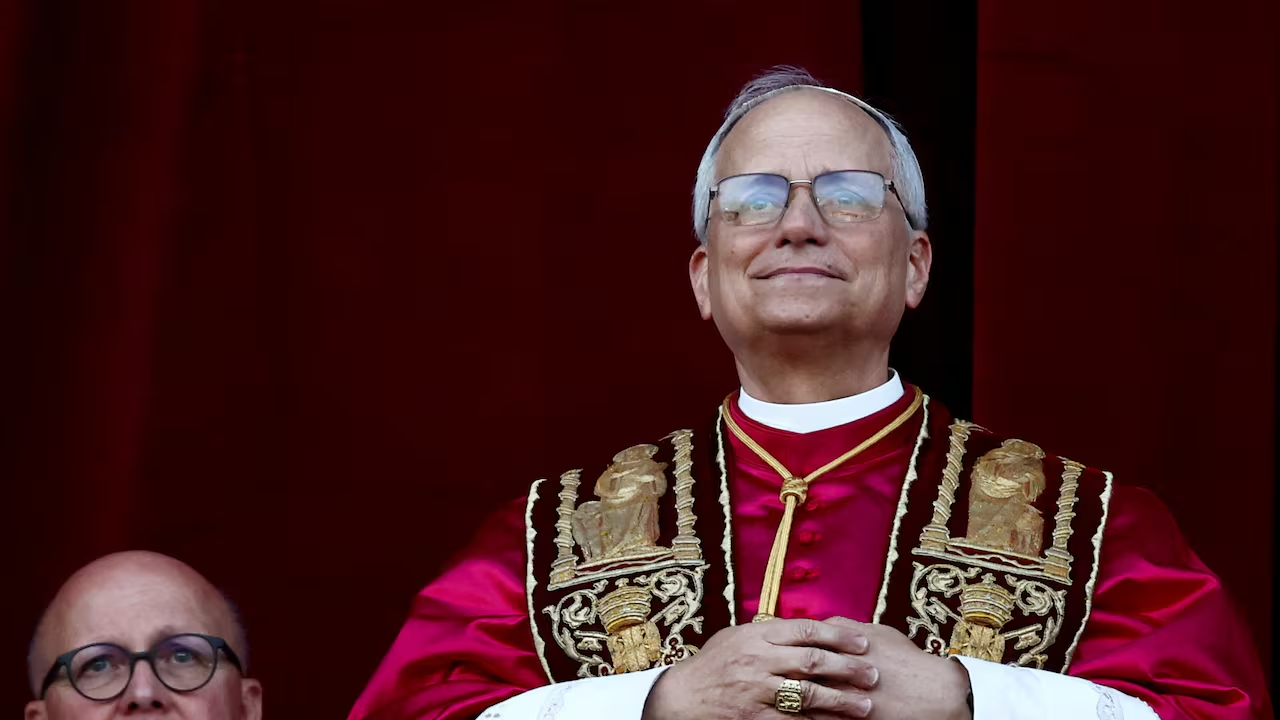
Per Honora’s extensive research, which has continued since last spring, Leo’s paternal ancestors were primarily from France, Italy, and possibly what is now the Czech Republic. His mother’s Creole roots also trace to France, as well as Spain, Africa, and the Caribbean.
Honora’s initial discovery in May was quickly followed by an outpouring of support both for his work and for the new pope, who has since been claimed by a variety of communities—including Black Catholics, African Americans, Black Creoles, and residents of New Orleans and Louisiana more broadly. Honora himself has not gone so far as to call Leo the first Black pope, though he has emphasized the importance of recognizing his connections to the Creole community.
The new recognition of Honora by the Georges Media Group strikes a similar tune.
“In 2025, there were plenty of Louisianans who made important contributions,” the staff editors wrote, “but no other Louisianan had the kind of global impact that reminded us why our state and its unique place in history matter so much.”
Nate Tinner-Williams is co-founder and editor of Black Catholic Messenger.