
The Virginia Supreme Court has nullified a retaliatory congressional map created by Democrats in the state legislature, with justices ruling that the ballot process violated the state constitution. The 4-3 decision deals a major blow to equalizing efforts in response to Republican gerrymanders in several states since last fall.
The Virginia decision, issued Friday morning amid ongoing redistricting efforts throughout the South, comes just one week after the U.S. Supreme Court weakened the Voting Rights Act in Louisiana v. Callais, a landmark decision fueling GOP efforts to dilute Black and Democrat voting power.
Writing for the majority in the Virginia case, Justice D. Arthur Kelsey—appointed to the state’s supreme court by a Republican-majority legislature in 2015—said that Democrats’ rushed effort to put a gerrymander on an April ballot was “unprecedented.”
“This violation irreparably undermines the integrity of the resulting referendum vote and renders it null and void.”
BREAKING: In a loss for Democrats, the Virginia Supreme Court ruled the congressional map voters approved last month to counter GOP gerrymanders cannot go into effect.
— Democracy Docket (@DemocracyDocket) May 8, 2026
The decision overturns the will of voters for technical reasons and gives Republicans a leg up for the 2026… pic.twitter.com/SdNokdfLIL
The struck-down Virginia map would have likely netted Democrats four seats in the U.S. House of Representatives in the 2026 midterm elections, shifting the state from a 6-5 Democrat majority to 10-1 by shifting congressional district borders.
Similar redraws have recently been signed into law in GOP-led states, including North Carolina, Florida, Texas, Ohio, and—as of this week—Tennessee. Additional Republican gerrymanders are moving through state legislatures in Ohio, Louisiana, Alabama, and Missouri, while Democrats are in the preliminary stages in New York, Illinois and New Jersey. California voters approved a new map in November that will likely net the party five additional seats.
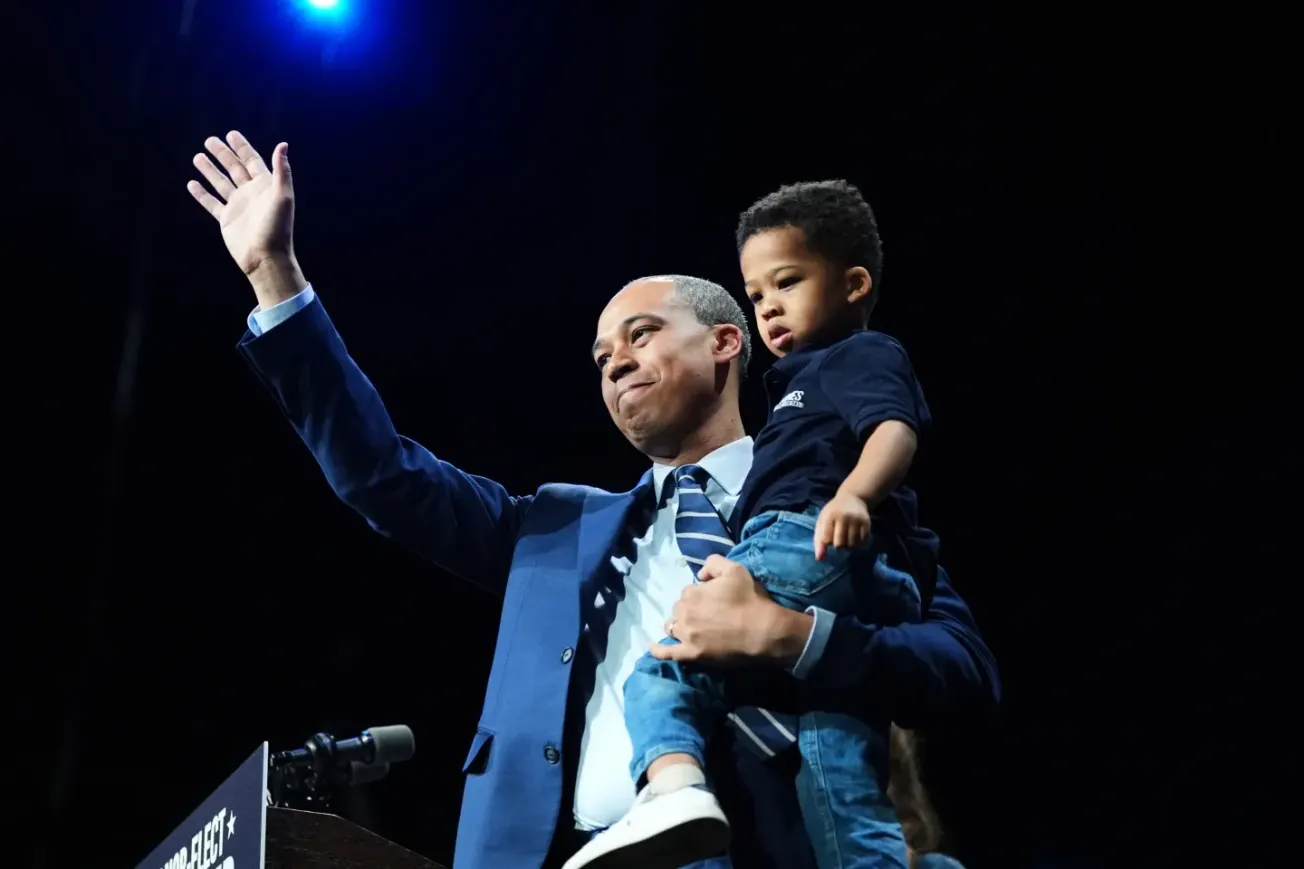
Virginia Attorney General Jay Jones, a Black Catholic Democrat, said Friday that his state’s supreme court decision improperly disregards the spring referendum, which narrowly passed before being signed into law.
“This decision silences the voices of the millions of Virginians who cast their ballots in every corner of the Commonwealth, and it fuels the growing fears across our nation about the state of our democracy,” he wrote.
“As Attorney General, it is my job to enforce the laws on the books and defend the will of the people. Before the Court, my office clearly laid out both in filings and oral arguments that this constitutional amendment process and voter ratification occurred in a timely, constitutionally-compliant, and legally sound manner.”
(2/2) This decision silences the voices of the millions of Virginians who cast their ballots in every corner of the Commonwealth, and it fuels the growing fears across our nation about the state of our democracy.
— Attorney General Jay Jones (@AGJayJones) May 8, 2026
Read my full statement here: https://t.co/enp32V4Bii
The Virginia ruling affects Democrats’ hopes to retake the house in November, with GOP gerrymanders outpacing theirs by a wide margin. It is likely that midterms will take place with nine new GOP-friendly maps to one for Democrats. This would result in Democrats needing to flip roughly a dozen U.S. House seats to win a majority.
The scene is further complicated by the U.S. Supreme Court ruling in Callais on April 29, which could allow Republicans to redistrict without the restrictions imposed amid the Civil Rights Movement. These had effectively mandated that states preserve majority-minority districts aligning with U.S. census data, which resulted in African-American districts throughout the South.
In Callais, the high court’s conservative supermajority sided with White GOP advocates who argued that the most recent congressional map in Louisiana was unconstitutionally designed to benefit Black Democrats because of their race.
In the decision, Justice Samuel Alito wrote that “allowing race to play any part in government decision-making represents a departure from the constitutional rule that applies in almost every other context.”
“Compliance with section 2 [of the Voting Rights Act] thus could not justify the state's use of race-based redistricting here.”
GOP-led states have seized quickly on the new federal ruling, seeking to eliminate African-American and Latino districts in time for the November elections. Florida led the charge, with Gov. Ron DeSantis signing a 24-4 map into law on May 4. The second was Tennessee, where Gov. Bill Lee signed a 9-0 map into law on Thursday amid raucous protests in the capitol.
Among the dissenters were Democratic state legislators, who staged a walkout amid the proceedings.
“If Republican policies are so great, why are we changing the lines to rig elections?” said Democratic State Rep. Vincent Dixie, a Black Catholic from Nashville, on the state house floor.
“Where is your humanity in this? You are deliberately silencing people who have fought for generations just to have a seat at the table.”
Powell: We ought to rename our state Washington, Tennessee, because we are doing the work of the White House.
— Erin McCullough (@IsErinThere) May 7, 2026
Now Rep. Vincent Dixie, who tries to appeal to the heart "Where is your humanity?" Says some members' parents and grandparents were beaten during Civil Rights mvmt @wkrn
The Tennessee state conference of the NAACP is suing in an attempt to block the new Tennessee map, along with the African American Clergy Collective of Tennessee and the League of Women Voters of Tennessee. Similar lawsuits have been filed in Florida, by the Equal Ground Education Fund, Common Cause, the League of Women Voters of Florida, and the League of United Latin American Citizens.
In Virginia, the attorney general says he is considering legal options to restore the new map increasing the Democrat majority, while experts say an appeal to the U.S. Supreme Court is an outside possibility.
The state-level battle aside, Virginia State Sen. Mamie Locke, a Black Catholic, did not mince words about the failure of the nation’s highest court to preserve minority voting rights. She said its stripping of the Voting Rights Act is just the latest in a long historical arc.
“Not our first rodeo with a Supreme Court determined to strip away the rights of black people: Dred Scott v Sanford, Plessy v Ferguson, Louisiana v Callais,” she wrote on social media.
“This, too, shall pass.”
Nate Tinner-Williams is co-founder and editor of Black Catholic Messenger.