
The life of an Egyptian Christian martyr is intertwined with present-day gang life in the new film, “Moses the Black.” Produced by rapper 50 Cent and directed by Yelena Popovic (“Man of God”), this drama connects the parallel lives of St. Moses the Black and gang leader Malik (Omar Epps) from different time periods and generations.
Set in present-day Chicago, Malik returns home from prison and learns that his close friend was murdered by a rival gang. Worried for his life and safety, Malik’s grandmother (Jacqueline Williams) talks to him about changing his life and gives him a holy card of St. Moses the Black for protection. Soon after, she dies of an illness.
In an attempt to kill Malik, the rival gang does a drive-by shooting at the grandmother’s funeral. Malik survives, but the trauma initiates a panic attack. He finds the holy card of St. Moses, which calms his mind. He starts seeing visions of the martyr and visits a local Eastern Orthodox church to learn more about the life of St. Moses and how to transform his life.
Meanwhile, an embarrassing incident that becomes viral on social media further heightens tensions between the two gangs, leading to shootings that kill members on both sides. To bring peace between the two gangs and in an act of repentance, Malik turns himself in to the police.
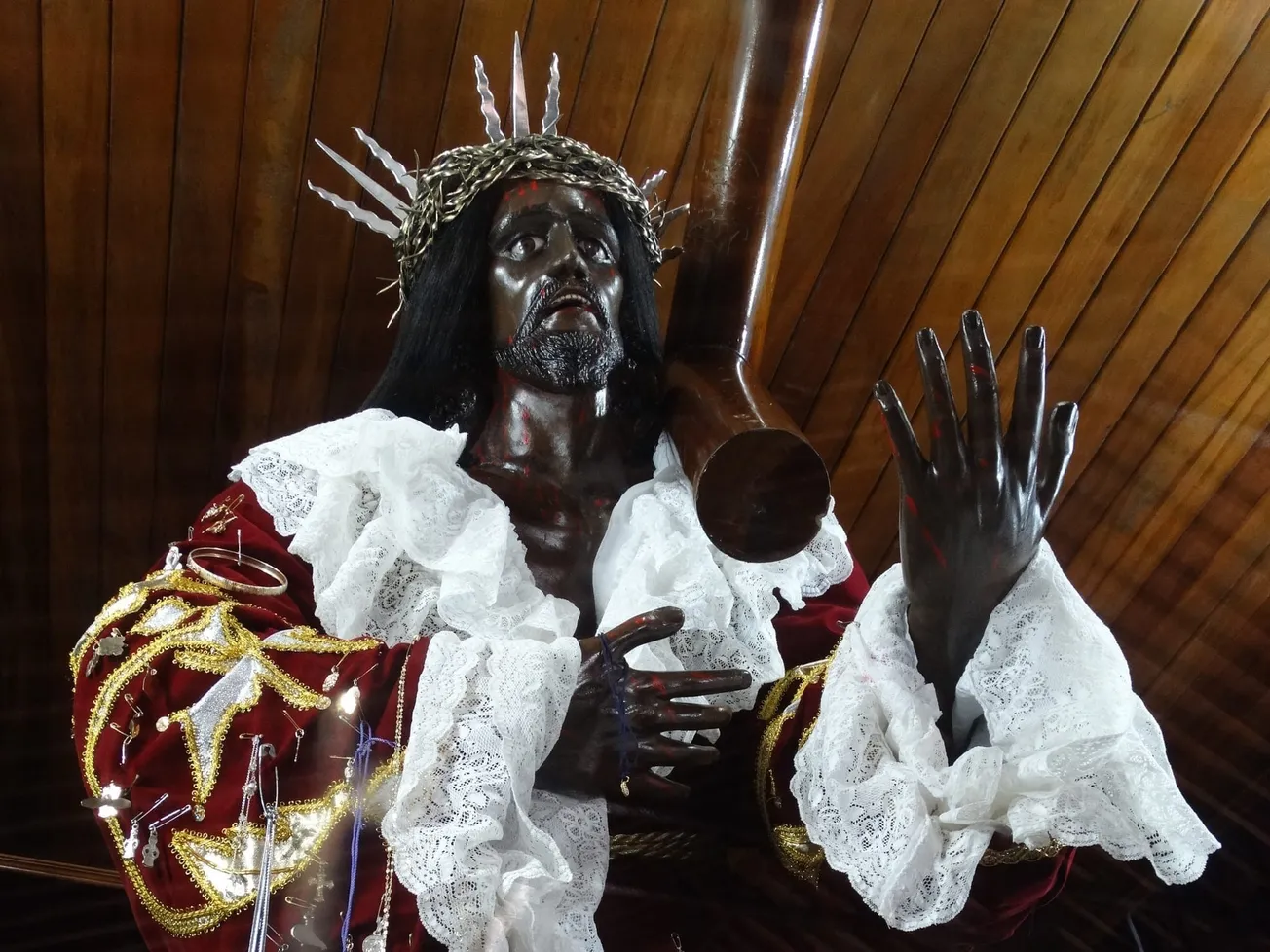
Throughout the film, we see visions of St. Moses (Chukwudi Iwuji), who lived in the fourth century. After murdering someone as a slave in his youth, his owner banished him, and he joined a gang of robbers. Soon, he became the leader of his own gang. While hiding from authorities, he found shelter with monks in a desert. Inspired by their lives of contentment and peace, he converted to Christianity, joined monastic life and became a priest.
The film highlights the challenges of leaving a life of crime, especially as an influential leader. While St. Moses had the benefit of leaving gang life by hiding away with monks, Malik still lives in his neighborhood among gangs. And as tensions between gangs grow and become more complicated, prison, while not ideal, becomes a way to escape his circumstances.
In the end, in its nearly two-hour run time, “Moses the Black” emphasizes that no matter the sins that are committed, everyone is deserving of God’s forgiveness.
Samantha Smith is a writer who serves the Archdiocese of Atlanta as a communications strategist. Connect with Samantha by following her on Substack at “The Soulful Scene,” and on Medium.