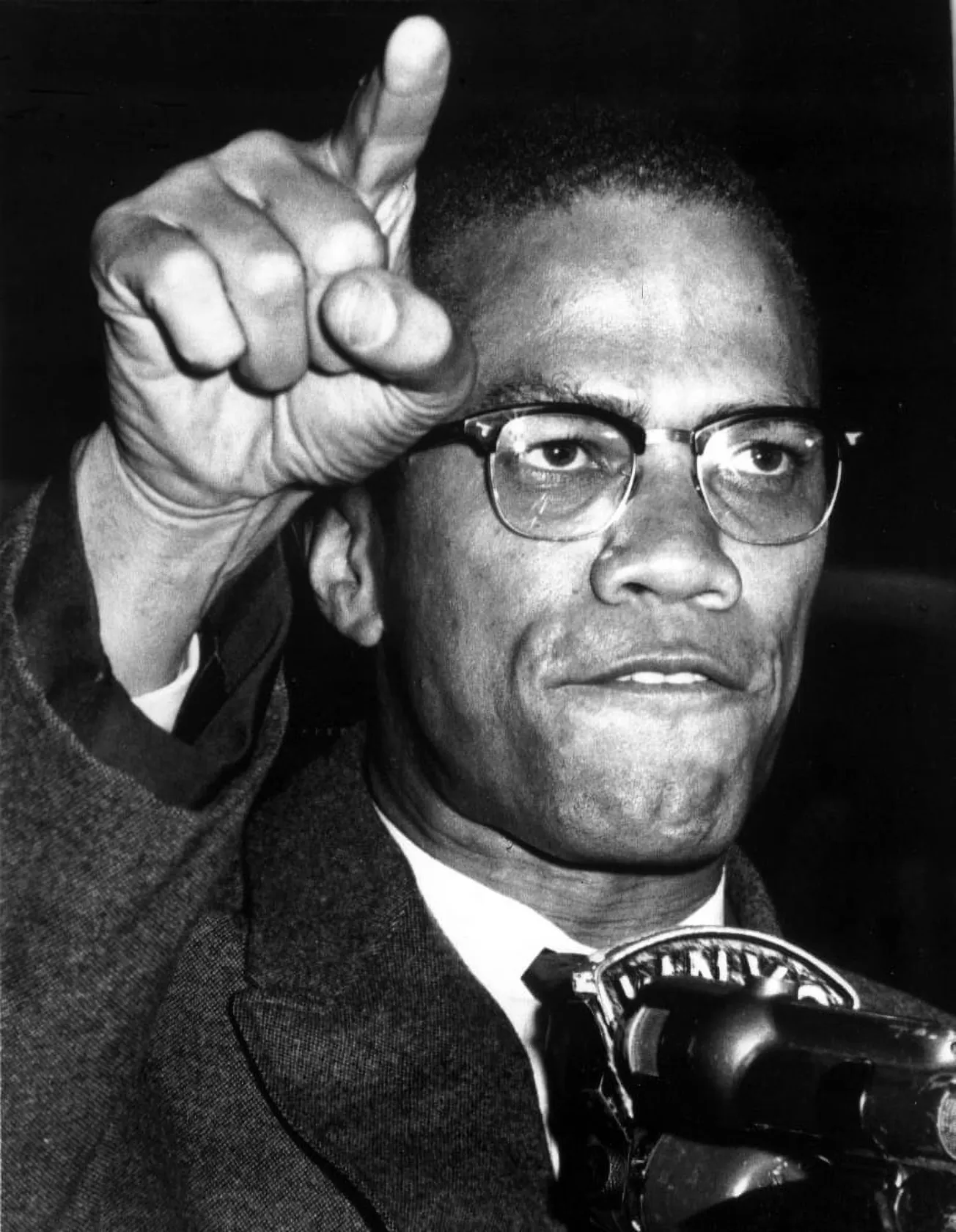
I begin this story as I often do in focused conversations. “Back in the day,” I worked as director of development for the Josephites. This is an evolution of my thinking that began when the Superior General of the Josephites, Fr Edward Chiffriller, invited me and others in the religious community to read an essay by Fr Bryan Massingale. The subject was lessons to be learned from Malcolm X in order to build and sustain a Catholic community.
By profession, and by vocation, I am a community organizer and a deacon. I am also a “Malcolmist” and continue to reflect on Massingale’s examination of the state of the Catholic Church in the United States and how studying Malcolm’s life might help us to grow the Church.
For starters, we have a vocations crisis. When looking at a problem in our society, African Americans often say something to the tune of: “If an institution suffers from a common cold, the African-American community within has pneumonia.” Within the Catholic Church in America, there are approximately 37,000 priests, and that is not nearly enough for the need. But even more tragic is that only ~250 of them are African American. Currently, there are:
- Very few vocations
- Shrinking populations in most African-American Catholic churches
- An exponential shuttering of inner-city Catholic parishes
- The closing of Catholic schools in African-American neighborhoods
- A dearth of practicing young (under-40) African-American Catholic adults, with an even smaller population of children
As the Church goes in inner-city African American communities, so goes the Church in the United States. Chiffriller and Massingale were on to something, and that something is relevant to today’s Church. The hypothesis is simple: Remember (and practice) Malcolm X’s way to “re-member” a religious institution. It is as simple as it is revelatory.
 Tim Tilghman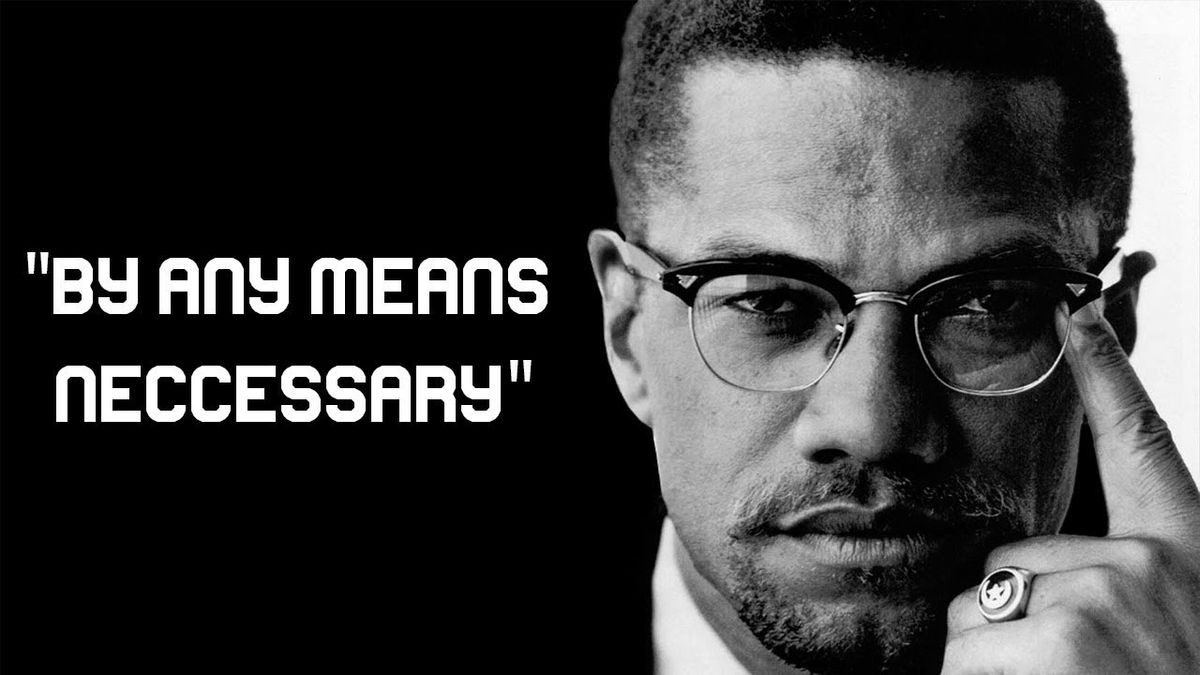
Think about this: Malcolm began his New York ministry in 1954, when the Nation of Islam had 5,000 members. His leadership helped increase its membership to more than 100,000 by 1959. This is growth of biblical proportions, like that of God’s kingdom in the Samaritan community after the evangelization of the woman at the well (John 4), or in Jerusalem after St. Peter’s Pentecost sermon (Acts 3).
It is important to look not only at what Malcolm did, but how he did it. Shortly after he left the Nation of Islam in 1964, he wrote a letter to the Honorable Elijah Muhammad with his methodology to invite people into the Nation of Islam.
“I have been following you for 12 years (since 1948) now, an active helper for about six years (here at #7). From the start I have studied those in the Bible who did most to help spread the ‘Gospel of Jesus’ and tried my best to copy them to walk in their footsteps without anyone knowing it… because that the best way to be a successful follower (and helper) to you is to imitate their tactics and efforts. I’ve kept my eye closely on the prophecy to avoid being a doubting Thomas, betraying Judas or denying Peter.
Instead, I’ve secretly tried to be a Fisherman, A Gospel Spreading Paul, a letter writing (Journalist) Paul, a Traveling Paul, a diplomat to all classes of people… and ALLAH has blessed me.
I would never tell this to anyone but you because no one else would understand me. Also, in picturing you as Moses, I’ve studied his work to see the tactics of those who helped him, and how they did it, and the area in which he was most in need of help. I studied the role of Aaron. It is for this reason that I’ve never feared to go anywhere, anytime, and represent you.”
Malcolm, in his writing, outlines simple, thorough, and practical Catholic catechesis. Read the Bible, study a favorite prophet, and apply lessons learned to invite people into community. Rev. Howard Thurman, in his book “Jesus and the Disinherited,” described such work as the “religion of Jesus,” stating that “insistence of Jesus upon genuineness is absolute; man’s relation to man and man’s relation to God are one relation.”
Malcolm’s way brought thousands into the practice and discipline, using the great apostle, St. Paul the Apostle, as his model. Under Malcolm’s influence, Cassius Clay became Muhammad Ali and changed his behavior to become an internationally recognized statesman—and he is but one example. On street corners even today in many African-American communities across the nation, we see highly disciplined, well-groomed, articulate men distributing copies of The Final Call and inviting others into relationship—essentially distributing letters like those composed by St. Paul, touching communities that he could not visit.
Malcolm, in emulating St Paul and following Thurman’s “religion of Jesus,” modeled how to invite folks back into the community we call Church and form them through practice to be confident, articulate evangelists. This is no different than the methodology of the worldwide Cursillo community, or any of our Church’s ecclesial movements.
As I stated previously, we are experiencing a vocations crisis in our Church. Malcolm manifested methods that can be used to make the Church a model community for new members, simply and systematically addressing the crisis at its root. Malcolm traveled our nation and the world with the ideal of justice for all and invited all to take real and tangible action to spread love in the world. In ancient times, some were surely surprised by the witness of the Samaritan woman at the well and of St. Peter as they boldly invited people into community. In a time of crisis, why not do as Malcolm did—preaching, spreading, and living the word in the neighborhood, inviting others to do the same?
Why study and follow Malcolm’s way? In the African-American community where he is known, he is revered. As he evolved as a world leader, a champion for justice, and an evangelist, his allies expanded to include Dr. Martin Luther King Jr., Rep. Adam Clayton Powell Jr., and countless other champions of justice and human dignity. If our evangelization matched his effort to grow the Nation of Islam, the results would be remarkable. Imagine what a twenty-fold increase in membership would do for the Church in our African American community and beyond.
If we can imagine and practice diligently and faithfully, we can re-member our Church in these United States. The joy is in the action! What happens if we approach the world as St. Paul, St. Peter, the Samaritan woman, and Malcolm did? We can only see when we choose to look deliberately. This is not a Black thing. It is the Catholic thing to do. So let’s get busy.
Deacon Timothy E. Tilghman is a permanent deacon of the Archdiocese of Washington, currently assigned to St. Teresa of Avila Catholic Church. He has two master’s degrees, one in public policy and the other in theology. He is the author of “Going to the Well to Build Community: A Pastor’s Guide to Evangelization.”