Seeing another Black person in Vermont always is a pleasant surprise. In the top five Whitest states in the U.S., three are in New England—with Vermont among them. In these moments, I often think to myself: “I can’t believe you’re here! Why are you here?!” I don’t think the next Harlem renaissance is going to happen in Burlington anytime soon, so it’s always comforting to have someone relate to the exhausting reality of living as a Black person in White America.
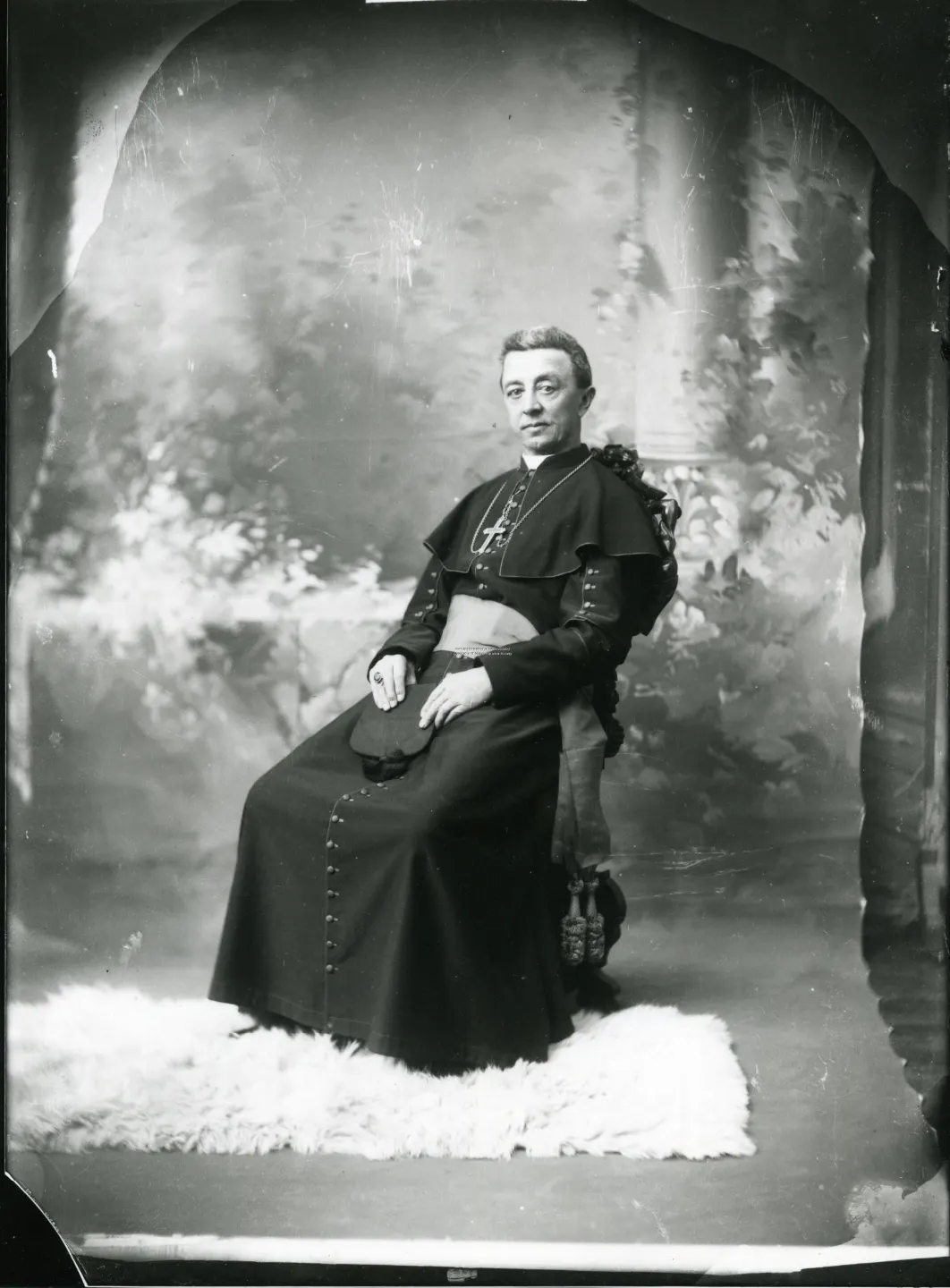
Given this, when I found out that the first African-American Catholic prelate was an early Bishop of Portland in Maine, I had to learn more about this James Augustine Healy. I first learned of him in 2024 when I picked up “God’s Men of Color,” a 1955 book of biographies by Fr Albert Foley, a White Jesuit in Alabama, about various Black men who had been ordained to the priesthood in America. Needless to say, I was shocked to read of Healy’s extensive ministry in New England.
Healy was born April 6, 1830, to Mary Eliza Clark (or Smith), a mixed-race enslaved woman, and Michael M. Healy, her White Georgian owner. He had bought Eliza and her family and lived with her as husband and wife (though interracial dating and marriage were not legal at this point in the state). Since Eliza was enslaved, James and his nine siblings were legally considered chattel as well and didn’t have access to proper education in Georgia.
Because of this, Michael took the children north, first to New York, and later New Jersey and Massachusetts, where James was one of the first students at what is now the College of the Holy Cross in Worcester. Here, Healy was baptized as a Catholic. His time at Holy Cross proved fruitful and memorable, and after graduation he headed to the Sulpician seminary in France, where he was ordained in 1854 for the Diocese of Boston.
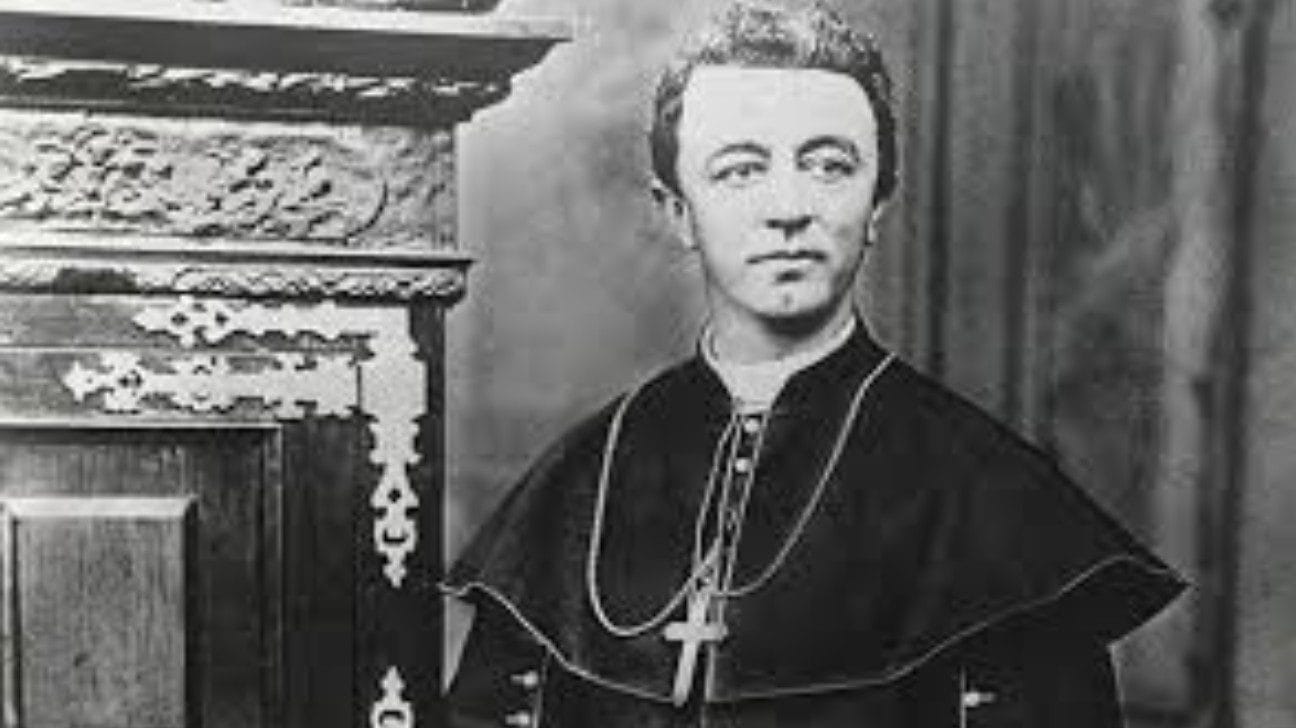
In Massachusetts, Bishop John B. Fitzpatrick—Healy’s educational patron and a fellow alum of the Sulpician seminary—made him his secretary and the pastor of St. James Catholic Church. In 1875, when Pope Pius IX created the Diocese of Portland in Maine and needed a new bishop, Healy was his man.
A couple of things stood out to me about Healy. One was his navigations of Blackness especially as a biracial man who at points passed as White. Also his journey from slavery to freedom, the cultural whiplash of going from Georgia to France, and spending the last quarter-century of his life in Maine. But also notable is his episcopacy itself, in which he was well liked by those in Portland, and known for paying medical bills for the sick and creating housing for orphans.
Healy is often taken simply as a White-passing Black man, never engaging with his identity as a person of color in the 1800s. But it seems that he did engage with his Blackness, at the very least in the confessional booth. In “God’s Men of Color,” Fr Foley recounts multiple stories wherein penitents confessed their racism to Healy, after which he gently confronts them on their ignorance and sends them on their way. Healy is reported to have said to one specifically:
“Take a good look at your bishop. Is there anything wrong with being a nigger?”
Now, how hagiographic this account is is a different question. But Healy did work on the committees for Black and Indigenous missions at the U.S. Catholic bishops’ Third Plenary Council of Baltimore—which would be a hard job to do without some self-realization of one's Blackness.
Regardless, I think it’s cool to see a glimpse of Black (and Black Catholic) history in a place like northern New England.
Tulio Huggins is a campus minister at Dartmouth College, where he graduated from in 2023. His hobbies include writing, baking bread, and playing rugby. You can follow him on Instagram at @tulioisreading.