
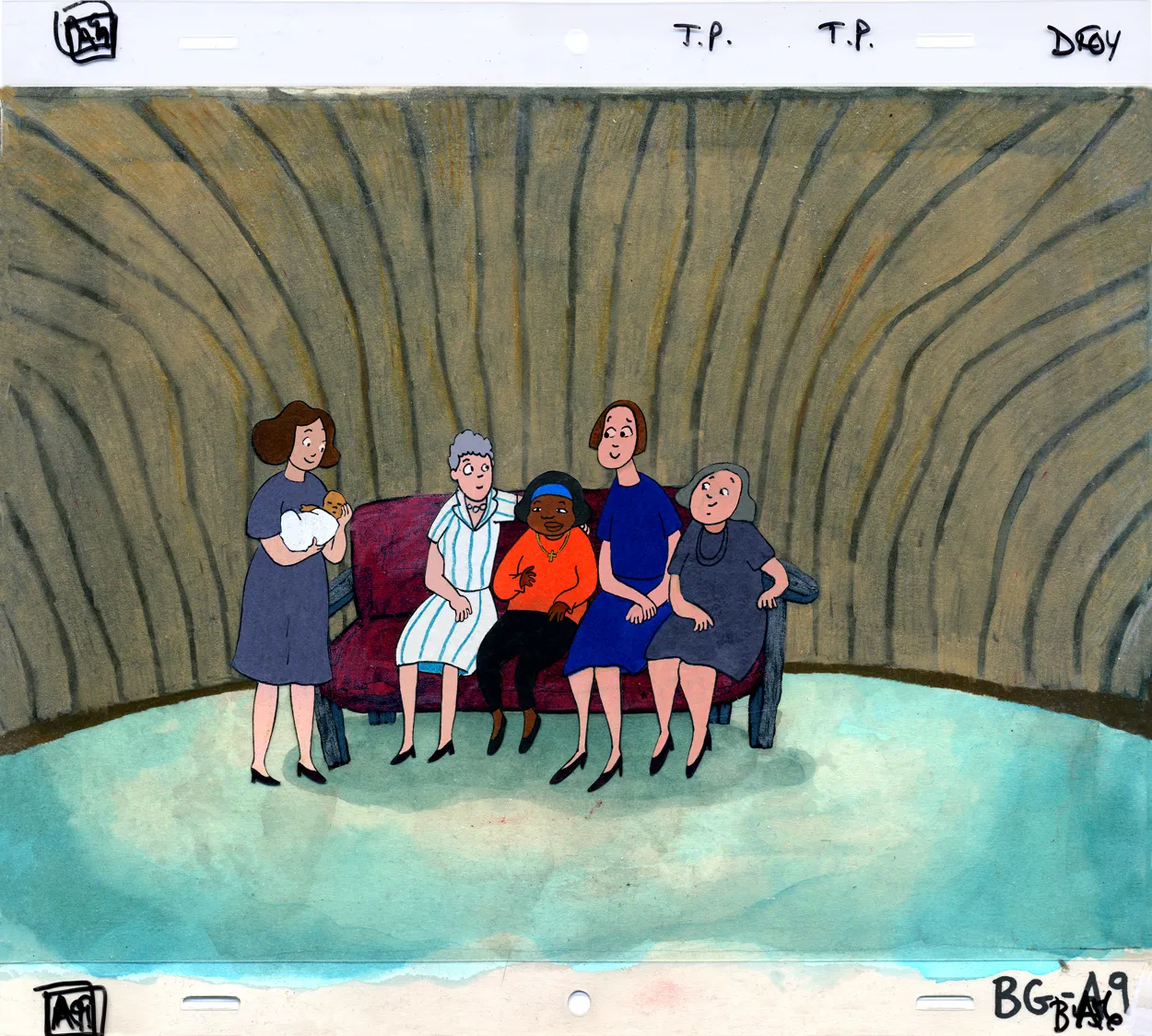
“Champagne,” the 1997 animated short film by the late Michael Sporn, is a rarity. It depicts nuns in a flattering light—a loving, earnest light. Too often these holy and courageous women of God are sexualized or reduced to evil caricatures in popular media. The nuns in this short film are not the focus, but their portrayal is nonetheless part of what makes the film such a rare enjoyment.
The titular heroine is a 14-year-old Black girl, and she also serves as the narrator. Champagne's mother is incarcerated, and she was placed in a Catholic foster home—My Mother’s House, for children with parents in prison—after her grandmother was no longer able to care for her. She describes the nuns as “God’s blessing on me, because without them, where would I be now?” She credits My Mother’s House for protecting her from the abuse and neglect she might face elsewhere.
Champagne is a gifted storyteller, relaying the sad circumstances of her life with candor. Aside from her storytelling prowess, she is at once endearing, with a vibrant personality and sense of humor. Her experiences don’t necessarily invite pity, but they do make you wish she had been dealt a better hand. At 14, she is acquainted with the kind of misfortune many adults never know. But any bitterness about her early years is nonexistent.
She certainly wishes her mother wasn’t in prison, but this desire is surpassed by the compassion she has. Her mother’s crime was murder, committed in self-defense. Champagne understands her mother’s motive: She was high at the time (which should have been a mitigating factor), but she also recognizes the irreplaceable value of a life. As she poignantly says: “You can give someone a thousand years, but it still won’t make up for a human life.”
 Animation Obsessive Staff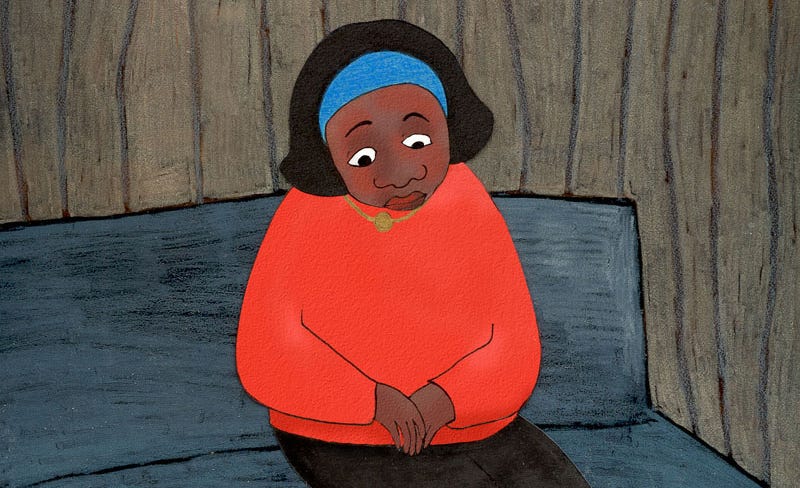
Prison has actually improved her mother’s life by giving her goals to strive for. Champagne even charms the other inmates on her visits to the prison. Her personality mirrors her mother’s, something she is quite proud of. The artwork of the film further brings Champagne’s voice to life with a childlike simplicity that brims with warmth. In it, we see a palette of striking colors and silhouettes that seems to spring from the paintbrush of her voice.
Sporn, the director of “Champagne,” was not a household name during his lifetime. Though his work is still celebrated today, it is overshadowed by that of the major studios. And unlike the heavy hitters during his era, his work featured Black characters. He adapted “The Red Shoes” fairytale with a Black ballerina in 1990. His delightful “Jazztime Tale” (1991) is a story of a lifelong interracial friendship that first blooms in early 20th-century Harlem; it also pays tribute to Fats Waller and stars Ruby Dee.
“Champagne” is now almost 30 years old, but it serves as a powerful reminder of all the real-life children like Champagne and those who are much worse off. The reminder is all the more necessary because this type of story isn’t usually told in popular media, as the capable storytellers are denied the opportunity. “Champagne” is also vital because Black children are so routinely brutalized, their innocence and their very lives stolen from them.
Each time I watch the film, it never fails to make me smile or fill me with hope. In it, I see a vision of our world as it could be: A village raising children; a family that extends past biological connection; the immeasurable dignity of children being upheld.
Sometimes I am guilty of forgetting that the children I love are a gift to me. I do remember looking at one of my nephews and aching because so many children are deprived of the love, nourishment, education, safety, and freedom that he and all my cousins, nieces, and nephews enjoy. It is a persistent ache. But what I do not take for granted is the abundant joy of a child’s smile or laughter being lavished on me. That is where I feel God’s presence the most. I see God when I look at Champagne too.
Our Lord tells us that we must become like children to enter the Kingdom of God. To maintain a childlike trust in our Father who always lovingly gazes on us as parents do with their babies. I take great comfort in the knowledge that no matter how old I am, I will always be a child in the palm of God’s hand. What is needed is a return to that childlike simplicity. To be as wise as Champagne Saltes.
Simoa Barros is based in Boston, frequently surprised by God's stubborn love and mercy, and a big fan of mystery, beauty, myth, and fairy tales.