

I was heartbroken earlier this year when I discovered that Dr. Janell Green Smith, a 31-year-old Black scholar, nurse and maternal health advocate, passed away on New Year’s Day. She died from complications related to the birth of her first child. Green was diagnosed with severe preeclampsia and delivered her baby at 32 weeks via caesarean, which is standard protocol for treating preeclampsia. Days later, her incision scar ruptured, and she was rushed to the hospital, where she unfortunately did not recover.
What hit me really hard about Dr. Green’s death was the fact that she spent her life’s work advocating for healthier outcomes for Black mothers and combating racial disparities in maternal mortality. While the exact facts and circumstances that led to Dr. Green’s death are still not known, what we do know is that the United States continues to face a maternal mortality crisis, and African-American women are taking the brunt of it.
Taking a deep dive into the life, love, and legacy of Dr. Janell Green Smith as a certified midwife and Black maternal health advocate. https://t.co/3igsEGR91d pic.twitter.com/WacwBmSQBQ
— Her Agenda (@HerAgenda) January 13, 2026
A 2023 study found that while all other races had decreases in maternal mortality, Black women saw an increase. In addition, Black women have a significantly higher likelihood of maternal mortality than any other race. Similarly, Black women routinely have their pain dismissed in hospital settings, especially in labor-related scenarios. In November 2025, a video from Dallas Regional Medical Center in Mesquite, Texas, went viral, depicting a White charge nurse disregarding a young Black laboring mother who was in excruciating pain.
The mother, Karrie Jones, ended up delivering her baby in the hospital’s emergency room waiting area, where she waited in a wheelchair for 30 minutes without care. The charge nurse was fired and the hospital committed to staff training, but let’s be honest: I think the issue requires digging deeper than a day of corporate jargon videos that employees will forget by the next week. There are real changes that need to be made in our healthcare system to safeguard and protect human dignity. It is not enough to cover the gaping wound with the band-aid of staff training. An entire overhaul of the system is needed.
One immediate need for improvement is the relationship physicians have with patients. In healthcare ethics, there are several models of physician-patient models. To paint an extremely simple picture, in an ideal world—and often in ancient medical texts—the physician would collaborate with their patient to prioritize and ensure their good. Today in the United States, we get 5 minutes maximum with our doctors, who really know nothing about us and half of the time dismiss our symptoms as mental health issues.
In a more ancient model, the physician worked closely with the patient and operated in a small community. Given this, they would have less patients overall, which provided the opportunity to know them better and see them more often. A care plan was developed with the patient and had a larger emphasis on physical observation of the patient and their symptoms. The assessments were more holistic, and the follow-ups were often longer. Today’s standard of physician care is in stark contrast to what has largely been a plan that prioritized the good of the patient. Now, we have a more paternalistic model, wherein treatment plans are not based on the good of the patient but largely on what insurance is willing to cover.
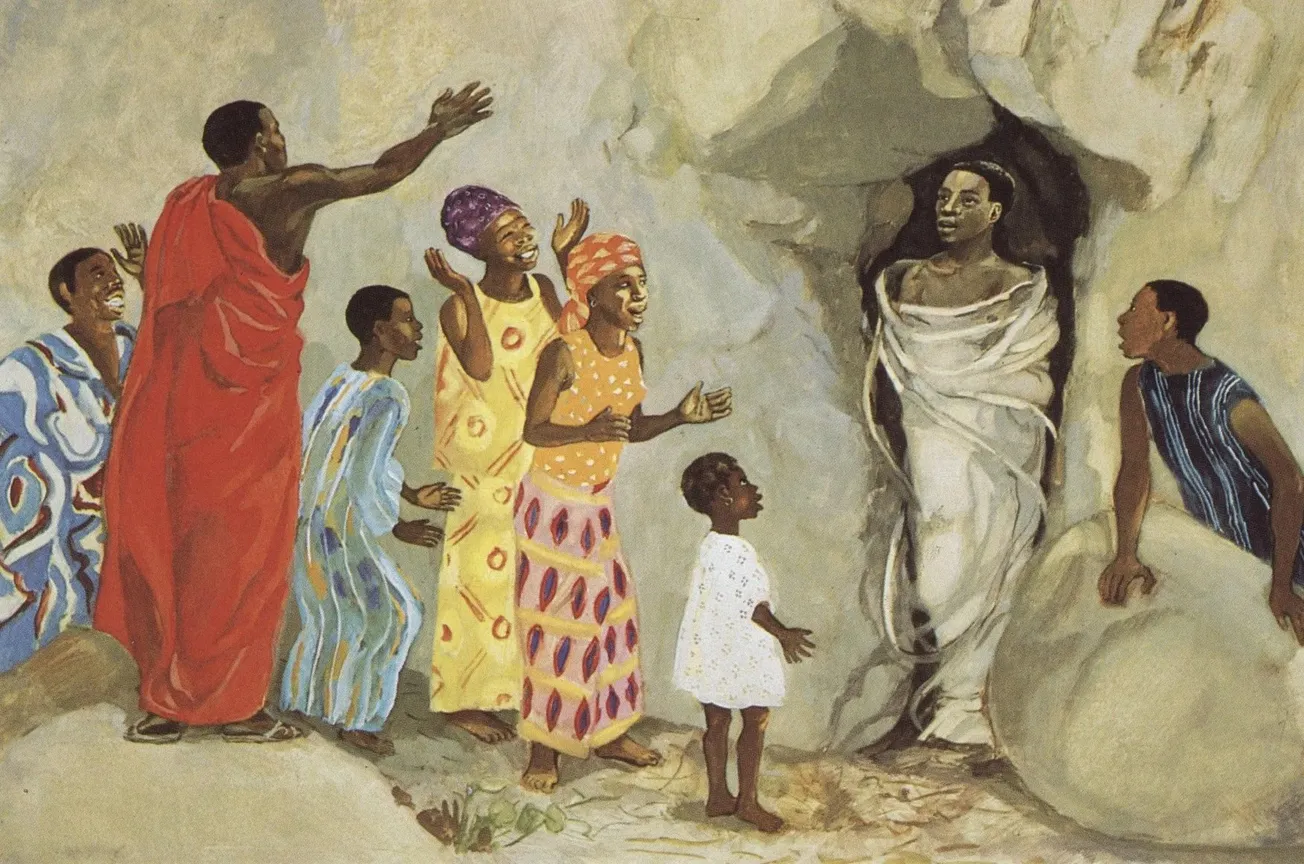
 Simonetta Pulciani
Doctors in the United States operate in a system of distrust. Here, when a White physician works with a Black patient, it is likely that the physician will not listen adequately to the patient and that the patient will be (understandably) wary of what the physician might say or do. This, combined with the general lack of familiarity between patients and doctors in our system, can result in disaster. For example, as with Karrie Jones in Texas, genuine signs of pain in a Black patient may be (and have historically been) attributed to standoffishness by White doctors and nurses.
Another pressing issue is that our healthcare system is compartmentalized and corporatized. Everything in the American healthcare industry is money first, patient last. Our physicians see an exorbitant amount of patients per week, leading to medical staff burnout. Hospitals and doctor's offices are now designed to get people in and out like fast food chains. This is a hindrance to the number of patients that physicians can truly work alongside (or even remember the names of). Instead, the physician often relies on charted notes, lab results, and vital readings—which do not paint a full holistic picture—to determine a plan of treatment. In addition, the physician is often tied down by what insurance will cover as opposed to what would be most effective.
All of these circumstances, when taken together, paint a complex picture of how African Americans are falling through the cracks in our healthcare system. If we want to fix the wound, we must treat the rupture, and that requires courageously asking ourselves a question: How can our healthcare system be transformed to promote dignity and human flourishing?
Briana Jansky is a freelance writer, author, blogger, and Live Action North Star Fellow. She graduated summa cum laude with a B.A. in Philosophy. She is currently working toward an M.A. in theology and a certification in Health Care Ethics from the National Catholic Bioethics Center.





.jpg)