Sometimes, the greatest ministry you can do is simply let people know that their presence is deeply welcomed in the presence of God.
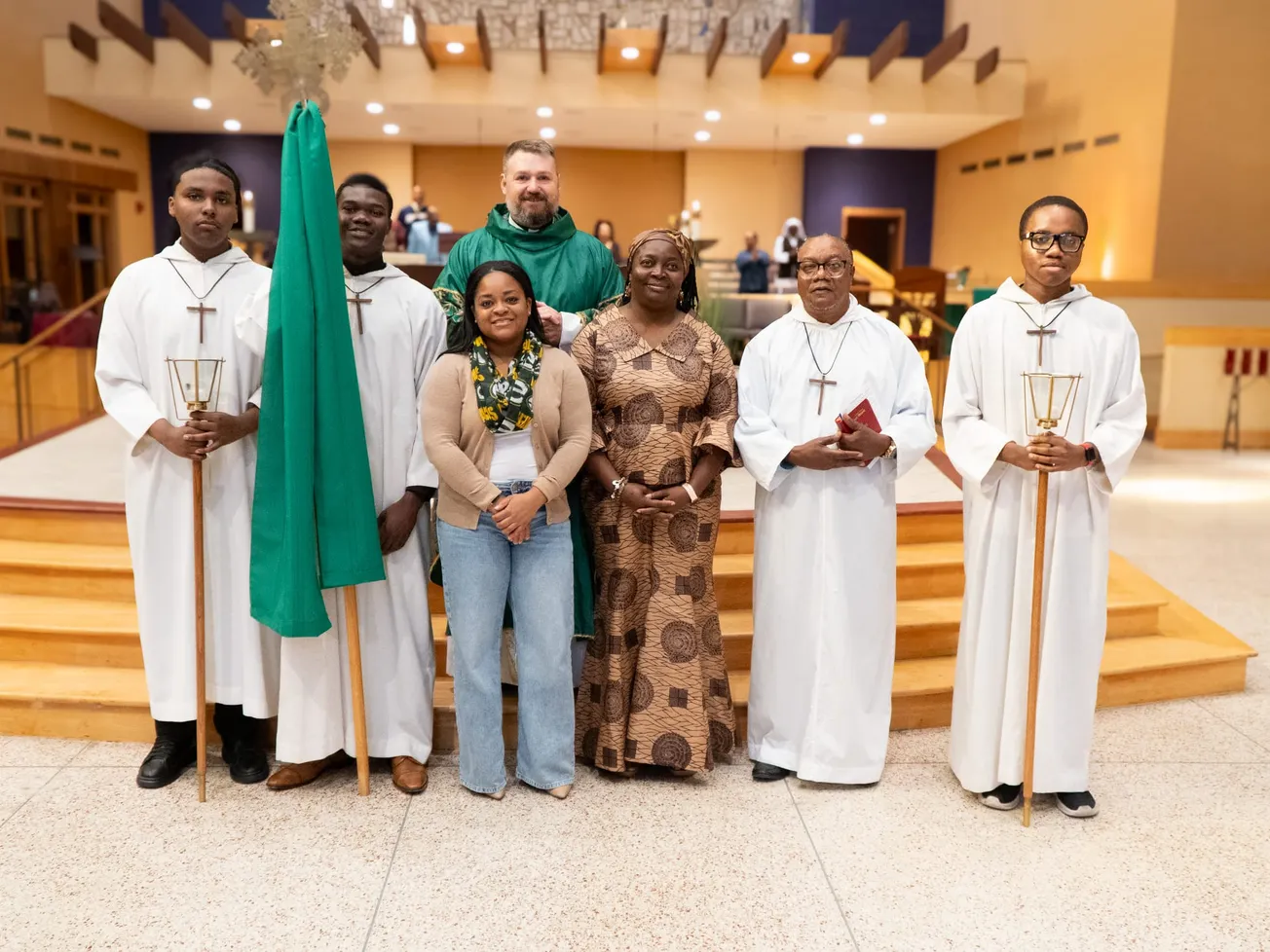
Just blocks from the legendary Mr. Perkins restaurant, one of Milwaukee, Wisconsin’s best-known Black-owned eateries, which regularly attracts NBA teams and clergy alike, stands All Saints Catholic Church. Just as Mr. Perkins brings people together over a comforting meal, All Saints brings people together around the Lord's table.
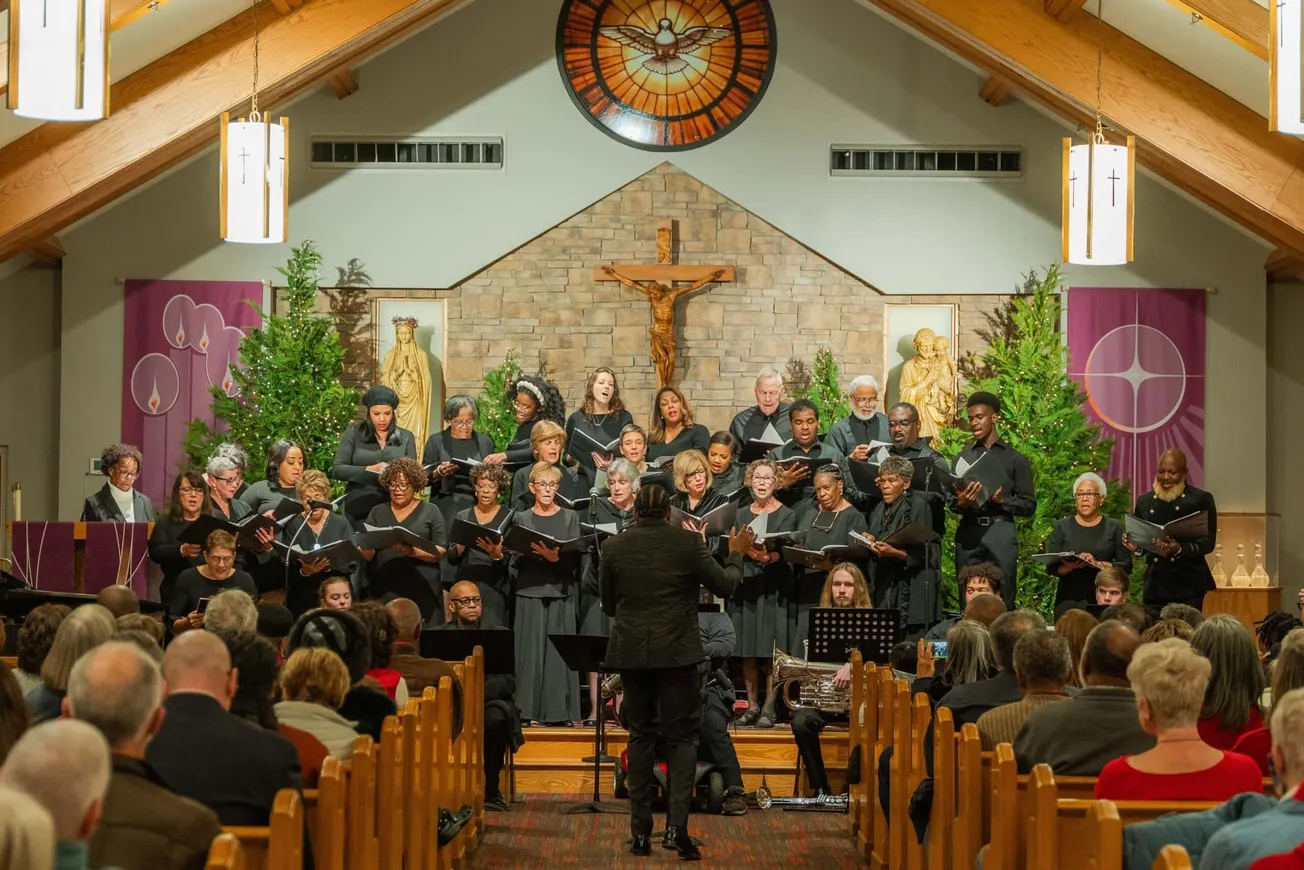
All Saints has mastered the ministry of hospitality, anchoring the city’s predominantly Black North Side in compassionate, accompanying love. This warm hospitality extends from the moment its gospel choir sings its first note of Mass to the steps people take exiting the church two hours later.
“There is a welcome. I would describe it as a vibrant, welcoming spirit. There's vibrancy, there's warmth,” said Fr. Michael Wolfe, who serves as pastor of All Saints and three other parishes on Milwaukee’s North Side.
“[There’s] a welcome of any newcomers or guests, and then they are invited to share who they are and how they got to be there. It just breaks down barriers. There's something to be said about having an entire group of people turn to you and say, ‘It's good that you are here.’ I think it just lets us relax and form a part of the assembly that's about to make this spiritual offering together.”
For more than a quarter century, Sheila Bost’s musical voice has helped welcome visitors and the Holy Spirit through gospel music at Mass. Her music has become a tapestry, woven together by the rich traditions of several North Side Catholic parishes from the 1990s.
She credits a woman named Arlene for using gospel music to make many parishes into one vibrant, faithful home.
“In 1996, we were all combined together. Arlene Skwierawski did a great, fantastic job of uniting the choirs, which helped to unite the congregations,” said Bost, who now leads the choir. Some of its members have sung at the church nearly every Sunday for decades.
She also credits numerous members who have since passed away with helping set the parish’s culture and worship experience through the choir, which continues to work as an avenue for people to encounter Christ in the liturgy.
“Our worship, our prayer, our praise is not limited to one aspect of life,” she said. “It's all-encompassing of all of us in every way possible. That's how we just enjoy one another, a group of us, all of us, who've just been together for years and years and years.”
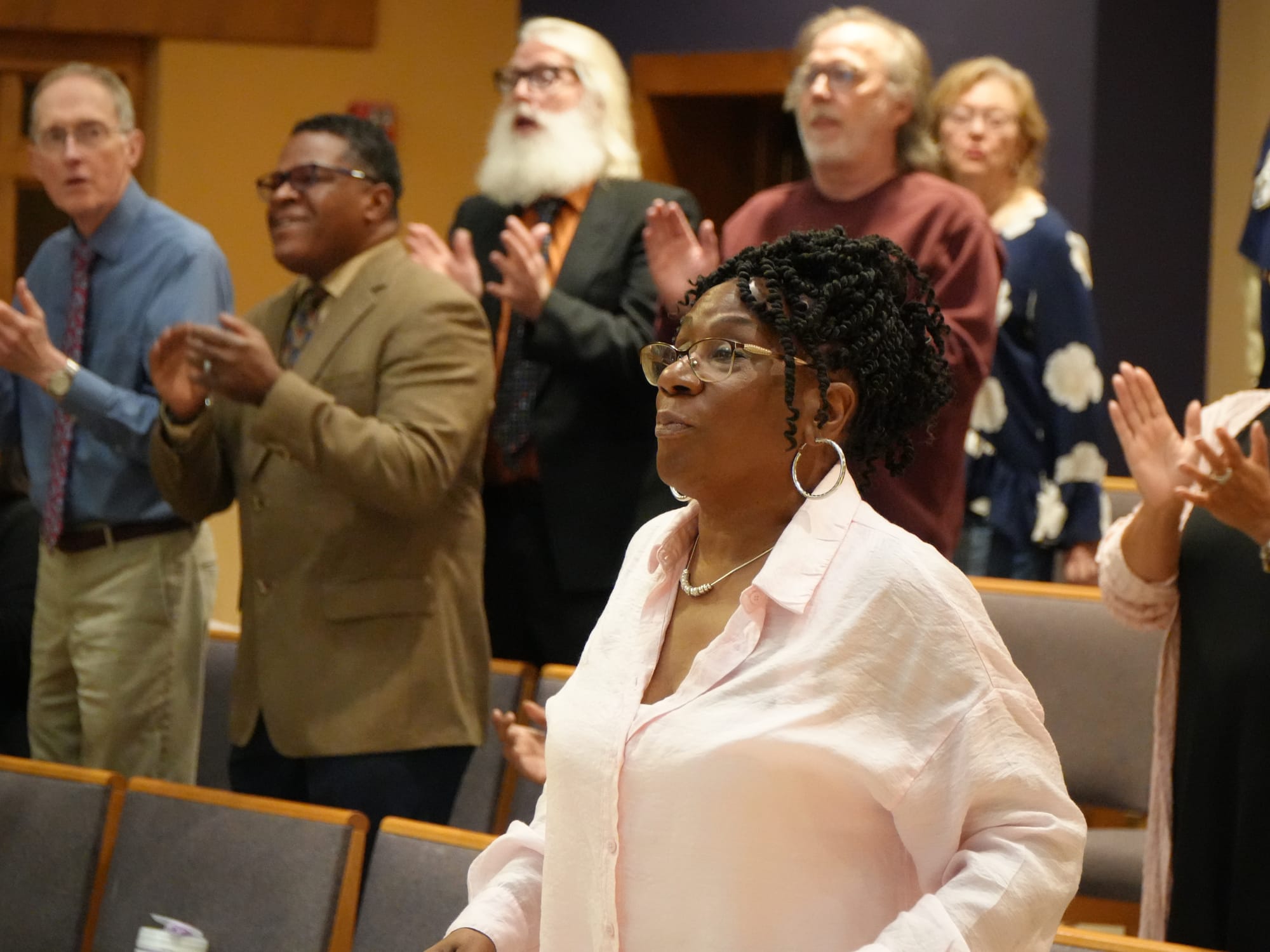
Offering a faithful welcome to strangers and decades-long parishioners of many ethnic backgrounds is deeply important to parish leaders. They recognize the struggles facing a city regularly ranked among the most segregated in America, including a nearby zip code where residents are less likely than any other in the United States to escape poverty.
“It's like being welcomed to a big family that's been through a lot together,” Fr. Wolfe said. “We have people that have been through a lot with regard to equal housing, with the fight for racial justice within this city. There's a parishioner from All Saints who actually founded America’s Black Holocaust Museum in Milwaukee. His son is still very involved.”
Fr. Wolfe adds that the parish’s welcome has also focused on opening its doors to help African immigrants and refugees who have chosen to call Milwaukee home.
The parish aims to take each person who comes in, bring their sense of how God works in their life, and bring it to the table of the Eucharist on Sundays and to everything the parish does, including the food pantry and hot meal program, which is its most active ministry of practical compassion.
The parish is also home to a weekly Zoom-held Bible study, active Knights and Ladies of Peter Claver groups, and a dedicated group of St. Vincent de Paul volunteers.
“Bringing your true self and coming as you are, and allowing your spirit to lead you and to guide you into who you are, it just for me allows our praise and our worship, our experience [to have] just a whole lot of genuineness, a time where you can kind of put aside all the other stuff that you have and just be you and praise God,” Bost said.
She says the way that people dress, get involved in the Mass and beyond, and the way that the Spirit moves them, reflect how All Saints aims to create a space for simply being yourself and offering it to God.
“I think, liturgically, [it’s] a beautiful thing,” Bost adds. “The teaching of the church to the understanding of the offering of the Mass is that we offer up to God all that we have and are. It doesn't make sense to come to that being anything other than who and what you are.”
Altogether, Fr. Wolfe believes the Mass and the parish’s other ministries at All Saints offer a chance for the time one to escape the worries of the world and for what he calls “Kairos”--God’s time in Greek–to take root in the heart.
“This [is] a different time, the finding of joy and peace, even in the face of tribulations, difficulties and darkness out in the world,” he said. “It really is an encounter with feeling, not just saying, but feeling that God is good all the time. And all the time. God is good.”
Jay Sorgi, a Marquette University graduate, is a freelance journalist for a dozen Catholic and nonprofit publications across America and was a news and sports journalist for more than a quarter century. Jay also published "Greater Than the Games," a study of Olympic host bids through the lens of his hometown of Milwaukee. He, his wife and son live in Philadelphia. Jay can be reached at sorgibooks@gmail.com.