
1 Peter 5:8 gives us a warning:
“Discipline yourselves; keep alert. Like a roaring lion your adversary the devil prowls around, looking for someone to devour.”
That scripture came to mind when I watched an excerpt of Charlie Kirk's last show on Facebook, which had 25 million views as of early December.
I don't think it's a coincidence that Kirk, a Christian nationalist, repeatedly used language similar to Peter's description of the devil, speaking of “Black criminals” who are “prowling” around looking to kill White victims. He is not the first Christian to speak like this. As I'll explain, similar inflammatory rhetoric from a prominent Catholic in the late 1990s has also shown to be dangerous and deadly to Black Americans.
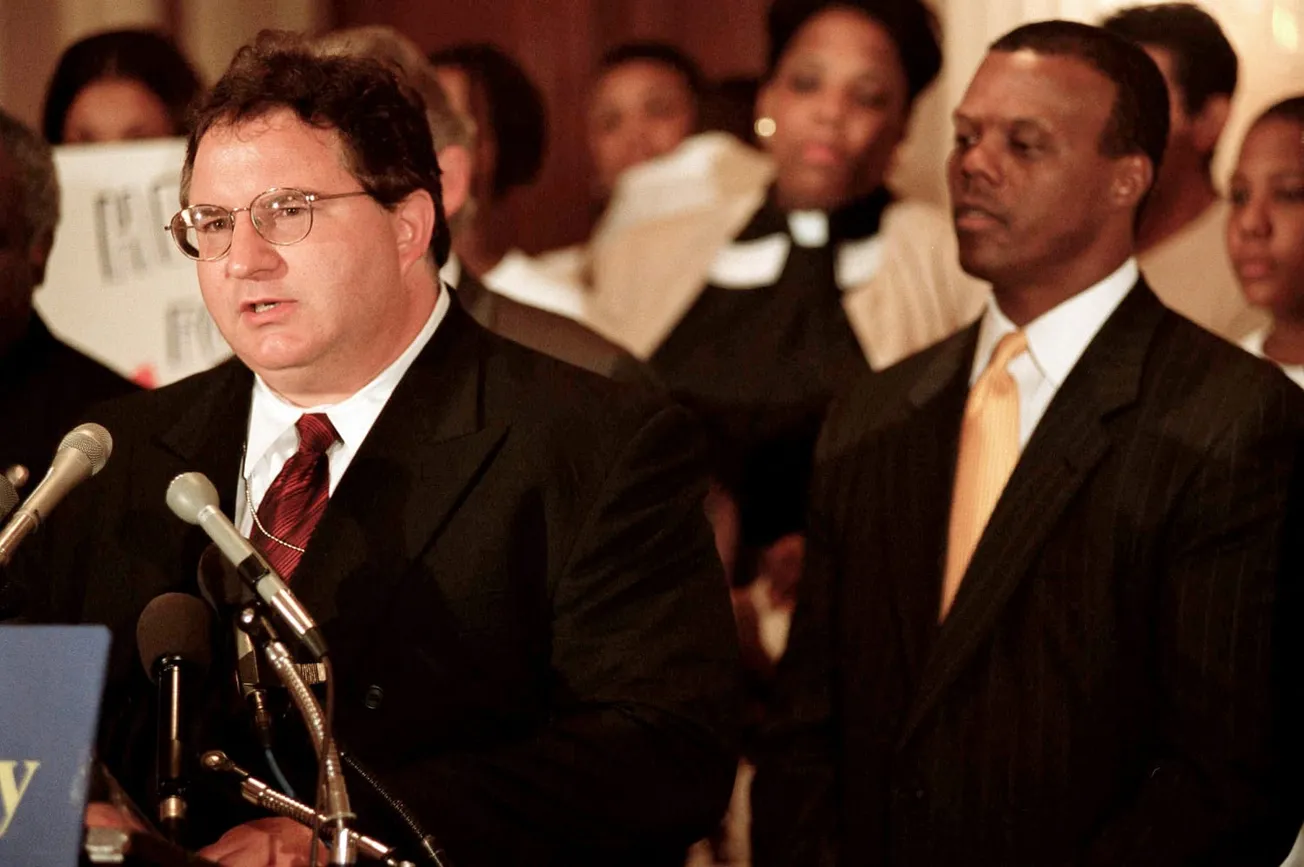
The Catholic political scientist and professor John DiIulio Jr. coined the term “superpredator” to describe particularly delinquent boys, especially those who are African-American. His 1995 article “The Coming of the Super-Predators” was the cover story for the conservative political magazine, The Weekly Standard. Using dubious statistics, DiIulio deduced that a staggering new wave of youth crime was inevitable, and according to him, “the trouble will be the greatest in black inner-city neighborhoods.”
Nationally, there are now about 40 million children under the age of 10, the largest number in decades. By simple math, in a decade today’s 4 to 7-year-olds will be 14- to 17-year-olds. By 2005, the number of males in this age group will have risen about 25% overall and 50% among blacks.
To some extent, it’s just that simple: More boys means more bad boys. But to really grasp why this spike in the young male population means big trouble ahead, you need to appreciate both the statistical evidence from a generation of birth-cohort studies and related findings from recent street-level studies and surveys...
James Q. Wilson and other leading crime doctors can predict with confidence that the additional 500,000 boys who will be 14 to 17 years old in the year 2000 will mean at least 30,000 more murderers, rapists, and muggers on the streets than we have today.
In 1996, DiIulio wrote an even more racist and unapologetic warning about Black youth titled, “My Black Crime Problem, and Ours.” Therein, he used talking points that have since been thoroughly debunked, such as that there were no racial disparities between cocaine trafficking sentences, that the war on drugs and death penalty were both racially unbiased, and several other racist claims about Black criminality.

DiIulio's articles had a major impact on the way the public, politicians, police, and governmental entities—even President Bill Clinton—treated young people, and especially young Black boys, in recent years. A review of 40 mainstream news outlets’ coverage for five years after his 1995 article found that the word “superpredator” appeared in at least 300 articles.
Using Christian language, DiIulio argued that “moral poverty” was to blame for the upcoming societal threat posed by young boys. His solution, therefore, was “religion” and investing in churches to provide services that would boost social and economic development, especially in low-income Black neighborhoods.
At the time, DiIulio was celebrated as a kind of prophet, someone who was brave enough to tell it like it is. By the end of the 1990s, almost every state had toughened its criminal laws concerning young people—convicting minors as adults, defunding family courts, incarcerating youth in adult prisons, and imposing mandatory sentences on young people, even life sentences without parole.
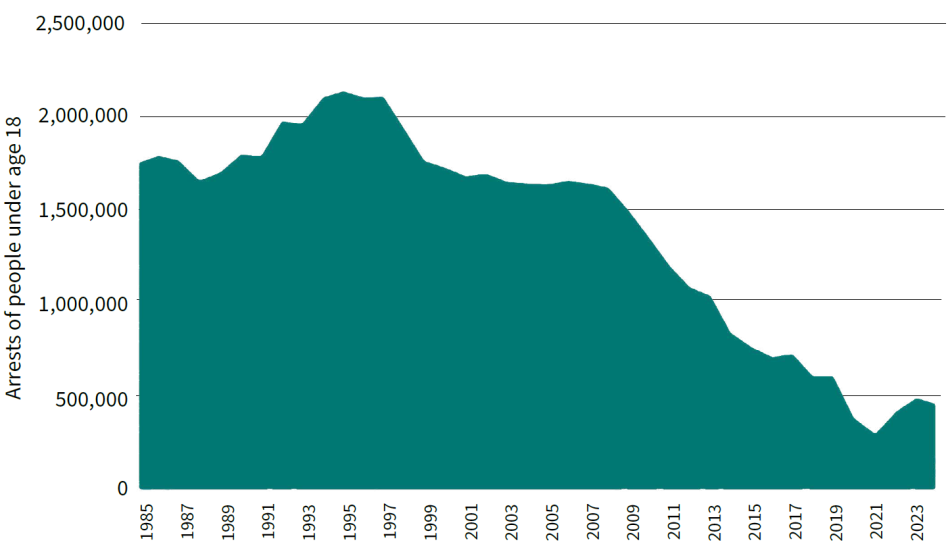
As with his bogus interpretation of statistics, DiIulio's predictions were also patently false. By 2000, youth crime had dropped by more than half. By 2020 and before the pandemic, violent crime arrests involving youth reached a new low that was 78% below the 1994 peak and half the number in 2010.
In a 2001 New York Times article, DiIulio confessed he had a conversion of heart and regretted becoming the face of the movement that deemed juveniles as superpredators. But the damage had been done. What DiIulio created and could not take back was a caricatured image of violent Black men that harkened back to similar views during slavery. In the superpredator stereotype, young Black boys and men were not fully human; they were animal-like predators with no conscience, ability to tell right from wrong, or capacity for human emotions like love and empathy. They were more like the “prowling devil” looking for their next victim that would—in the eyes of the White public—most likely be one of them.
On Charlie Kirk’s Facebook page, in his September 10, 2025 video, he stated bogus statistics, like that 1 in 22 Black men will become murderers in their lifetime, which is statistically impossible to predict for many reasons. He argued that Black people commit the most crime in America, which is also patently false. Yet, like many did with DiIulio, right-wing American Christians laud Kirk as one who wasn't afraid to stand up and proclaim the “truth.”
Even right now, the criminal legal system’s pendulum is swinging rightward once again with the Trump administration weaponizing public fear of “inner-city violence” while ignoring the predominately White male domestic terrorists using guns to murder children in their schools, adults in public, worshippers at church, and even Charlie Kirk at his own public debate.
According to The Guardian, the Trump Administration is closing offices and laying off employees tasked with responding to and preventing White supremacist violence. In the new style guide for the State Department, the term “racially or ethically motivated extremism” and their acronyms, “REMVE” or “REVE,” are now banned except in certain circumstances. This is deeply concerning given that in 2020, then-FBI chief Christopher Wray identified White supremacist violence as the “top domestic terror threat.” A similar warning was issued in a report last year from President Joe Biden’s director of national intelligence.
For those Christians who are advocates of justice and reform in the criminal legal system, it’s important not to buy into the anti-Black crime hysteria while dismissing the true threat of white supremacist violence. The truth is that according to the FBI’s 2024 criminal statistics, crime decreased in every category—including murder, motor vehicle thefts, and violent crime—compared to the year before. Black mayors like Chicago’s Brandon Johnson and Baltimore’s Brandon Scott are implementing policies that have resulted in historic drops in homicide in their cities; and we are on track nationally to have the lowest number of homicides since reliable records have been kept.
Unfortunately, after Donald Trump took the presidential office for the second time; racial profiling, targeted violence, detainment, and deportation are now focused on the immigrant communities in the United States. Masked and unidentified ICE agents are now terrorizing mostly Hispanic neighborhoods, and even people who are U.S. citizens. The Supreme Court has sided with these Trump policies, yet in a dissent, Justice Sonia Sotomayor said:
"We should not have to live in a county where the Government can seize anyone who looks Latino, speaks Spanish, and appears to work a low wage job."
As Catholics, let us reject turning back to punitive measures like over-policing, racial profiling, ICE raids, immigration detention, and charging children as adults. Instead, let us move forward with life-giving policies like restorative justice practices, violence interruption, and community-led solutions that actually work.
Alessandra Harris is a writer, author, wife, and mother of four. She earned degrees in comparative religious studies, Middle East studies, and a graduate certificate in restorative justice and chaplaincy. She has published three novels and her fourth book, “In the Shadow of Freedom: The Enduring Call for Racial Justice,” her first non-fiction title, won first place for Religion in the Public Square in the 2025 Catholic Media Awards. In addition to co-founding Black Catholic Messenger, she has appeared as a writer in National Catholic Reporter, America, U.S. Catholic, The Revealer, Critical Theology, and The Catholic Worker. She currently volunteers as a chaplain at the Elmwood Women's Correctional Facility in California.