
Nearly 50 years ago, the U.S. Catholic bishops published one of their first teachings on racism in America. The groundbreaking document, “Brothers and Sisters to Us,” has a sobering reminder of how racism destroys the Gospel call of love:
“Racism is more than a disregard for the words of Jesus; it is a denial of the truth of the dignity of each human being revealed by the mystery of the Incarnation.”
If we as Catholics believe the Magisterium of the Church is infallible, then we must understand that its call to eradicate racial discrimination is essential to our faith. Tragically, this authoritative call to action has been ridiculed, ignored, and overshadowed by politics that are in direct opposition to the authoritative vision on human dignity and sacredness of life rooted in Catholic social teaching.
The call of the bishops wasn’t a mere reflection on the slowing progress after the Civil Rights Movement, but a confrontation with White backlash, including the racialized rhetoric of “law and order” and the beginnings of mass incarceration. Combined with widening structural disparities, hostility to social progress, and cautious ecclesial silence, the crisis led to an admission in “Brothers and Sisters to Us” that should convict all Catholics:
“How great the scandal given by racist Catholics who make the Body of Christ, the Church, a sign of racial oppression! Yet all too often the Church in our country has been for many a ‘White Church,’ a racist institution.”
The bishops’ acknowledgment is still an ever-present reality for the Church today. One of the greatest stumbling blocks arises when those who profess Christ do not embody his teachings. Through hypocrisy, pride, and alignment with dehumanizing ideologies, many Catholic clergy, leaders, laypeople, and institutions attempt to preach love while practicing exclusion.
Black Catholics, who more than any racial/ethnic group in the Church prefer a worship setting that provides racial affirmation and addresses injustice, are currently left disillusioned by the lack of both. In the process of omitting these topics, clergy and staff weaken the Catholic witness and make the journey of faith increasingly difficult to sustain for Black Catholics.
Several clergy have weighed in on these conversations, offering commentary that reveals their lack of support for advancing a fully just and inclusive society. Archbishop José H. Gómez of Los Angeles once condemned modern justice movements as “reducing what it means to be human to essentially physical qualities—the color of our skin, our sex, our notions of gender, our ethnic background, or our position in society.”
 Nate Tinner-Williams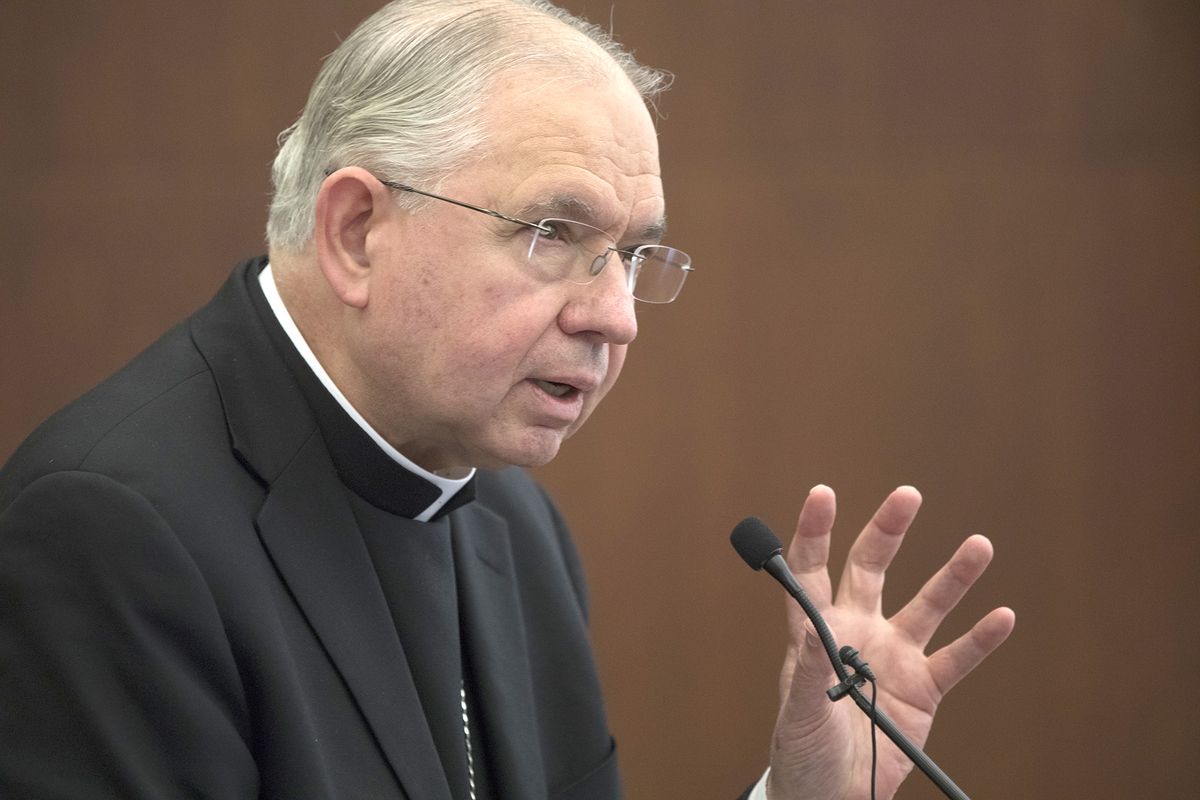
Similarly, Cardinal Gerhard Müller of Germany preached a similar message when he denounced cultural ideologies that, according to him, are rooted in secularism and Marxism. Both of these prelates demonstrated a recurring theme from Catholics opposed to justice efforts: When the clergy of the Church work in opposition to establishing a better society, they betray their unique mission to demonstrate God’s infinite love for the suffering.
When the historic Catholic faith becomes immersed in damaging rhetoric and inflammatory actions, the impact can be faith-shattering. Those that sincerely want to follow the teachings of the Church are forced to reevaluate their relationship with the Church. For plenty of Black believers, the disconnect creates a sense of unease, causing doubt that the Catholic Church is truly a place of unity. Instead of being a hospital for sinners, it becomes a bastion for the powerful.
It’s curious that such Catholic figures seem to denigrate Black political movements in particular. In the last decade, we’ve seen prominent Catholic clergy attack “wokeism” and “DEI” as assaults on a Catholic worldview. The U.S. Supreme Court’s Catholic majority has been busy erasing the progress of the past on issues such as voting rights and anti-discrimination. Many Black Catholics have watched with sorrow as fellow Christians diminish the importance of penance and reparation for the original sins of the nation. To see our faith leaders practice anti-Blackness is to abandon the oppressed and cease being a light to the world.
Catholic media, which has a global reach to millions of Catholics, also participates in diminishing the realities of racism. Catholic World Report, a popular right-wing media outlet, has published pieces attacking critical race theory and asserting that lineage-based and generational disenfranchisement isn’t possible. In the same way, Word on Fire, led by Bishop Robert Barron of Winona-Rochester, has produced content questioning the “defund the police” movement, as though Americans don’t overwhelmingly support policing alternatives.
Catholic media has the capacity to exhort and challenge the faithful. However, far too many outlets insist on belittling the Black American experience and perspective. Though our voices are not the center of the U.S. Church, we as Black Catholics must scrutinize Catholic institutions and figures with power and influence. Where their opposition to Black justice promotes deep-rooted inequality, the words of Christ ring true: You will know them by their fruits. Their works are rancid, bearing nothing even remotely Christ-like.
Adopting the language of war, many White Catholics see themselves as on the battlefield against cultural, social, and systemic change they want to resist. Dr. Kevin Roberts, a Catholic who serves as president of the Heritage Foundation, has stated:
“We are in the process of the second American Revolution, which will remain bloodless if the left allows it to be.”
Unfortunately, the mission for many Catholics in positions of influence is to use the faith as a means toward conservative, Christian-dominated government. In the process, many of these believers are committed to ensuring that White power and influence reign supreme over the nation’s institutions.
In this understanding, the new “spiritual warfare” of attacking DEI, racial justice movements, and equal opportunity becomes a sort of holy crusade. The result of this faith isn’t evangelization or Christian unity, but rather a defense of White supremacy in America.
 Nate Tinner-Williams
These figures could be offering better examples that reflect the essence of sanctifying grace. The U.S. Catholic bishops, in their 2018 pastoral letter “Open Wide Our Hearts: The Enduring Call to Love,” affirmed that "examining our sinfulness—individually, as the Christian community, and as a society—is a humbling experience." The Church needs a better understanding of this truth, an embrace of humility to acknowledge when we’ve fallen from Christ's standard in deeds and thoughts. The universal call to examine one’s conscience is an invitation to see how silence toward racism, participation with structures that reinforce disenfranchisement, and harboring bias are in stark contrast to love.
We need more accountability in the Church. As Catholics, we like to uphold fraternal correction as a method of repairing sin. Yet, in my time as a convert, I’ve rarely seen this used as a method of repairing harm in the collective body of Christ. We must confront dehumanizing and inflammatory speech and the denunciation of justice movements, which are ultimately dog whistles that allow bias and stereotypes to fester.
Lastly, reclaiming the core of the Church’s social teaching is essential. We need leaders and teachers that understand the importance of justice and solidarity rather than power and control. This type of leadership requires the repudiation of blind allegiance to the state, political parties, and interest groups, and the embrace of transformative change and the marginalized.
The moral decay we’ve witnessed amid an increasingly contentious political environment requires courageous religious leadership in response. In the end, not only Catholics but the entire U.S. Church must rise against any activity that undermines social progress and against any facet of White Christian nationalism. And it must all be done with a sound commitment to advancing a better Union.
More White Christians and other groups that have benefitted from White privilege need to participate in the work of reparation, reconciliation, and justice that leads to true solidarity. Only then will the longstanding work of interior conversion lead all in the body of Christ to the heart of the Gospel.
Efran Menny is a husband, father, and regular contributor to BCM. His work is informed by his experience as an educator and his studies in social work. He has a passion for elevating topics on justice and theology for Black Catholics.
Like what you're reading? Support BCM's holiday giving campaign.
a.) click to give on #iGiveCatholic