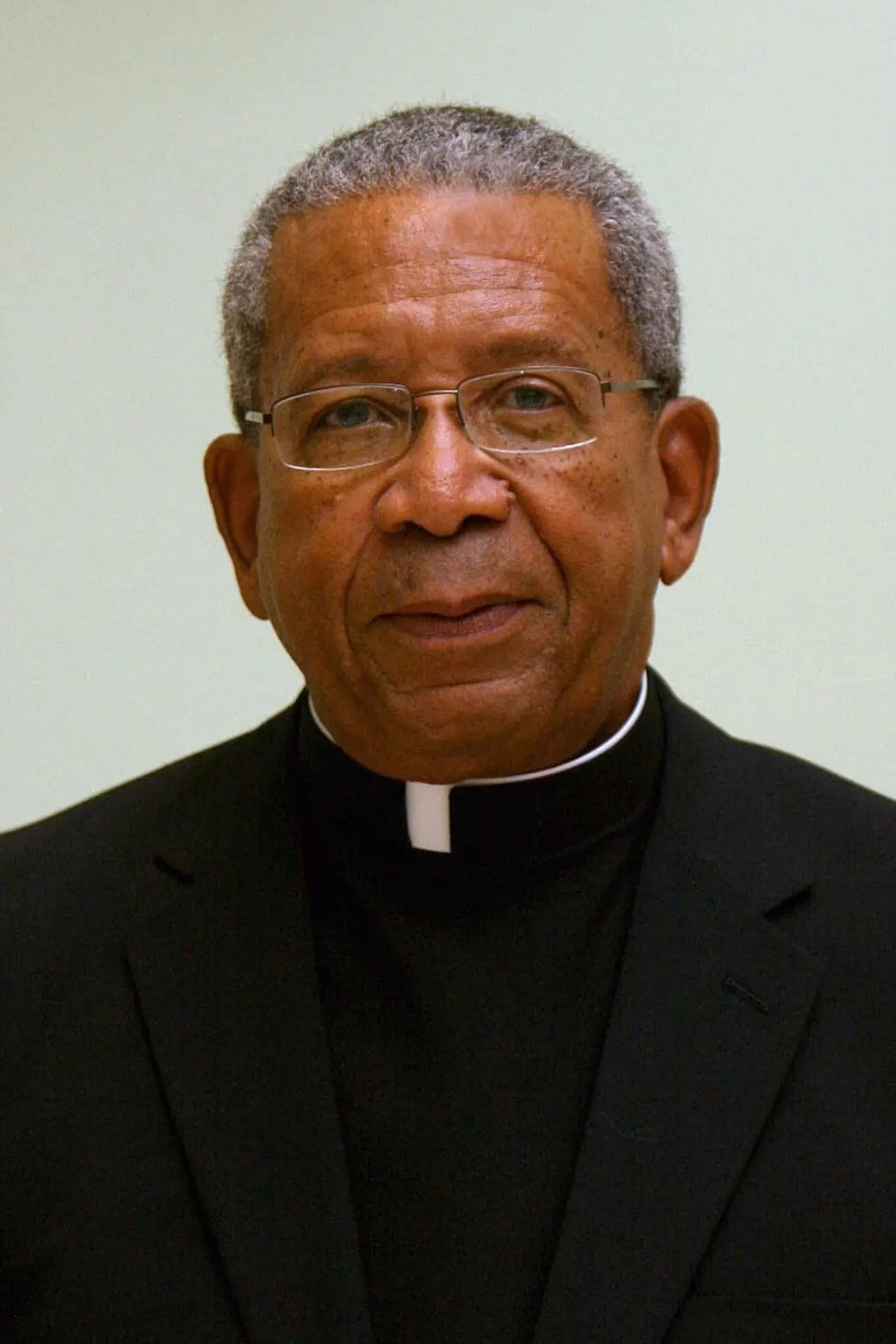
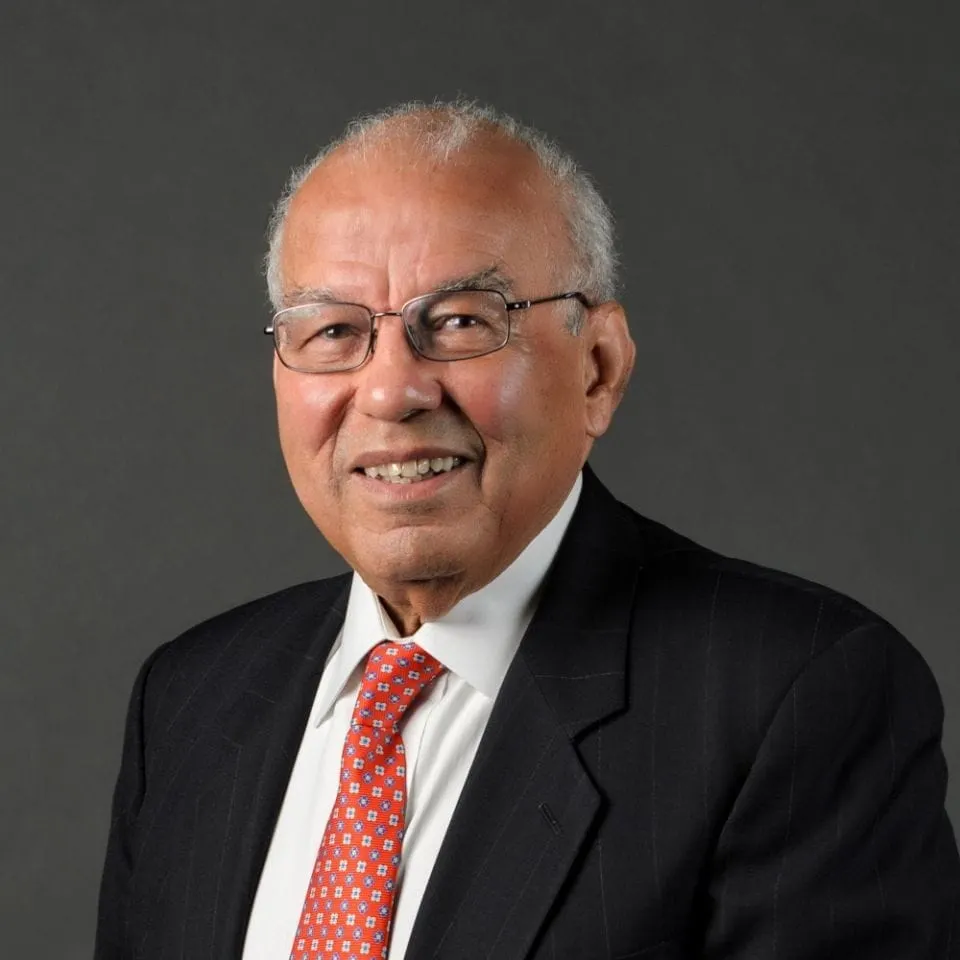
Norman C. Francis, a Civil Rights activist who served as the first lay president of Xavier University of Louisiana for more than nearly half a century, has died in New Orleans. He was 94 and no cause of death was released.
His family announced the news in a statement on Feb. 18, the day of his passing.
“While many knew him as the former president of Xavier University, as a civil rights leader, and as a respected voice for justice and equality on both the local and national stage, we knew him simply as Daddy—a man whose greatest joy came from family gatherings, quiet moments of prayer, and encouraging those around him to live with purpose and kindness,” they said.
“His legacy lives on not only through his accomplishments and leadership, but through the countless lives he inspired, the students and communities he uplifted, the public officials he advised, and the values he passed on to us. We will remember his gentle strength, his unwavering integrity, and his deep passion for equity.”
Born in 1931 in segregated Lafayette, Louisiana, where his parents—a barber and shoeshiner father and a stay-at-home mother—raised him Catholic and sent him to parochial schools. He was one of five children and his brother, Joseph A. Francis Jr., SVD went on to become Auxiliary Bishop of Newark. Norman would later note that the racial injustice in his hometown inspired his call to activism.
Though he had initially planned to enter the military out of high school, Francis was encouraged by one of his high school teachers—from the Sisters of the Holy Family—to instead attend college, securing him a scholarship to attend XULA.
Francis matriculated to New Orleans in 1948 and graduated as valedictorian and student body president, earning a degree in mathematics before pursuing a legal career. In 1952, he became the first Black student to enroll at Loyola University New Orleans’ College of Law, where he was prohibited from living on campus due to his race. He continued to live and serve at Xavier while making the 2.5-mile commute to LOYNO until his graduation in 1955.
Francis’ racial justice activism began small, including breaking social barriers with his White classmates at Loyola, before his law degree opened the opportunity for more direct advocacy. After a brief Army stint—in which he was assigned partly to menial labor despite being a lawyer—Francis’ first law firm stint involved representing the Congress of Racial Equality, as well as XULA students who took part in lunch counter sit-ins to protest segregation in Louisiana’s public accommodations.
We mourn the passing of Dr. Norman C. Francis, civil rights leader & transformative president of @XULA1925. The first Black graduate of @LoynoLaw, he marked a profound step in our journey toward greater justice & inclusion.
— Loyola New Orleans (@Loyola_NOLA) February 18, 2026
We remember his life of faith, leadership, and courage. pic.twitter.com/RWAhl98fZp
Francis' professional career with XULA also began early, with his hire as dean of men at the school in 1957, shortly after his return to civilian life. He maintained the role during his time as a civil rights lawyer, in which he also served with the U.S. Attorney’s Office to assist with integrating federal agencies.
While dean of men at Xavier, Francis was central to the university’s decision to house the 1961 Freedom Riders, who took part in protest rides on segregated interstate buses. They famously received housing under the cover of night at a XULA dormitory on the orders of Francis, following the riders’ being flown to New Orleans after facing White supremacist terrorism in Alabama.
At Xavier, Francis rose through the ranks of university administration throughout the 1960s, becoming executive vice president in 1967, second-in-command to M. Maris Stella Ross of the school’s founding religious order, St. Katharine Drexel’s Sisters of the Blessed Sacrament.
While serving as a vice president, Francis took part in the convening of U.S. Catholic higher education leaders that produced the 1967 Land O'Lakes Statement, which famously promoted academic independence and autonomy. It also led to a greater focus on lay leadership, which soon took hold with force at Xavier itself.
In 1968, XULA hired Francis as the university’s first lay president, becoming not only the first Black president of a Catholic university in the United States, but also the first lay president of a Catholic university in the South.
His 47-year presidency included guiding the school to its status as a top producer of Black medical professionals, as well as its stellar reputation in the broader STEM field. Under his leadership, enrollment more than tripled, and a campus expansion led to the school’s prominent facade in the Gert Town neighborhood of the Crescent City. An exponentially increased endowment strengthened the school’s financial footing, contributing to Francis’ national profile as a vaunted figure in higher education.
Outside of Xavier, Francis was also active in civic life, co-founding in 1972 the Liberty Bank and Trust Company, today one of the nation’s oldest and largest Black-owned banks. He was also instrumental in the construction of the Superdome, a major arena in downtown New Orleans, and chaired the United Negro College Fund, the Southern Education Foundation, and the Southern Association of Colleges and Schools.
In 1983, Francis helped prepare a landmark report for the U.S. Department of Education’s National Commission on Excellence in Education, titled “A Nation at Risk: The Imperative for Educational Reform.” The document detailed the situation of American schools, warning of the need for increased rigor and government intervention.
The tragedy of Hurricane Katrina in 2005 also put Francis and XULA on the map, with the submerged campus prompting Francis to postpone his retirement and assist the school’s rapid recovery and rebuilding efforts. The university reopened just four months after the deadly storm, with Francis then in his early 70s.
“President Emeritus Norman C. Francis dedicated his astounding effort to the flourishing of the human community, to full freedom of the oppressed, especially the descendants of the enslaved – it is the love to which we are called as disciples of Christ,” said current XULA president Dr. Reynold Verret.
“The nation is better and richer for his having lived among us.”
Francis received the Presidential Medal of Freedom from George W. Bush in 2006, one of the many accolades during his six-decade career, which ended with his retirement in 2015.
Francis received roughly 40 honorary degrees beginning in the late 1960s, was named a Knight Commander of the Order of St. Gregory the Great in 2000 by Pope St. John Paul II, and received the University of Notre Dame’s Laetare Medal—the highest honor for American Catholics—in 2019. He also became the namesake of a major thoroughfare in New Orleans in 2021, taking the place of Confederate president Jefferson Davis.
A Proud President for 46 yrs, I'm convinced that Xavier will soar after my retirement June 30 2015.
— Norman C. Francis (@DrNCF) September 4, 2014
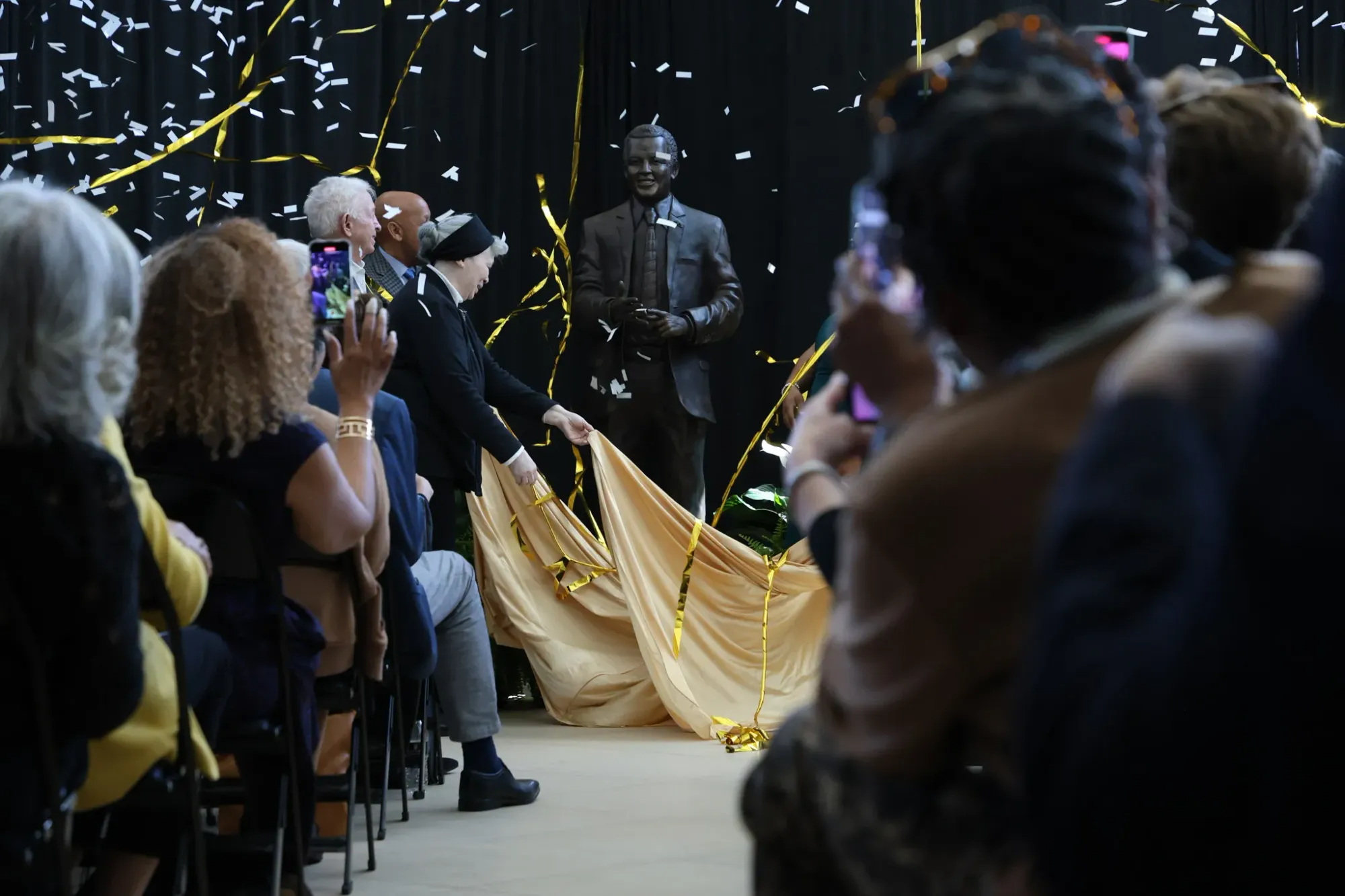
A documentary on Francis’ tenure at XULA, “Dr. Norman C. Francis: A Legacy of Leadership,” premiered on PBS in 2022, and a life-size bronze statue of Francis was unveiled at XULA in 2024, just ahead of the school’s centennial year.
“At Commencement, I looked at every student who came up those steps, I shook their hands, and I said, ‘I see me in you,’” Francis said then of his connection with students during his years as president.
“That was my feeling for what happened over the 60 years I was at Xavier. It touched me.”
Francis, who continued to make public appearances at the school as recently as last year, reportedly entered hospice care earlier this month and was surrounded by family prior to his death.
Francis was predeceased by his parents, Joseph Sr. and Mabel Coco Francis; his wife Blanche; sisters, Velma Boykin and Pauline “Penny” Navarre; and brother, Joseph Jr. He is survived by his six children, Michael, Tim, David, Kathleen, Patrick, and Christina; 11 grandchildren; and a sister, Mabel Bailey.
Francis will lie in state at XULA’s Convocation Center on Monday, March 2, beginning a 9am CT, with a family program beginning at 4pm. Bishop Emeritus Curtis Guillory of Beaumont will deliver opening and closing remarks, and a celebration of life program will begin at 5pm.
Visitation will take place at St. Louis Cathedral on Tuesday, March 3, at 8am, followed by a Rosary of remembrance at 9:30am. and Cardin Wilton Gregory, Archbishop Emeritus of Washington, will celebrate a funeral Mass on Tuesday, March 2, at 10am. A private burial will take place at St. Louis Cemetery No. 3.
Flowers in memory of Francis can be purchased online through D.W. Rhodes Funeral Home of Gretna, Louisiana.
Nate Tinner-Williams is co-founder and editor of Black Catholic Messenger.