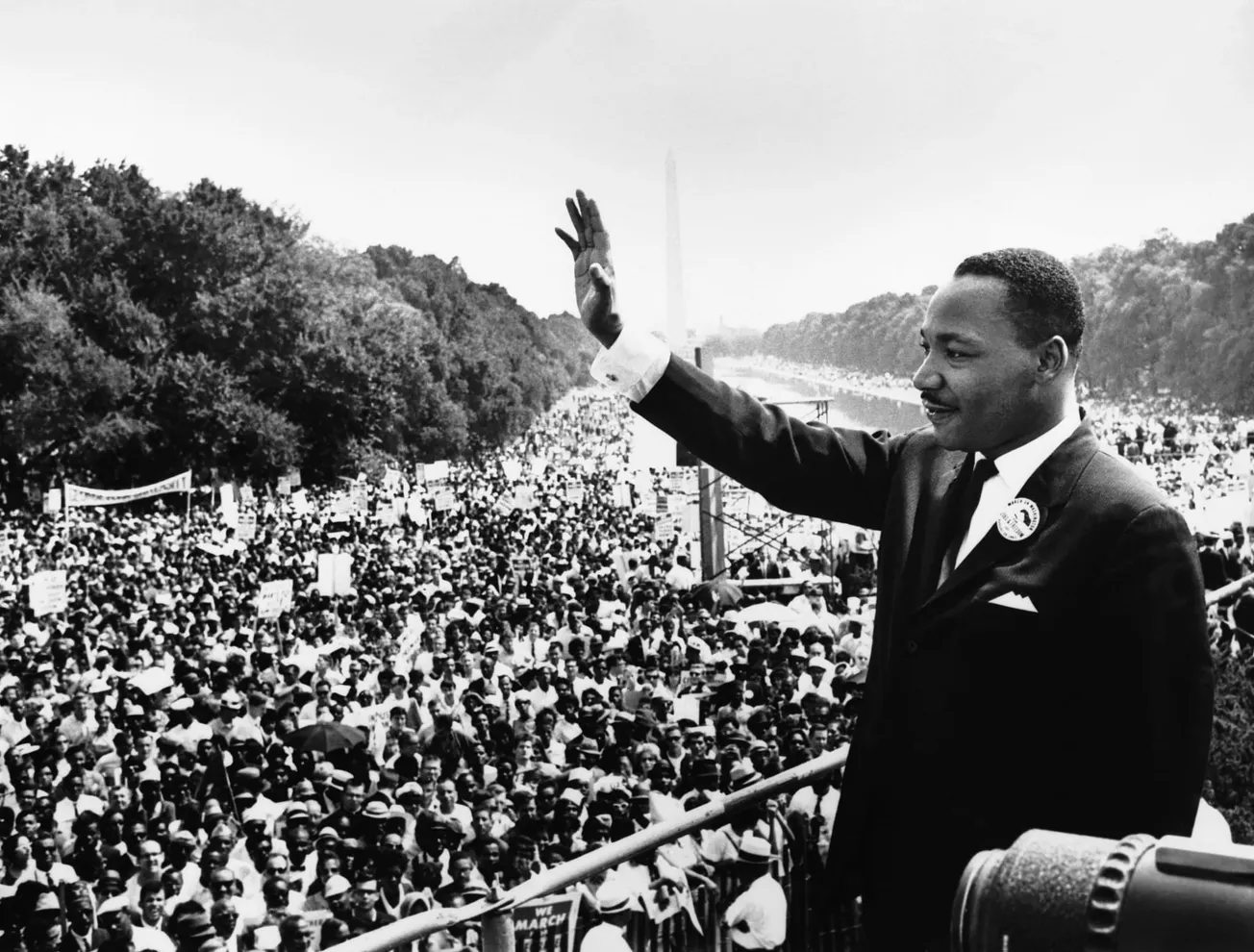
Each year, Martin Luther King Jr. Day invites remembrance. We recall marches, speeches, and legislative victories that reshaped American democracy. Yet for people of faith, remembrance is also a moment of moral examination, an opportunity to consider how public witness is formed and sustained.
For Black Catholics, whose tradition has long held together dignity, suffering, and hope amid exclusion, Dr. King’s legacy invites reflection not only on what was achieved, but on the spiritual discipline that made such leadership possible.
King did not arrive at nonviolence as a political strategy chosen for convenience. He came to it as a way of life shaped through interior formation and sustained by conscience. Nonviolence, in this sense, was not simply how the movement acted. It was how its leaders learned to endure injustice without surrendering their moral integrity.
King once summarized the roots of his approach with clarity: “Christ gave me the message. Gandhi gave me the method.” The phrase is frequently quoted, yet its depth is often missed. The method of nonviolence demanded more than public restraint. It required the cultivation of virtue, patience, fortitude, and charity, formed through prayer, discipline, and moral clarity. These were not spontaneous dispositions. They were learned.
King owed much of his formation in this regard to Rev. Howard Thurman, the Black theologian and mystic who served as his spiritual mentor. Thurman’s work confronted a central question for the disinherited: How does one resist injustice without becoming consumed by fear or hatred? In “Jesus and the Disinherited,” Thurman identified fear as the primary instrument of oppression, capable of eroding dignity from within. Against this, he offered a theological affirmation deeply resonant with Catholic anthropology: the knowledge that one bears the imago Dei, the image of God, a dignity no system of domination can erase.
For Thurman, liberation required interior freedom. Without it, resistance would reproduce the very dehumanization it sought to overcome. This insight matters because nonviolence asks much of those who practice it. It demands restraint in the face of provocation, patience amid delay, and fidelity when outcomes remain uncertain. Such demands are unsustainable without a formed conscience and a spiritual grounding that secures one’s identity beyond social recognition.
King’s leadership reflects this understanding. In his “Letter from Birmingham Jail,” he outlined the discipline of nonviolent action, careful examination of injustice, negotiation, self-purification, and direct action. Self-purification was not just a matter of symbolic language. It involved workshops, prayer, and preparation to accept suffering without retaliation. The goal was not merely legal reform, but moral confrontation, placing injustice before the conscience of the nation in a way that upheld human dignity.
This emphasis resonates deeply with the Catholic moral tradition. Catholic social teaching insists that the pursuit of justice must remain consistent with the dignity of the human person. Means matter. King’s nonviolence reflects this conviction. It sought not the humiliation of opponents, but their conversion. It understood suffering not as passivity, but as disciplined endurance that participates, without romanticizing pain, in a tradition of redemptive suffering ordered toward reconciliation.
King did not develop this vision in isolation. He inherited a global moral tradition shaped by Mahatma Gandhi’s practice of satyagraha, or truth force, forged in response to racial oppression in South Africa, where Gandhi lived in his young adult years. Gandhi understood nonviolence as a disciplined way of life grounded in truth, voluntary suffering, and love of the opponent. It was Thurman who translated this tradition into the language of the Black Christian experience, making it spiritually inhabitable within a community formed by Scripture, prayer, and the long memory of suffering.
The result was a movement that confronted injustice without surrendering its moral center. Nonviolence exposed segregation not through coercion, but through disciplined witness that appealed to conscience and revealed the incompatibility of racial injustice with the universal moral law. In Catholic terms, it made visible the distance between unjust structures and the demands of human dignity.
For Black Catholics, King’s legacy carries particular weight. Our history includes deep faithfulness alongside marginalization within the Church itself. King’s witness reminds us that faith cannot remain private when human dignity is denied, but it also warns against forms of resistance that abandon moral integrity in the pursuit of quick results. Justice pursued without charity hardens the heart, while peace without justice becomes little more than the absence of open conflict.
To remember King responsibly is to recover the spiritual tradition that sustained him. It is to recognize nonviolence not as nostalgia or tactic, but as a demanding moral discipline requiring formation, patience, and faith. In a time marked by polarization and impatience, King’s life invites an examination of conscience, probing not only what we oppose, but how we live while opposing it.
King did not offer easy answers. He offered a way of being, one that insists justice and love are inseparable obligations. And indeed, for those willing to accept that discipline, his legacy remains not only relevant, but unfinished.
Malcolm K. Oliver, Ph.D., MPA, is dean of the John S. Watson School of Public Service at Thomas Edison State University in New Jersey. His work focuses on public service leadership, ethics, and the formation of institutions committed to human dignity, the common good, and responsible stewardship.