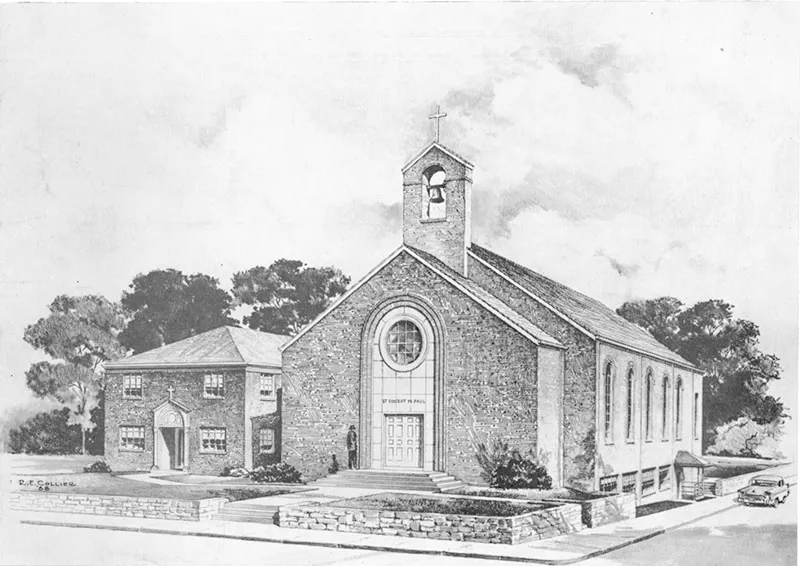
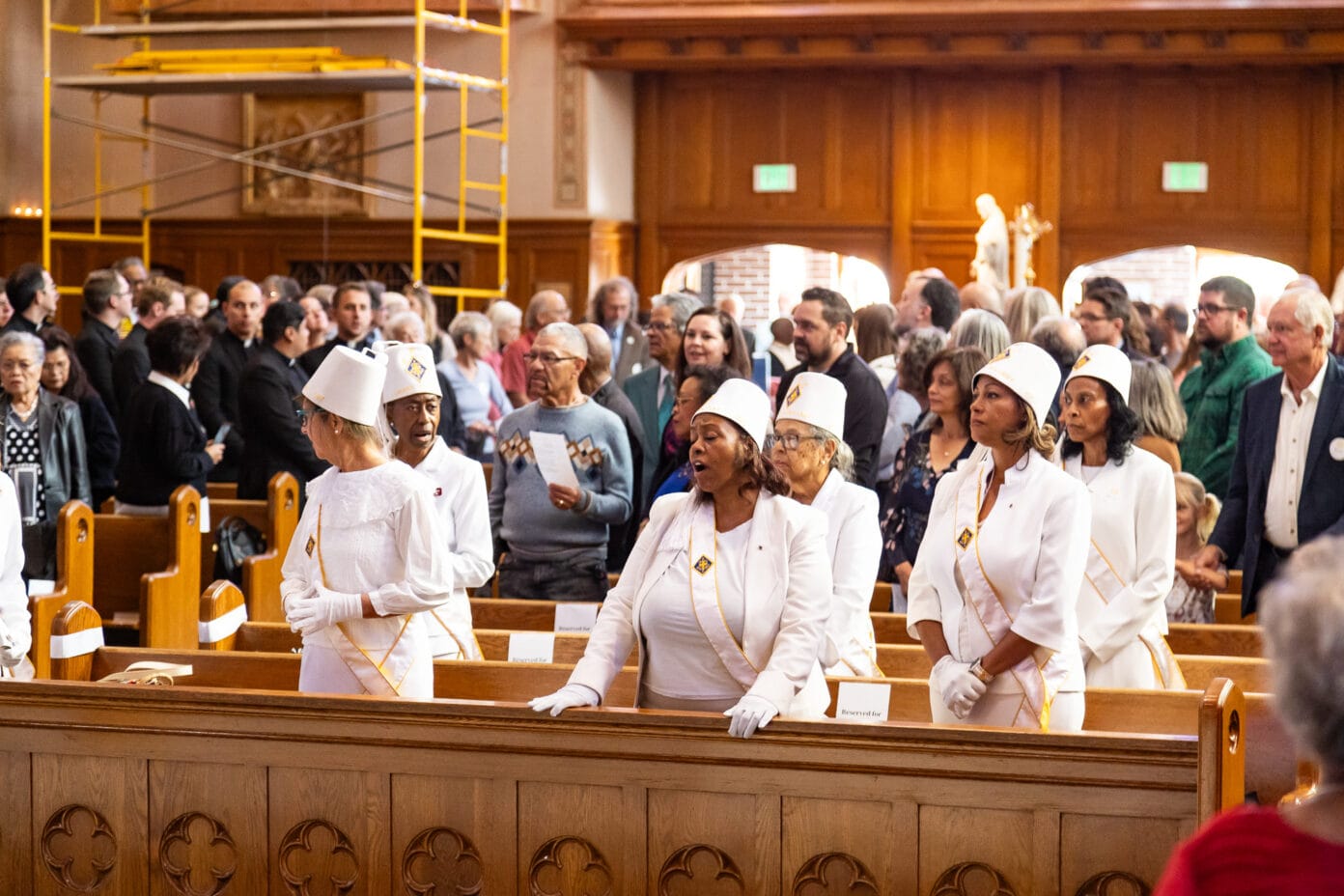
St. Ignatius of Loyola Catholic Church in Denver is a historic church, built by the Jesuits in 1879. The current building was dedicated in 1924. The parish recently celebrated its centennial in October 2024. The previous year, the Jesuits departed the parish after serving there for more than a century.
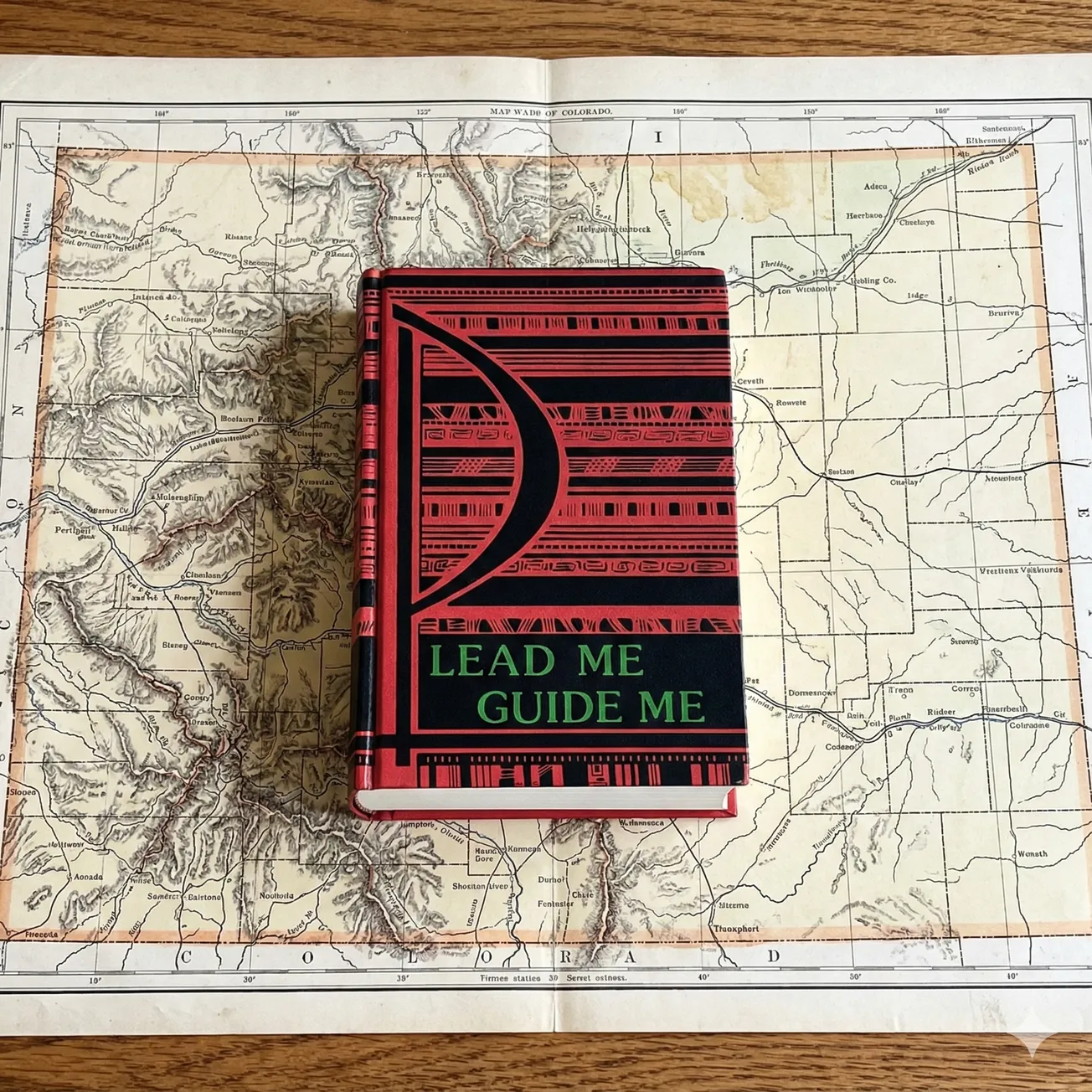
The parish was transferred from the Jesuits to the Congregation of St. John, with a new pastor in Fr Francis Therese Krautter, installed in September 2023. In just over two years, Krautter has implemented several changes and reforms in the parish. Sometime early to mid October, a directive was given to remove the parish’s Black Catholic “Lead Me, Guide Me” hymnals and “throw them in the dumpster,” according to a parishioner.
This command came from a man who is himself a musician, even a liturgist, and who in his new role oversaw the restoration of the church’s rear choir loft and the installation of a new digital/pipe organ. Denver Catholic reported these changes as emblematic of the community’s “renewed focus on sacred music.” This focus seems to be quite narrow in scope, such that the musical emphasis has become exclusively on the older traditions—much like how the U.S. bishops’ 2007 document “Sing to the Lord: Music in Divine Worship” refers to Gregorian chant as “uniquely the Church’s own music.” The most current and comprehensive treatise on music in the Catholic Church, the document goes on to say that chant is “the traditional music of the Roman Rite.”
This critical source for the implementation of music for the Church also makes clear that while chant is historically the Church’s own music and to be given “pride of place in liturgical services,” the modifying phrase “other things being equal” appears before the recognition given to chant. All too often, pastoral leaders overlook or simply ignore this modifying phrase in favor of promoting the merits of chant in the liturgy. However, in a footnote, “Sing to the Lord” additionally points out that the pride of place given chant applies to “sung liturgical services celebrated in Latin,” citing the Vatican document “Musicam Sacram,” which came after the Second Vatican Council.
These convenient oversights are frequently used to undergird the argument for privileging chant while excluding the music of other cultures. Yet in the same section of “Sing to the Lord” that qualifies the pride of place afforded chant, the bishops also state that pastors and liturgical musicians should “be sensitive to the cultural and spiritual milieu of their communities, in order to build up the Church in unity and peace” (STL 73). Vatican II’s Constitution on the Sacred Liturgy, “Sacrosanctum Concilium,” further articulates that our churches have “peoples who have their own musical traditions, and these play a great part in their religious and social life. For this reason, due importance is to be attached to their music, and a suitable place is to be given to it, not only in forming their attitude toward religion, but also in adapting worship to their native genius” (SC 119).
Given the official position of the Church as stated in its documents, the act of throwing the Black Catholic hymnal, “Lead Me, Guide Me,” in the dumpster is an egregious act that disparages the music and culture of Black Catholics. Even more, it communicates an act of total disregard, disdain, and disrespect. Ultimately, it shows contempt for the music contained in the hymnal, those who contributed to it, and the people it is intended to uplift.
The first edition of the “Lead Me, Guide Me” hymnal was published in 1987 by GIA. It was born out of the desire to have a musical resource that reflected the “African American heritage and Catholic faith” of the Black Catholic community. Its development was authorized by the National Black Catholic Clergy Caucus in 1983 and the hymnal itself was dedicated to Fr Clarence Rivers, the “father of Black Catholic liturgy.” Dr. M. Shawn Copeland asserts that the timing of the hymnal came as three historical events converged: the Civil Rights Movement, the Black Arts movement, and Vatican II. Archbishop James P. Lyke of Atlanta was instrumental in the creation of the hymnal and coordinated the creation of committees and subcommittees that worked on it. One such subcommittee included the likes of Marjorie Gabriel-Burrow, who served as chairperson; Rawn Harbor; and Leon C. Roberts. The hymnal takes its name from a beloved gospel song written in 1953 by Doris Akers.
In addition to its preface written by Archbishop Lyke, the first edition of the hymnal had two essays: “The Gift of African American Sacred Song,” by Servant of God Thea Bowman, and “The Liturgy of the Roman Rite and African American Worship,” by the Jesuit priest J-Glenn Murray. The second edition, released in 2012, contains 559 hymns and congregational songs (237 more than the first edition), a complete psalter for the lectionary, and nine new settings of the Mass that conform with the new translation of the Roman Missal.
The “Lead Me, Guide Me” hymnal facilitates the sung prayer of the Black Catholic community. It allows for an authentic expression of Catholicism that is culturally relevant to people of the African diaspora. The music contained therein allows us to be authentically Black and truly Catholic. Sr Thea addressed the U.S. bishops in 1989 and famously said:
“I come to my Church fully functioning. I bring myself; my Black self, all that I am, all that I have, all that I hope to become. I bring my whole history, my traditions, my experience, my culture, my African-American song and dance and gesture and movement and teaching and preaching and healing and responsibility, as gifts to the Church.”
The presence of the “Lead Me, Guide Me” hymnal in the pews is also an act of hospitality and communicates a spirit of welcome to Black Catholics. To deny Black culture in Catholic spaces disparages and dismisses the imago dei and diminishes the catholicity of us all. A Catholic church that is Eurocentric is not only monocultural but inauthentic. Catholicism, rightly considered, is multicultural, universal, and therefore truly catholic.
Krautter and other pastoral leaders seem to find Black Catholic worship expressions problematic. They see Catholic liturgy as something that should be cerebral, engaging the intellect alone—even dispassionate. However, Black expression is holistic and grounded in the oral tradition. It engages both heart and mind, as well as the senses. The liturgy is a sensorial experience. One need only smell the incense, touch the wood of the cross on Good Friday, take in the liturgical processions and seasonal colors, or receive the Holy Eucharist to find this to be true.
Considered in this light, Black worship is totally Catholic in cultural expression and iteration. In articulating what it means to bring her full Black self in all of its expression to the Church, Sr Thea remarked to the bishops: “That doesn’t frighten you, does it?”
 Nate Tinner-Williams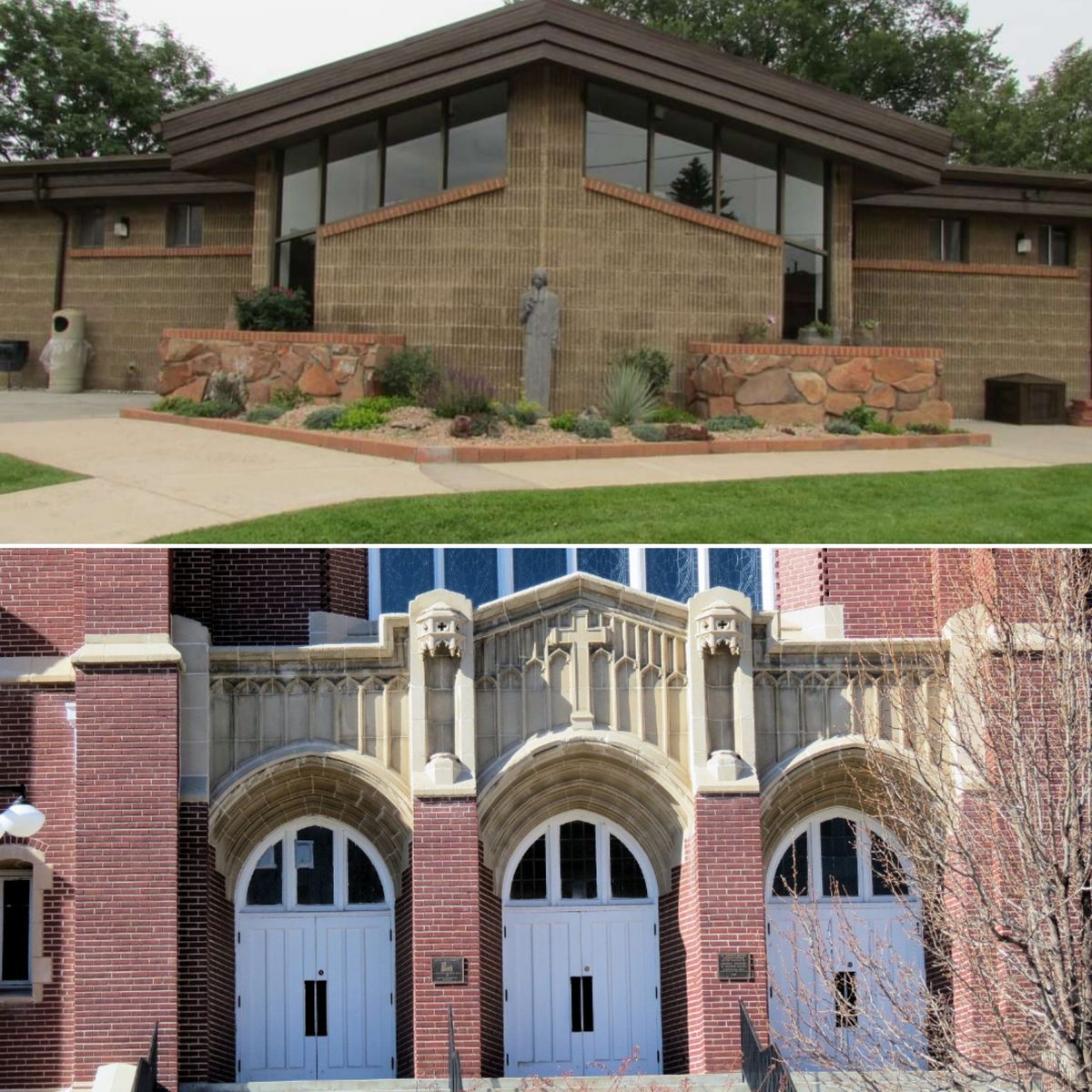
Like many churches in metropolitan America, St. Ignatius in Denver was originally a predominantly Irish and Italian congregation. As part of the Great Migration, the parish became predominantly African-American by the 1970s. According to Denver Catholic, the surrounding Whittier neighborhood is now 53% White, 25% African American or Black, 16% other races, and 5% mixed-race. These demographics were also seen in the makeup of the parish as of 2023.
Denver’s most recent census data reveals an ethnic demographic that is 54.6% White (non-Hispanic) and 8.48% Black or African American (non-Hispanic). These numbers are comparable with the national percentages of 58.2% and 12%. Pew Research found in 2022 that just 4% of U.S. Catholics were Black or African American (non-Hispanic). That number has dropped to 2% in 2025. In conversations with Black Catholics, the overarching reason for this decline is racism in the Church, with a lack of Black vocations as a significant secondary factor.
In November 2023, a group of young adult Black Catholics met in New Orleans to discuss the myriad issues they felt the U.S. Church needs to address. Among them were a lack of Black representation, not enough focus on social justice, not enough talk about racism and White supremacy, Eurocentrism and a lack of Black cultural expression in the liturgy, and too great an emphasis on tradition instead of missions. In this context, mission can be understood as evangelization, especially within the Black community. If St. Ignatius and other Catholic parishes in the nation wish to be relevant to the Black community, they must welcome and embrace Black culture.
Before Fr Krautter took over at St. Ignatius, the parish was a vibrant bastion of multiculturalism. The music of the parish reflected its ethnic makeup, with resources for singing that included “Breaking Bread” and “Lead Me, Guide Me.” One member shared with me how much parishioners, both Black and White, enjoyed music from the latter and regularly requested to hear music from the hymnal. Today, under Krautter, the church uses the “Source & Summit” missal, a resource that contains standard Catholic hymnody with an emphasis on chant and other music in Latin.
After learning that the “Lead Me, Guide Me” hymnals were thrown in a dumpster, the same parishioner shared with me in confidence:
“I've never in my life heard of any pastor from any church putting hymnals, without even asking the parishioners, in the dumpster. That is, in my opinion, very mean-spirited and very hurtful.”
Rosa Salazar, another parishioner and a former member of the music ministry, had this to say regarding the new music reforms at St. Ignatius:
“Some of it's just painful. People are potentially just not choosing to be buried there anymore. If somebody wanted a culturally appropriate funeral with music that their loved one wanted, I don't think it could happen there anymore. One lady, Mrs. Herbert, [who’s] 96 or 97 now, would like Stacy to sing ‘His Eye Is on the Sparrow’ and ‘Ave Maria’ at her funeral. And I just don't know if that can happen. It's heartbreaking.”
In order for the U.S. Church to be relevant in today’s society, it must engage the culture of the people in its neighborhood and its pews. This is accomplished by the source and summit of our faith, the sacred liturgy, being reflective of the culture of the people. This means cultural representation in the sacred space with art, language, and music. Inculturation, put simply, is the incorporation of culture into the liturgy, such that the latter reflects the former. On this, Filipino Benedictine theologian Anscar Chupungco writes:
“Liturgical inculturation is basically the assimilation by the liturgy of local cultural patterns. [The liturgy, then], begins to think, speak, and ritualize according to the local church pattern. If we settle for anything less than this, the liturgy of the local Church will remain at the periphery of our people’s cultural experience.”
Bishop B. Christopher Butler of Westminster, one of the leading lights of Vatican II, indicated in his letter “The Aggiornamento of Vatican II” that should the Church fail to respond to the changing times that included modernization and growing technological advances in society, it runs the risk of becoming a “monumental irrelevance.” Likewise, in the liturgy, cultural inclusion is a theological imperative, for without it, the work of mission is rendered grievously ineffective and impotent.
 Efran Menny
The Church presents the Christian message through means of culture. “Gaudium et Spes,” Vatican II’s Pastoral Constitution on the Church in the Modern World, speaks of “the law of evangelization.” In presenting the Gospel to various peoples, the Church has “utilized the resources of different cultures to spread and explain the message of Christ in its preaching, to examine and understand it more deeply, and to express it more perfectly in the liturgy and in the life of the multiform community of the faithful” (GS 58).
“The church is faithful to its traditions and is at the same time conscious of its universal mission; it can, then, enter into communion with different forms of culture, thereby enriching both itself and the cultures themselves.”
In this, we see the very essence of inculturation, where each enriches the other in a posture of mutuality. The Church also models its work of evangelization by recognizing that the Gospel is incarnated in a people by means of inculturation. Religion, or faith, is expressed through culture.
When the cultural expression of a people is excised from the Church, it is most often the result of cultural hegemony. By this I mean the wielding of power by one group over another group, suppressing the culture of the group with less societal or institutional power. In the case of the U.S. Catholic Church, the dominant group is White Americans. Without the power to effect change and implement true inculturation, Black Catholics are at their mercy.
Fr Rivers states the following in his book, “The Spirit in Worship”:
“When Blacks have been and are being excluded from the exercise of power and authority within the church, the White church is maintaining a separate and unequal status for Blacks in the church.”
White Catholic bishops and priests are the dominant group wielding power within the hierarchy of the U.S. Church. Without checks and balances, they can exercise, for the most part, absolute authority over the Church and liturgical matters typically go unchallenged, leaving little to no recourse for Black Catholics. This is how the only Black Catholic hymnal, “Lead Me, Guide Me,” can be thrown in a dumpster with seemingly little consequence.
It is therefore incumbent upon our White priests and bishops to hold each other accountable for these blatant acts of contempt and disrespect. It is not enough to agree that this is abhorrent behavior. There must be correction and justice. Frankly, what undergirds these types of oppressive behaviors toward Black Americans and other people of color is racism—something the U.S. bishops acknowledged in their 2018 pastoral letter “Open Wide Our Hearts: The Enduring Call to Love.”
It is the racism that lives in the hearts of some of our White priests and bishops that undergirds the cultural hegemony Black Catholics continue to endure. It is White clergy such as Krautter who continue to suppress and reject Black culture as unsuitable for the liturgy. They maintain that only “traditional” and Eurocentric music is appropriate for Catholic worship. It is this that prompted Fr Bryan Massingale, a professor of theological and social ethics at Fordham University, to write of the U.S. Church:
“It is not the fact that the majority of its members are of European descent (especially since in many places, they no longer are), nor the fact that many of its members engage in acts of malice or bigotry. What makes it ‘White’ and ‘racist’ is the pervasive belief that European aesthetics, music, theology, and persons—and only these—are standard, normative, universal, and truly ‘Catholic.’”
(“Racial Justice and the Catholic Church,” 2014)
It is not until the normativity of Eurocentrism is addressed that cultural hegemony will be dismantled and Black Catholics—including their culture and music—will be treated with the welcome and dignity that they deserve.
In this season of Advent, when the Magnificat is typically read, let us pray that justice for Black Catholics is found manifest and that God disperses the arrogant of mind and heart, throws down rulers from their thrones, and lifts up the lowly, cast down, and oppressed. May our pastoral leaders cease from regarding Black Catholic music as “not Catholic” or unsuitable for the liturgy, especially those sacred songs printed in “Lead Me, Guide Me”.
All the music published in our Black Catholic hymnal, both editions, has received the imprimatur from the Archdiocese of Chicago, granting ecclesial authority to publish the hymnal, declaring that its contents are “free from doctrinal and moral error.” Further, American Catholic music publishers are required to seek permission from the USCCB before any hymnals are published, and all liturgical texts are reproduced by the authority of the conference’s Committee of Divine Worship. As the Holy Spirit spoke to Peter, “What God has made clean, you must not call profane.” (Acts 11:9)
Parishioners at St. Ignatius in Denver were invited to take home copies of “Breaking Bread,” the missalette decommissioned under Fr Krautter’s leadership. Yet, “Lead Me, Guide Me” was unceremoniously disposed of, with no warning, in secret, and thrown into a dumpster. An argument might be made that the intent was never to treat the Black Catholic hymnal with contempt or disrespect, but as James Baldwin has said, “I can’t believe what you say, because I see what you do.”
In his inaugural homily earlier this year, Pope Leo XIV stated:
“We are called to offer God’s love to everyone, in order to achieve that unity which does not cancel out differences but values the personal history of each person and the social and religious culture of every people.” (May 18, 2025)
May the work of this inclusive love truly begin this Advent season.
Dr. M. Roger Holland II is an associate professor in music and religion and director of The Spirituals Project at the Lamont School of Music, University of Denver. He earned a Doctor of Pastoral Music, with distinction, from Perkins School of Theology, Southern Methodist University, and a Master of Divinity from Union Theological Seminary. He is the recipient of Union’s 2015 Trailblazers Distinguished Alumni Award, the first given to a graduate whose ministry is music, for his contributions to the legacy of African-American music; the 2023 Composer of the Year and Song of the Year awards from the Association of Catholic Publishers for his composition, “All of Me: Ode to Sr. Thea,” written in honor of Servant of God Thea Bowman; and the 2016 Pierre Toussaint Medallion from the Archdiocese of New York.