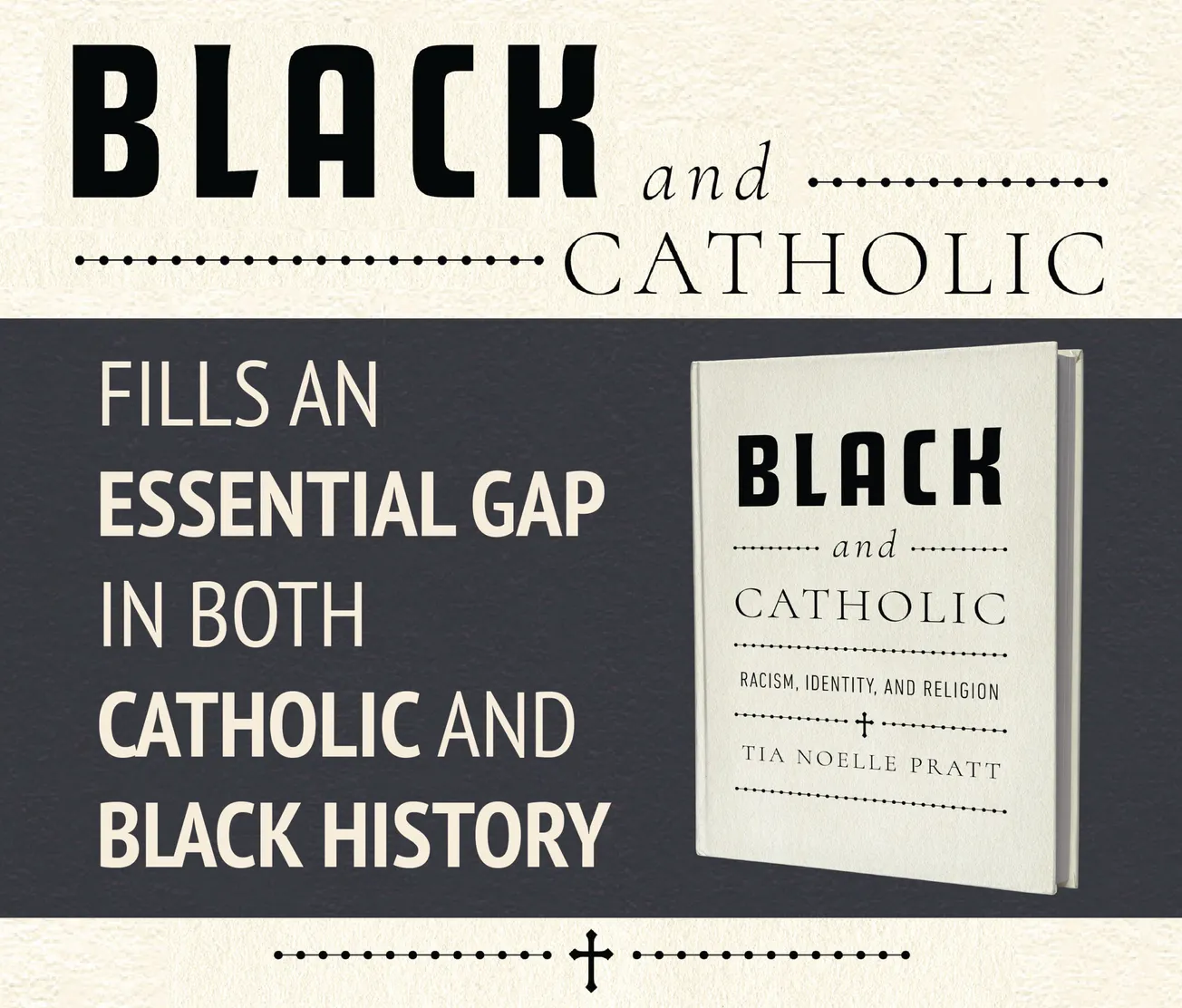
Much ink has been spilled in scholarly and religious spaces addressing the intersection of race and religion, especially in the context of the United States. Largely left out of the equation, however, are Black Catholics. Dr. Tia Noelle Pratt, in her new book “Black and Catholic: Racism, Identity and Religion,” seeks to rectify that.
Indomitably approaching the issue as an educator and a sociologist of religion, Pratt sets straight those who believe that Black Catholics don’t exist. Her illustration of the religious experiences and culture of Black Catholics in the U.S., and the impact of U.S. Catholic racism serves as an invaluable resource for anyone interested in learning about American Catholicism and African-American religion. More than that, Dr. Pratt’s work is an unapologetic statement in scholarly form that we, Black Catholics, are here and we matter.
Taking a sociological perspective on Black Catholicism, Pratt elucidates how Black Catholics form their identity—one in which faith and race are not separate but rather intertwined and no less one or the other. She also exposes how racism within the U.S. Catholic Church has and continues to have an impact on Black Catholic identity and faith.
This is chiefly done by concentrating on the experience of Black Catholics at the parish and diocesan level. Pratt specifically highlights experiences in the Archdiocese of Philadelphia, a region with significant history in terms of U.S. Catholicism as a whole and Black Catholicism in particular. Her exploration puts at the forefront the melding of African-American religious traditions and Catholicism, the contradiction of racism in a Church that calls itself universal, and the resilience of generations of Black Catholics.
Interspersed within “Black and Catholic” are anecdotes from Pratt’s personal life. These kinds of insights are typically left out of discussions on race and religion in many academic and religious spaces, making this new book a refreshing turn.
As Pratt notes, “Black and Catholic” is her Sociology of African American Catholicism college course in book form. However, the book is not inaccessible to those outside of academia. This is essential to a salient conversation at the intersection of race and religion, especially here in the United States. Personally, I found Pratt’s approach to be illuminating and affirming.
It goes without need for detail here that the U.S. is experiencing a racial reckoning among its religious institutions. As Pratt illustrates, the U.S. Catholic Church is no exception and, for the conversation to happen fully, insights into the Black Catholic experience cannot be left out. There can be no discussion—within or outside the academic sphere—on race and religion in America without Black Catholics.
This conversation must include Black Catholics themselves coming to know that their community, culture, voices matters. Their voices have been missing from far too many important conversations, and Pratt has masterfully shown in “Black and Catholic” that it’s time to bring them in and put them at the forefront.
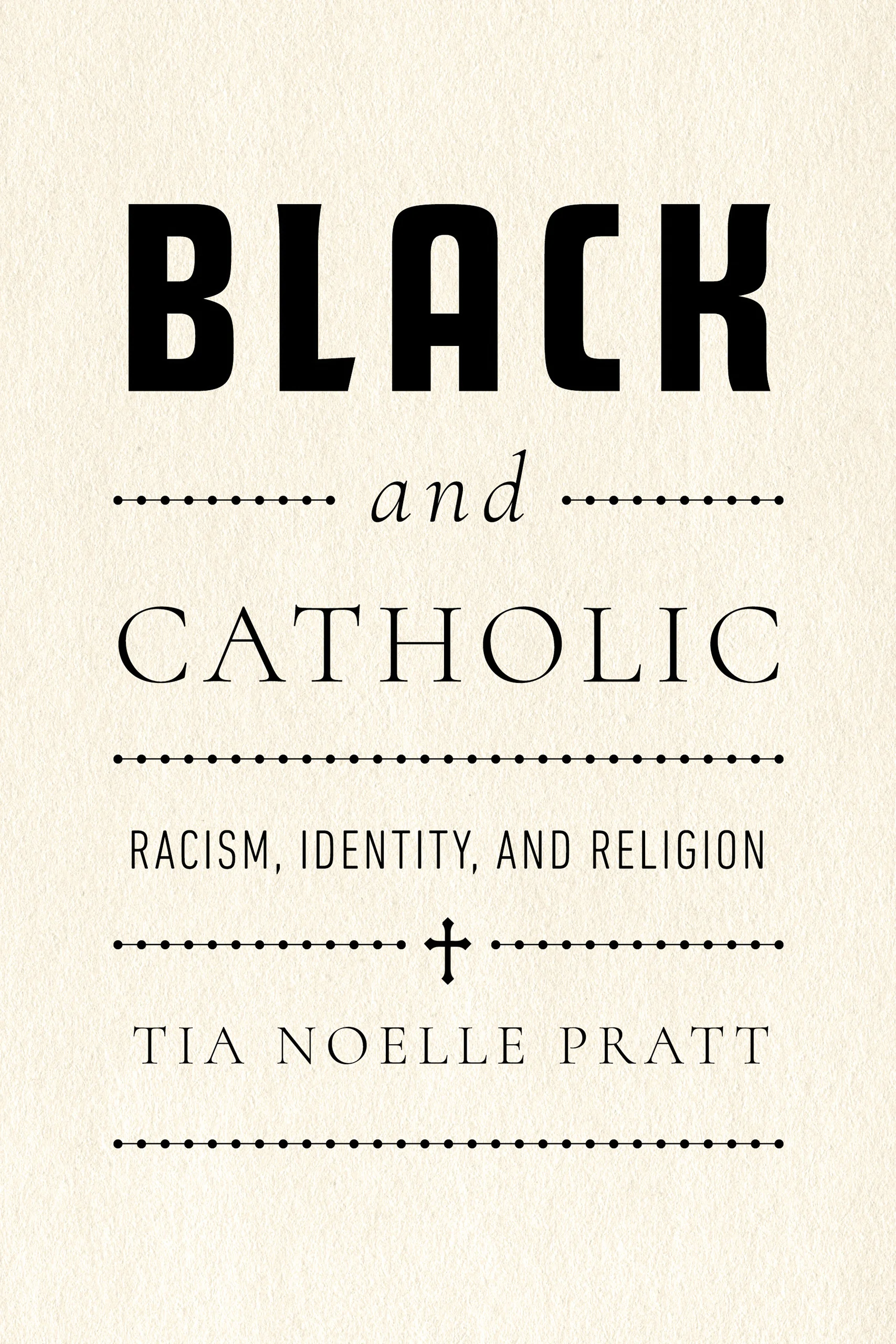
Black and Catholic: Racism, Identity, and Religion
Dr. Tia Noelle Pratt
Rana Irby is a freelance writer from Detroit, focused on the intersections of faith and culture.