As a year comes to a close, it’s common for institutions to perform a holistic evaluation and promise new goals for the upcoming year. The U.S. Catholic Church should be no exception to this practice. The past year revealed instances of concern, including the Church’s silence and caution toward addressing the sin of racism, and its lack of awareness on Black issues.
Put simply, if the Church is serious about its commitment to creating a just society, it must reckon with its failure to uphold human dignity and change how it fosters a relationship with one of its oldest populations.
For many Black Catholics, the issue is not whether the Church moved to combat racial harm, but rather if the response was sufficient to meet the powerful wave of forces so adamant on preserving the status quo, keeping Black people out of mobility and access to opportunity. The gap between what the Church proclaims on human dignity and its measures to enforce that ideal needs to be scrutinized.
With the Trump administration being sworn into office in early 2025, a swift assault on DEI was a looming threat for federal agencies and the private sector across the country. Government officials were clear with their messaging: Failure to comply with new executive action would result in fines or withholding of federal funding. As a result, many faith-based institutions were faced with cutting a commitment to inclusion or suffering harsh consequences.
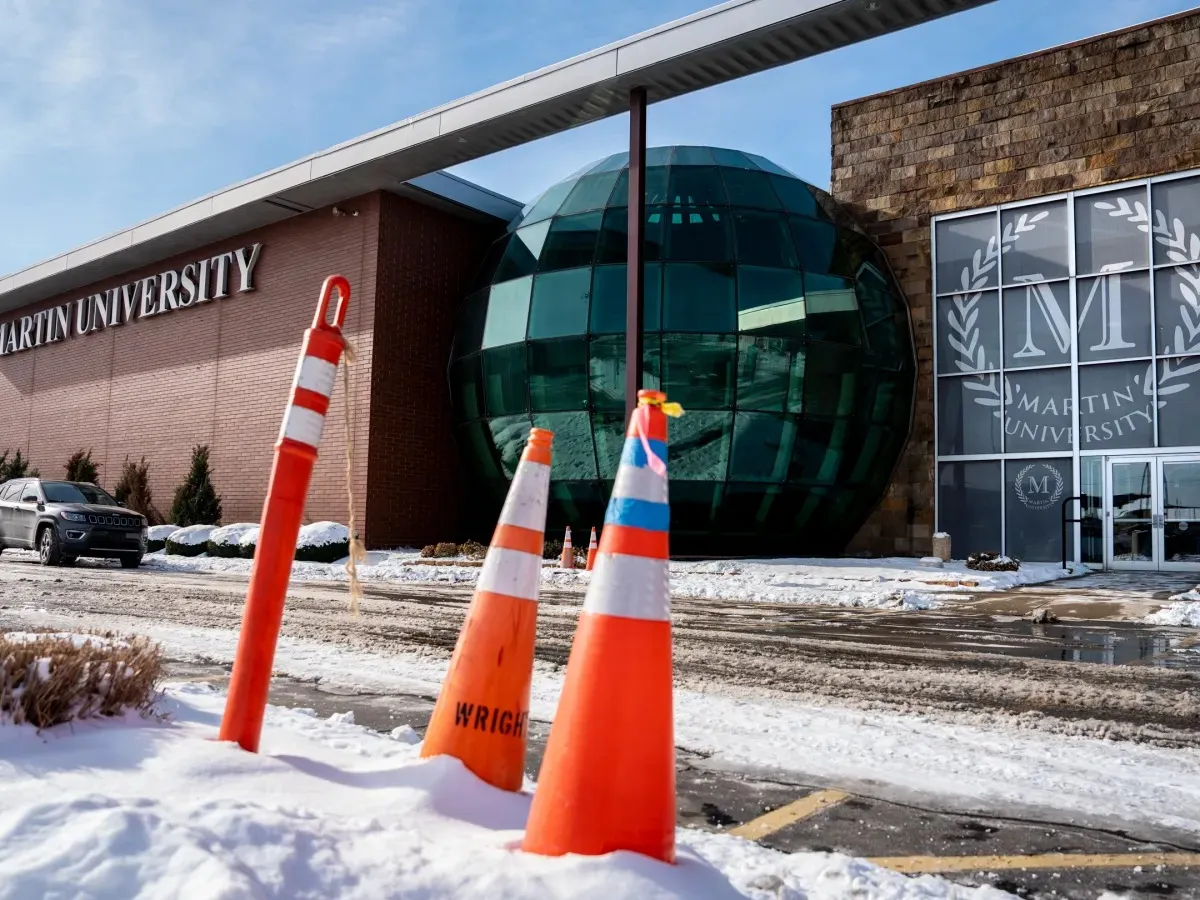
Many Catholic institutions, feeling the political pressure of losing funds and suffering federal retaliation, quickly buckled to Trump’s new executive standards. In September, the University of Notre Dame changed its Office of Institutional Transformation to the Office of Belonging, Engagement, and Mission (BEAM). On the former department’s webpage were commitments to ensuring Dr. Martin Luther King Jr.’s vision of “dismantling systems of injustice” and “creating spaces for those traditionally excluded,” along with explicit mentions of DEI. The new BEAM page, however, puts forward palatable Christian themes of love and compassion while failing to name power imbalances and structures of sin.
Similarly, both the University of Scranton and Le Moyne College took efforts to erase bold language on diversity initiatives in their institutions. Scranton removed references to systemic racism and how BIPOC communities have suffered from historical injustices. Le Moyne erased their Oath to Diversity and Inclusion and other language that centers BIPOC initiatives.
With the Catholic universities capitulating to Trump’s assault on DEI, it seems their former commitment was more for preserving profit and institutional reputation than ensuring Black students have access to programs, resources, and the university’s backing for the collective well-being. We don’t know if the institutional solidarity truly extended beyond hollow promises, and their sudden switch seems to abolish systems that sustain inequity. This is a true disservice to Catholic social teaching.
In 2025, we also saw disgraceful erasure practiced even by the U.S. Conference of Catholic Bishops, with the removal of Bishop Roy E. Campbell Jr.’s powerful essay, “DEI Means God” from the USCCB website in September. Refusing to back down from the Trump administration, Campbell addressed the White House policies as a threat to the sacredness of life:
“The current government administration that we have is working to separate us from one another, not just migrants, but many, especially people of color, who have been denied for far too long, equal opportunities in education, social recognition, and economic growth, truly denying the DIGNITY OF EVERY HUMAN BEING!”
The USCCB deleted the reflection due to it allegedly being published without undergoing the normal review process. Given the conservative push to punish and criminalize any institution that upholds DEI, the erasure of Campbell’s words only highlights how deceptive the U.S. Catholic Church can be when sidestepping racial justice, and when sidelining its already outnumbered Black American prelates.
 Nate Tinner-Williams
What stood out to me even more in 2025, though, was the absence of moral witness on so many fronts. With reports that nearly 300,000 Black women lost their jobs early in the year, 25.4% of Black children living in poverty in 2024, and a consistently high Black male unemployment rate, on economics alone there was an opportunity for the clergy to challenge the status quo at the local, state, and federal levels.
Black Americans were continually on watch as community support programs were being stripped, which disproportionately impacted their financial health. The Trump administration was adamant about eradicating borrower-friendly student loan repayment measures, which greatly benefit African Americans—who hold the most disproportionate amounts of student loan debt. Moreover, the deployment of the National Guard in Black cities like Washington and Memphis, most of which have a strong presence of Black Catholics, was met with strong disapproval. Research demonstrates that militarized law enforcement has been ineffective at reducing crime, and these tactics also erode government trust among Black Americans.
Despite all these crucial affairs, the bishops were silent. In the midst of crisis in the state of Black America, the bishops did find time to address the vilification of immigrants and the deplorable nature of Trump’s detention centers. Archbishop Timothy Broglio, then-president of the USCCB, also found time to condemn the One Big Beautiful Bill. Even so, the conference remains at a deficit on racial justice.
The time to offer spiritual platitudes that reiterate the Catholic stance on justice, human dignity, and racism is over. The day has come for meaningful action. The bishops, either individually in their diocese or collectively, have the platform to be the moral and spiritual conscience of America. Yet when it comes to speaking on racism, their prophetic voice is missing. Further, when Black Catholics fail to put pressure on their bishops, this type of silence becomes the status quo.
Even our American-born pope has touched on U.S. politics, repeatedly addressing the treatment of migrants while saying much less about racism in America. Some might say he’s the pope of the universal church, so his advocacy has to be broad. That said, pontiffs have been involved in the affairs and conditions of various countries and acted as moral leaders in defending human dignity and promoting justice.
The larger ecclesial inaction conveys a deeper problem: The Church, in its past and in its current format, doesn’t see itself as an agent in solidarity with Black communities. Many Black Catholics earnestly hope that the Church will advocate for policies and programs that redistribute power and opportunity, as well as confront inequity in political and religious aspects in a transformative way. Yet that hope has consistently been unrealized.
As we step into 2026, Black Catholics must unite to put pressure on bishops and priests to address the iniquities that are pervasive stumbling blocks to our participation in community life and human flourishing. This type of action must be the foundation upon which Church leaders spearhead devotion to Catholic social teaching and the gospel’s mandate to protect the dignity of those entrusted to their pastoral care.
At the national level, Archbishop Paul Coakley, as the newly minted president of the USCCB, is in a privileged position to amplify the message and work of the Subcommittee on African American Affairs. A willingness to champion the related needs and issues would provide a greater public witness from the Church for solidarity with the Black community.
Further, it would be beneficial for Coakley to meet with the Congressional Black Caucus to start a partnership at the intersection of Catholic social teaching and the lived experiences of Black Americans. Regardless of the USCCB’s differing views with the CBC on certain issues, they are both tasked with scrutinizing policies that impact Black America at the federal level, so Coakley’s participation would be a meaningful step for the Church as a moral leader.
 Nate Tinner-Williams
Lastly, Black Catholics have to break the cycle of unrealized promises. In other words, we have to organize. If Black Catholics can meet with their bishop or diocesan leaders to have informative, community-based discussions on religious, social, and political needs, they will not only ensure that our welfare is being centered but will also transform the Church into an ally for progress. Diocesan synods and parish-level town halls can provide clergy with the knowledge needed to respond more faithfully to anti-Black threats and underinvestment at the local, state, and federal levels.
There is no doubt that 2025 was a year like many others, with leaders putting out simplistic statements, evading moral responsibility, and lacking the courage to be a witness for racial justice. Even so, with the proper introspection and action, we can make 2026 the year when the Catholic Church’s promissory note of justice can finally be redeemed.
That redemption will not be in the form of trite remarks or caving to political pressure, but can only come with sustained engagement and a commitment to seeking the common good.
Efran Menny is a husband, father, and regular contributor to BCM. His work is informed by his experience as an educator and his studies in social work. He has a passion for elevating topics on justice and theology for Black Catholics.