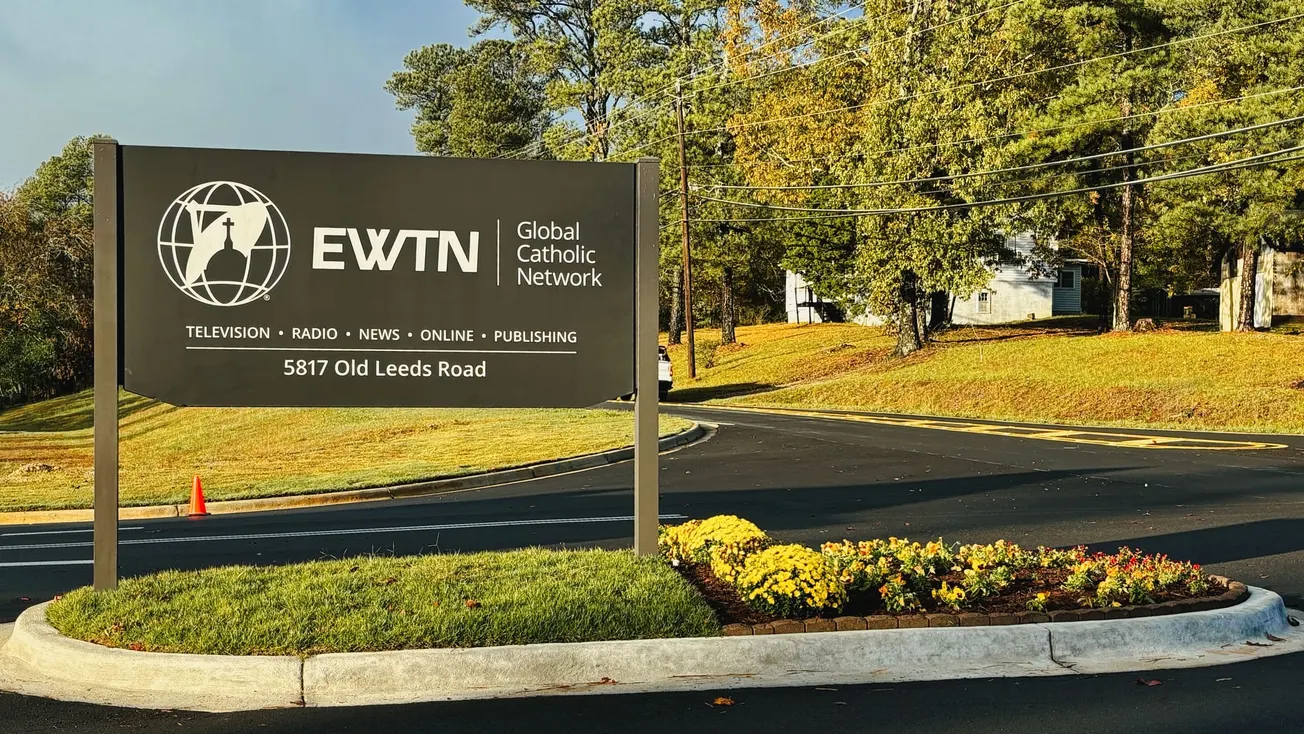
There was a time when EWTN was a regular feature in my life.
My grandmother prayed her nightly Rosary alongside the network’s nightly broadcast, which meant that the TV was hers from roughly 8 to 9pm every night. Even now, the cadence with which I pray my own rosary is heavily influenced by that nightly broadcast, as is my tendency to say “amongst women” rather than “among women”.
EWTN ceased to feature in my life at all after my grandmother died, and with her death my understanding of the network’s identity froze in time from around the year 2000 until about 2020.
EWTN, I recognize, played a huge role in the lives of Catholics during the pandemic lockdowns, providing a televised Mass with directions for making a spiritual communion as part of their daily programming cycle. Spending the summer of 2020 with my grandfather gave me occasion to once again view their programming regularly, thanks to my grandfather possessing something I did not: cable TV. Having been a reliable daily communicant prior to the pandemic, I sought out their daily Mass in an attempt to restore a sense of personal and spiritual normality. Whatever else can be said about the network, televised Catholic Mass from Our Lady of the Angels Chapel in Irondale, Alabama, is always a wonderful watch. As someone who generally does not enjoy Mass through the medium of a screen, EWTN’s is by far the best version of it that you can find on a regular schedule.
My memory of that time with my grandfather, however, is not defined by the beautiful choir or skillful liturgy. Rather, I vividly remember the last time I ever watched EWTN’s church broadcast. As Election Day 2020 was approaching, I was treated to what could charitably be called a pro-Trump stump speech in place of a homily. The presiding cleric encouraged the listening faithful to ignore Donald Trump’s obvious moral failings by stating that “sometimes God paints straight with crooked lines.” I’d heard this thought-terminating cliche before, but never from the pulpit.
The remainder of EWTN’s programming reveals that this is simply a single element of a media ecosystem designed to reinterpret Catholicism as a liberation theology for American conservatives. Trump enjoyed a media interview with Raymond Arroyo on the network in October of the same year—timing clearly calculated to put a finger on the scale of his support among Catholics. The same Arroyo makes regular appearances on the faux-journalistic Fox News, and more recently had Trump’s border czar Tom Homan on to engage in simpering apologetics for the administration's immigration policies.
Infamously, the network was so prolific in platforming critics of Pope Francis that the pontiff himself remarked upon it, calling the repeated invectives against the Church “the work of the devil”. When pressed, those in charge in the network will freely admit their conservative tilt, though they will blithely characterize it as downstream of their pro-life witness—conveniently glossing over the network’s obviously polemical and partisan tone and content.
 Colleen Dulle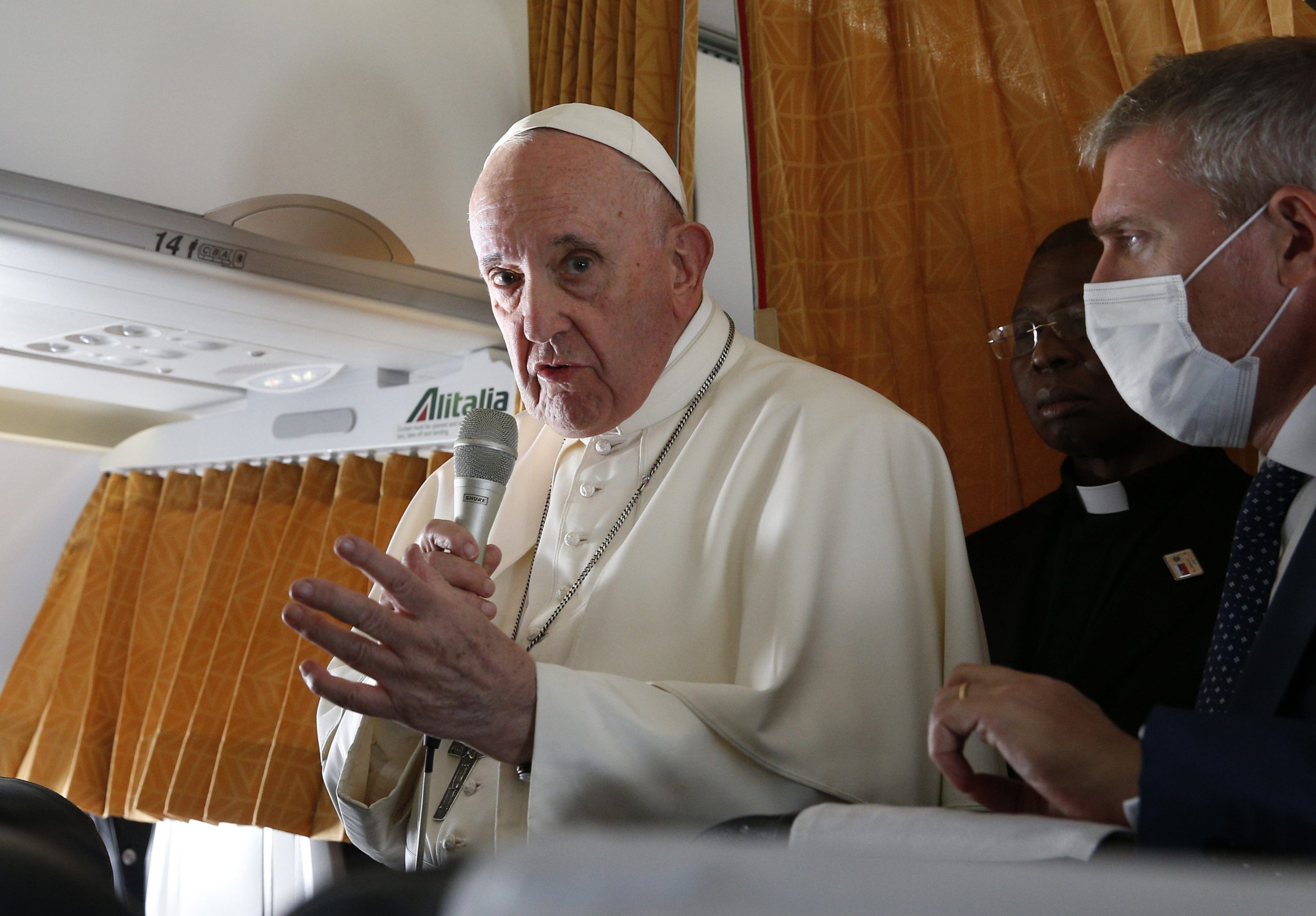
Given EWTN’s unambiguous pro-Trump editorial stance, I was understandably skeptical when a political poll was published in early December with their name on it. Sure enough, it purports to show that “[a] majority of Catholic voters in the United States have a favorable opinion of President Donald Trump and support the broad-scale deportation of immigrants who are in the country illegally.” EWTN and right-wing pollsters RealClear Opinion Research polled 1,000 “self-identified [American] Catholics,” 54% of whom supposedly said they at least somewhat favor Trump’s immigration policies, and 52% of whom supposedly have favorable views of the president himself.
I say “supposedly” only because the topline of the poll is not posted anywhere that is easily accessible. Instead, the results were reported by EWTN’s own National Catholic Register and the similarly EWTN-affiliated Catholic News Agency—upon whom we apparently have to rely for information relating to the poll. Without the raw numbers, there’s no way of definitively knowing if this was a random, representative sample. The vague category of “U.S. Catholic voters” does not account for the demographic diversity of Catholic political behavior. Even within the universe of Catholic voters, support for Trump and his border policies tends to skew older and Whiter. In the reporting, there is a token attempt to address this: The Register article acknowledges that the results vary between White and Latino Catholics. But even this was qualified by noting that within the (unquantified) universe of Latino Catholics surveyed, support for the president and the policies were evenly split.
But even assuming that these numbers are real, proportional, and accurate, the interpretation of the data is where the trouble lies. There’s an obvious attempt to make the numbers say more than they actually do. For starters, 54% is barely a majority (and 52% not at all) when the margin of error is taken into account in a poll with a sample size of 1,000. A less motivated observer of the data would likely read the raw percentages as indicative of sharply divided opinion rather than majority support. The tipping point from one conclusion to the other is itself a matter of interpretation, and given the slanted narrative of the reporting on the poll, there’s obvious gamesmanship afoot.
The game is given up entirely and without much ceremony by way of CNA’s heading partway through its story on the poll: “Support for deportations at odds with bishops.” The section, preceded by the White House’s boasting of “historic support” among American Catholics, includes a quote from a theology professor, Dr. Chad Pecknold, to the effect that the poll tracks with general public support for Trump’s immigration policy. (That claim can charitably be described as fanciful.) CNA juxtaposes Pecknold’s comments with the U.S. Catholic bishops’ near-unanimous condemnation of “indiscriminate mass deportation,” and Pope Leo XIV’s encouragement for American Catholics to follow the bishops’ instruction in this regard.
The section is capped off with Pecknold’s diagnosis of the supposed intellectual flaws of the bishops’ exhortation, which he blames on a “badly outdated” reliance on “liberalism, and Popperian ideas about an ‘Open Society.’” The USCCB was offered the opportunity to comment, presumably to either rebut the accusation or to explain the disconnect between their unified message and popular opinion. Shockingly enough, they did not take this opportunity. The amateurish attempt by CNA at viewpoint balance by allowing the bishops to have their say does not disguise that the thrust of the article is the assertion of a vulgar populism.
The unsaid (but easily visible) theme of the article is that the pious, believing man in the pew is behind Trump, and that the bishops are out-of-touch spiritual elites who have compromised their pastoral mission in pursuit of an extra-Christian political philosophy. The bishops have, by this telling, placed their credibility as moral teachers in danger by refusing to affirm the consensus of faithful, conscientious Catholics in “prudential matters”.
 CNA
CNA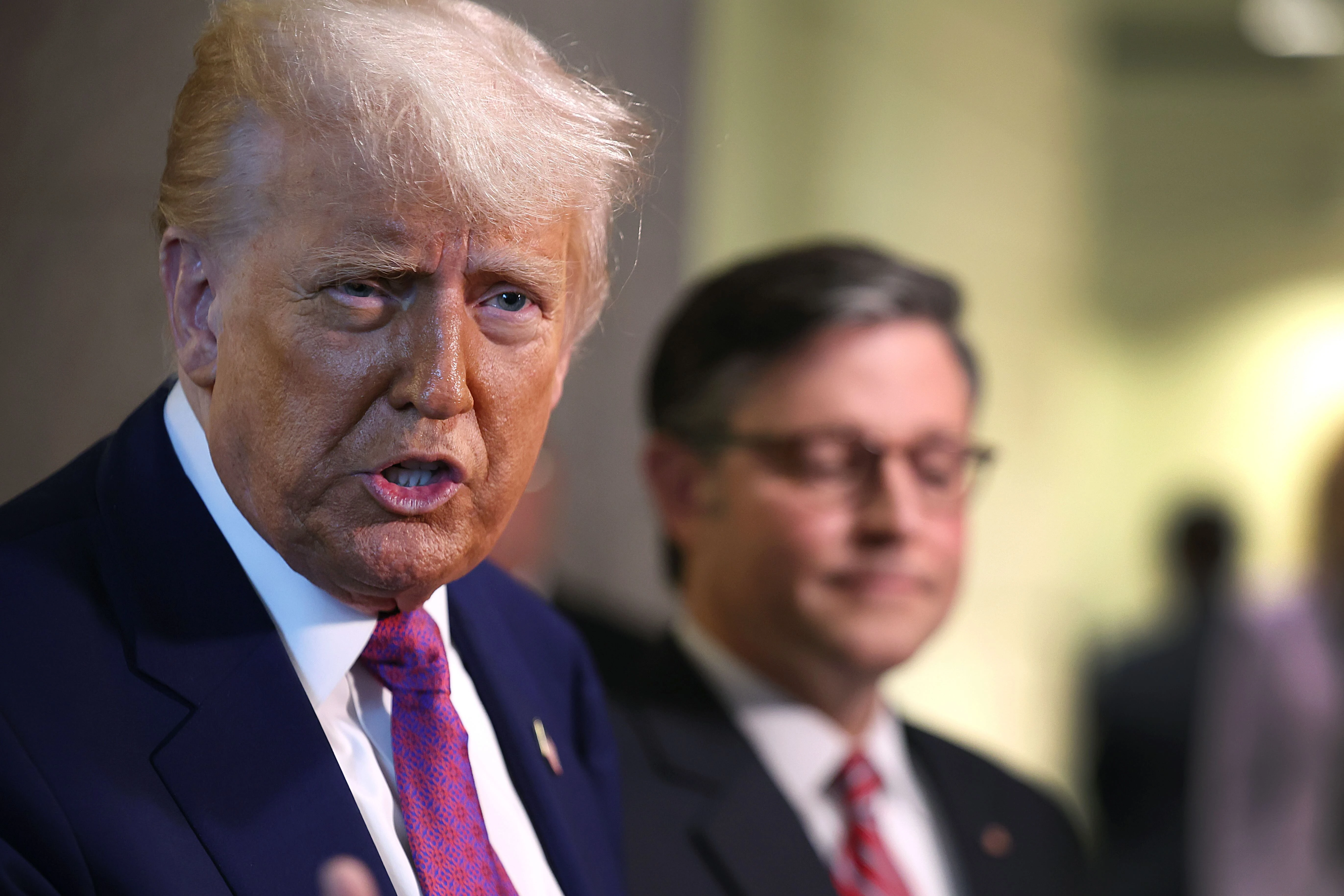
That the numbers supporting this supposed consensus have to be fudged is only part of the problem. The chief issue is the moral presuppositions that consistently underlie the Catholic defense of Trumpian immigration policies. It begins with a set of false assertions, a manufactured crisis that justifies extreme, indiscriminate action. The groundwork for this was already laid by the hyperbolic, frequently false statements made about immigrants during Trump’s most recent presidential campaign. Now, however, that tendency to lie and scapegoat has been given the weight of policy and enforcement.
The set of falsehoods is then run through a malformed theology, which downplays the inherent dignity of the human person and overemphasizes the permissibility of legal limitations on migration. There is already a microbiome of language crafted to suit this moral calculus; terms such as “toxic” or “suicidal” empathy, or “forced charity” are bandied about with abandon by many who find their politics aligned with Trump. This language is designed to construct a false dichotomy between the “well-formed” Catholic who affirms both the necessity and the permissibility of Trumpian border policy and the moral critic of this regime who is said to be motivated not by an alternative reading of Catholic doctrine, but by the distortion of that doctrine via secular liberalism and pathological feelings of compassion.
Homan has had his say on the matter on EWTN already. In his interview with Arroyo, he argued that Catholic leadership should be on the side of the Trump administration. In doing so, he lays his Manichean logic down flat:
“The most humane thing you can do is enforce the law, secure the border, because it saves lives. The Catholic Church should support keeping the community safe again.”
In other words, the choice is between public safety and law enforcement or anarchy and indifference. Homan builds his case by appealing to an exaggerated association between illegal immigration and drugs, human trafficking, terrorism, and criminal gangs. By his account, a straightforward application of Catholic principles requires him to do what he’s doing. In his view, the bishops disagree simply because they don’t know what he knows. If only they knew the gritty reality of border security, they would be his biggest fans.
The subtle irony of this framing is that it is the likes of Pecknold and Homan who have distorted Catholic teaching in the service of secular ideology, not the bishops. There is simply no way to marshal the Catholic faith in defense of Trump’s border policy without distorting it beyond recognition.
To some extent, the would-be cheerleaders for the administration know this already, which is why they have to reframe the issue around legality. Despite their insistence, the right of the U.S. government to enforce its immigration laws is not, and has never been, the issue. The manner of that enforcement and the justifying principles behind it are. The joint statement of the U.S. bishops does not argue against the existence of immigration law, but rather the arbitrary, indiscriminate enforcement of it by the current regime, coupled with rhetoric that demonizes and dehumanizes immigrants. The joint statement expressly refuses the opposition of security and humanity:
“Human dignity and national security are not in conflict. Both are possible if people of good will work together.”
On November 12, 2025, and for the first time in 12 years, the U.S. bishops issued a Special Message addressing their concern for the evolving situation impacting immigrants in the United States. Collectively, the bishops have invoked this particularly urgent way of speaking as a…
— U.S. Conference of Catholic Bishops (@USCCB) November 13, 2025
The inhumane treatment of those subject to deportation is a clear and obvious violation of the Catholic principle of the dignity of human persons. Despite Homan’s assertions to the contrary, a person can’t forfeit this dignity—which is God-given and inheres at the moment human life comes into being—simply because they’ve broken the law. Pope Leo has also expressed his concern about the tenuous relationship between immigration enforcement and public safety, a concern that is borne out by the data. Empirical studies have failed to justify the supposed grim choice between uncritical support of scorched-earth immigration enforcement and a lawless abyss of crime and danger. The Trump administration’s response to this fact is to do what it has always done when confronted with inconvenient facts: assert an alternative set of “facts” with completely unjustified certainty and bravado.
Appeals to the Catechism’s exhortation that states may impose reasonable legal limits on immigration are of no help here. The wanton thuggery of ICE enforcement raids can scarcely be countenanced by secular law, let alone any Catholic conception of “juridical conditions” on immigration. The bishops have raised concerns about the conditions of detention, the separation of families, profiling by enforcement officers, indifference towards the outcomes of enforcement actions, and the violations of the sanctity of hospitals and houses of worship.
Many of these measures have been undertaken by the Trump administration in a manner calculated to circumvent legal limits. The conditions of detention are so horrific that they’ve merited judicial intervention. The administration faces lawsuits from Catholic leaders who are routinely denied the ability to provide pastoral care to inmates at the facilities. Even the Catholic prelates recruited to serve as Trump’s mascots have been critical of this policy. The disregard for human life in this enforcement regime has been appalling, with 2025 being the deadliest year for ICE since its founding. Moreover, the explicitly White nationalist aims of this regime of enforcement do not fall under the ambit of legitimate state goals. Whatever the official justifications may be, rampant racial profiling, the failure of the enforcement to meet its stated goals, and the outrageous, disturbing public statements made by the president and other White House officials indicate that the goal is not to safeguard the common good, but to promote a particular racial and ethnic makeup in America. Ignoring this reality simply because it is indelicate to accuse public figures of racism is not an exercise of prudence. It’s patent dishonesty.
The distinctly Trumpian populism that underlies the narrative of justification is also illustrative of this distortion. The line of thinking proceeds how most populism does: Constructing a public, assigning to that public a general will, and defining a moral axis of right and wrong based on how it accords with that general will. Opposition to that will is said to be the province of a corrupt elite, motivated not by a higher moral principle, but by self-interest or snobbery. In this case, it is assumed that the majority of American Catholics who attend Mass regularly represent the true Catholic position. The bishops, in this framing, are an elite corrupted by a desire for political relevance, and are thought to be better off following the lead of the pious Catholic public.
This is certainly rhetorically evocative and emotionally satisfying if you’re a pro-enforcement layman, but it’s bad theology from top to bottom. It has been observed, for example, that the vast majority of American Catholics dissent from the Church’s teachings on abortion and artificial birth control. For decades, plenty have argued that this is a sign that Church teaching on both issues are in need of revision. The idea that the USCCB’s persistence on these matters is simply a sign of their influence by secular authoritarianism and anachronistic ideas about human sexuality would be met by Pecknold and the like with nothing but contempt. And they wouldn’t be wrong. But consistency, both moral and logical, would demand that same principle apply across the entire suite of Catholic social teaching.
 Guest Writer
The truth, as Flannery O’Connor once said, does not change according to our ability to stomach it emotionally. Catholic doctrine isn’t decided by referendum, and thank God for that. If it were, it would never challenge, never cause discomfort, never make demands for self-sacrifice. This sort of morally aimless anti-establishmentarianism is both foreign to and completely incompatible with Catholic teaching. Worse than that, it is a form of tactical dishonesty. It is a weapon against ideological opponents, who can be cast as part of an oppressive elite, and is a balm of comfort to the consciences of ideological supporters, who can dismiss moral criticism as little more than the imposition of a false ideology.
But it is not at all surprising to see this sort of crass majoritarianism being peddled in a self-professed Catholic publication like EWTN. This is the organization’s contribution to the aforementioned ecosystem bent on transforming Catholic teaching into an ideology of comforting myths, justifying the selfishness of the right sort of people. EWTN has abandoned any pretense of standing for truth. Instead they peddle to their viewers a soothing narrative of moral superiority and invincible piety, challenges against which are dismissed as encroaching liberalism. Viewers are reassured that moral issues to which they are indifferent are simply matters on which reasonable minds may disagree, but those that they do care about are moral non-negotiables that Catholic teaching cannot do without.
The archetypal form of religious hypocrisy is to declare that the sins one is personally guilty of are trivial or non-existent, while condemning the sins of others in absolute terms. EWTN has adopted this as a policy, running programming that rails against the evils of abortion and divorce while justifying or excusing the evils inflicted upon immigrants, the poor, people of other countries, and victims of police brutality. The network broadcasts denunciations of Pope Francis’ exhortations of mercy and pastoral care for gay people and divorced couples as confusing and demoralizing to faithful Catholics while being willing to countenance the sinful nature of the president and his administration as the work of God “writing straight with crooked lines.” They denounced the COVID lockdown measures when they closed churches, but demonstrate manifest indifference to their brothers and sisters in faith being forcibly denied access to the sacraments by heavy-handed immigration enforcement. They decry a spirit of relativism in the broader culture, but eagerly embrace it as a political value, disguising it by abusing the church’s own doctrinal language.
Fr Albert Nolan, a Dominican friar who served as one of the most influential religious leaders against Apartheid in South Africa, articulates the evil in such work extremely well. Applying the framework announced by John Paul II’s “Sollicitudo Rei Socialis,” Nolan identifies “structures of sin” as distinguishable from sinful social structures by the nature of culpability. A sinful structure is unjust, exploitative, oppressive, and dehumanizing. A structure of sin is the network of guilt reproduced by that unjust system.
“All those who knowingly and willingly build the structures by making the laws, designing the policies, fabricating rationalizations for it, and promoting its false values would be guilty. But not only them. All those who reproduce the system daily by knowingly and willingly benefitting from its injustices and making excuses for their conformity to the demands and temptations of the unjust arrangements and relations are also guilty… So, behind and within structures of sin are numerous individuals who are personally guilty.”
Nolan also speaks of the insidious nature of such structures, and their tendency to lead into temptation:
“Such structures legitimate sins of discrimination and justify our indulgence in unjust practices. Structures of sin make it difficult for us to see anything wrong with our selfishness. In fact, they make what is wrong appear to be right – at least for those who benefit from the way society is structured.”
Make no mistake, justifying the actions of the current immigration regime, calculated to oppress and inflict gratuitous suffering, is sinful. A media apparatus devoted to justifying this is a structure of sin. Attempts to justify that sin through appeals to Catholic teaching is the result of a conscience that is either fundamentally deformed or atrophied from disuse. To the extent that EWTN maintains its character as a structure of sin, tempting its subscribers to ignore pangs of conscience and dismiss out of hand the moral criticisms from the Church, it is indeed doing the work of the devil.
It must be conceded that the EWTN poll did find a plurality of strong support for Trump’s border policy, and stronger opinion for than against. Whatever methodological questions may linger about this data, this is an alarming statistic in any population of Catholics. 500 Catholics expressing even moderate support for this administration’s policy of immigration enforcement is 500 too many. More general data regarding the matter suggest that support and opposition is strongly politically polarized, illustrating the fact that it is far too often the case that American political behavior is tribal rather than moral.
This is particularly salient for American Catholics, who are called to reconcile a faith that demands consistency and universal standards of morality to a democratic, pluralistic political system. Far too often, Catholics have responded to this tendency with a bottomless capacity for self-deception and hypocrisy, claiming absolute, uncompromising moral certitude for those issues which align with their political tribe, all other issues demanding conditional, relative, or neutral stances. “Prudential matters” becomes a rhetorical shield against moral criticism, a coded advocacy for indifferentism rather than a guidepost for reasonable disagreement.
This is a cause for shame and an occasion for reflection. We could all benefit from a call to be more catholic in our thinking. As Catholics, we are not called to embrace a particular political ideology. We are instead being called to live our faith by embracing the implications of our common humanity. The idea that such a call could be dismissed out of hand as an ideological imposition is telling of our priorities in the worst possible way. Whatever you may hear on TV, solidarity with the oppressed is non-negotiable for anyone who believes in the Gospel. Regardless of what any majority might think, recognizing and honoring the dignity of all people is an imperative to anyone who professes the Catholic faith. That is not liberalism. That is Christianity.
I cannot help but think of my saintly, Fatima-devoted grandmother, and what she might make of what EWTN has become. As she reached the end of her life, EWTN was a lifeline to the faith that had defined her life, and through her, had defined mine. That EWTN uses that reliance, that platform that they have cultivated, to justify the unjustifiable is deeply tragic. My grandmother never saw any contradiction between her profound, highly traditional faith and her call to solidarity and social justice. There is no contradiction, in fact, except that which is manufactured by spin doctors. Anyone with Christian aspirations, who takes seriously the call to be a light to the world, needs to aspire to do better than what the devil is offering.
Jack Champagne is a lifelong Catholic, former Catholic Worker, and graduate of the University of Pittsburgh School of Law working in the area of human rights and economic justice. He works as a teacher and youth athletic coach in addition to practicing legal advocacy.

_-_road_sign.jpg)