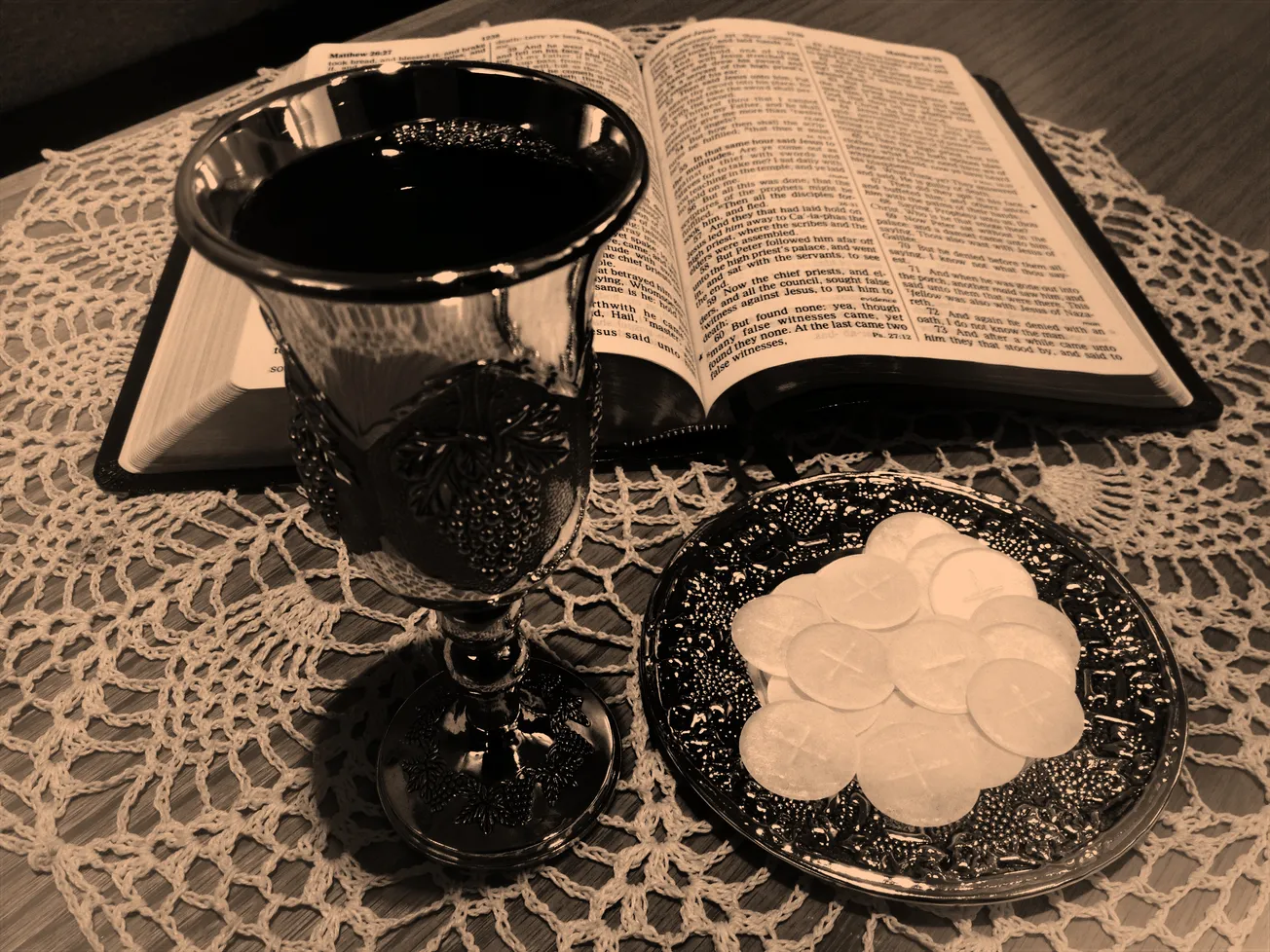
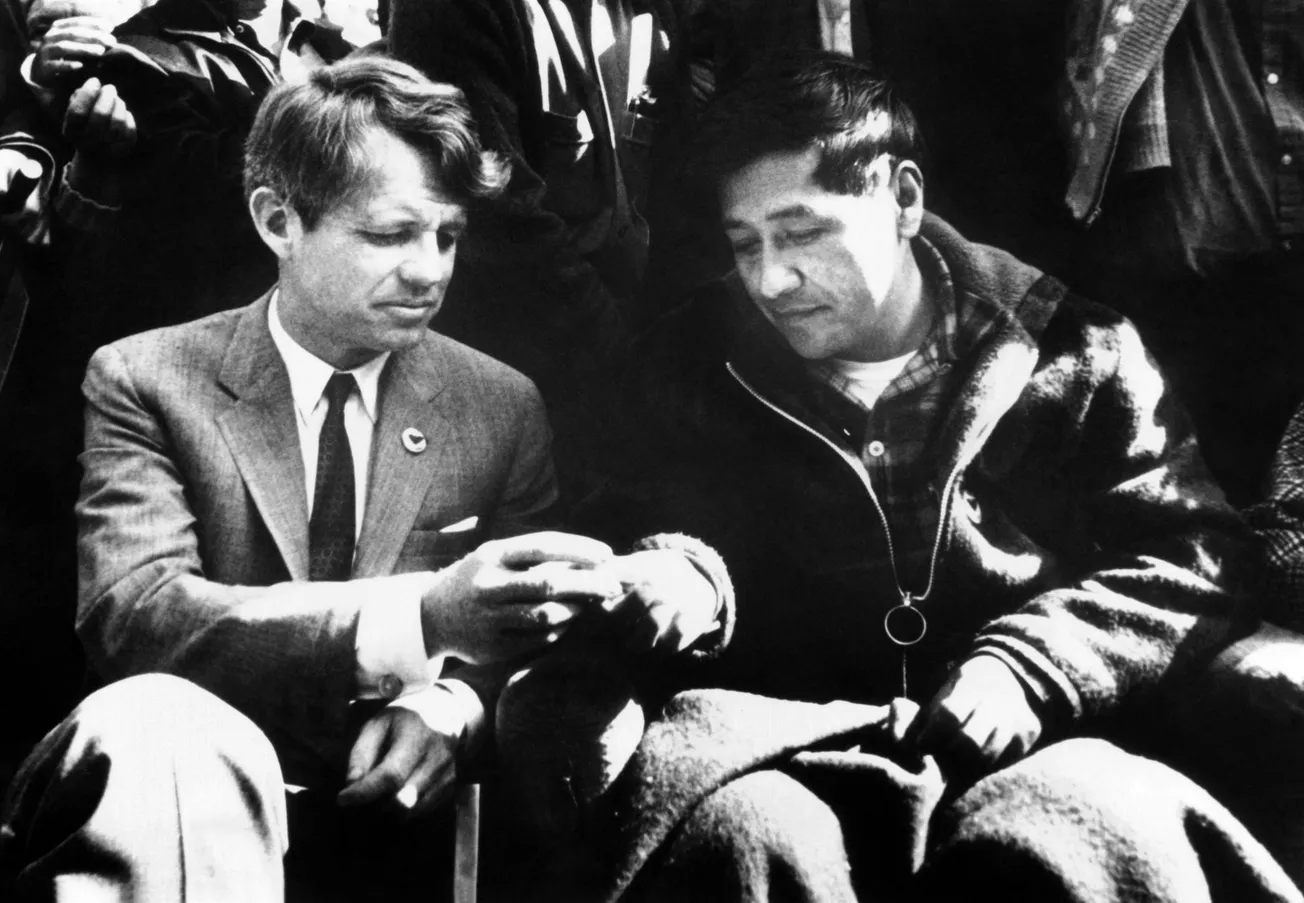
Bread has always carried sacred meaning in the Christian imagination. In 1968, Cesar Chavez understood this when he ended a protest fast not with a speech, but with a small piece of bread shared publicly with thousands of farmworkers in Delano, Calif.
After 25 days of voluntary hunger, Chavez chose nourishment not as celebration, but as witness, a reminder that the struggle for labor justice was also a spiritual discipline rooted in restraint, prayer, and nonviolence. At his side, Sen. Robert F. Kennedy Sr. became part of a moment that blurred the line between protest and pilgrimage, between public action and moral devotion.
Chavez’s leadership was shaped deeply by Catholic spirituality. Prayer, fasting, and devotion were not ornamental gestures added to activism. They were the foundation from which his commitment to justice emerged. Catholic teaching and spiritual discipline shaped how he understood social justice, labor dignity, and moral leadership. His movement embodied solidarity expressed through action, the joining of contemplation and public witness, where interior formation became outward courage.
This moral language did not belong to Chavez alone. Dr. Martin Luther King Jr., its most prominent champion in America, recognized Chavez’s symbolism immediately. During Chavez’s fast, King sent a message praising the sacrifice as a living example of disciplined nonviolence—drawing on the same Gandhian tradition that shaped King’s own ministry. Gandhi, King, and Chavez stood in different cultural and religious contexts, but shared a common understanding that nonviolence was not passive resistance. It was spiritual discipline, interior formation, and public courage joined together.
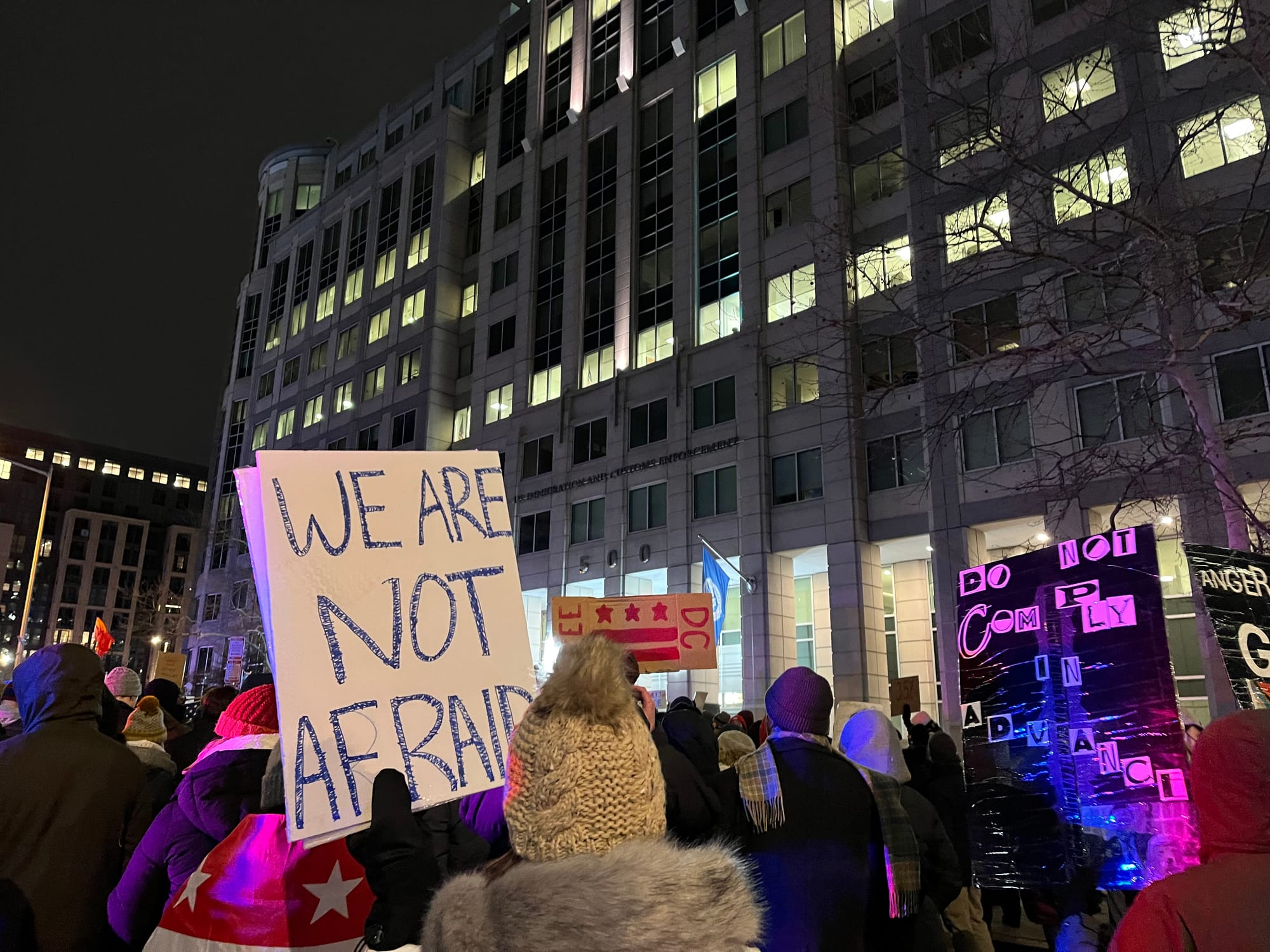
More than 50 years later, Minnesota has become one of the most visible stages where these same tensions are playing out. Protests, enforcement actions, and public conflict have turned workplaces and neighborhoods into contested spaces. Yet Minnesota is not alone. What we have witnessed there reflects a national struggle over how the country understands labor, migration, and belonging. Beneath the headlines lies a deeper moral question that cannot be answered by policy alone.
America faces a moral reckoning. Will public institutions and faith communities choose fear or courage? Will leaders hide behind neutrality or speak with moral clarity? Our production systems depend on the labor of the poor and the stranger, yet too often we repay that service with suspicion and exclusion. When fear is projected onto those who harvest our food, build our homes, and care for our communities, it reveals not only a policy failure, but a spiritual one. Silence in such a moment is not prudence. It is participation in injustice.
People do not come to this country by accident. They come because the economy pulls them here. Across the nation, immigrants fill labor gaps created by aging populations and shrinking workforces. In Minnesota and beyond, tens of thousands of undocumented workers labor in construction, food service, manufacturing, health care, and agriculture. These workers are not abstract statistics. They are parents, parish members, neighbors, and taxpayers who are essential to the daily rhythms of American life.
Catholic social teaching reminds us that the economy exists to serve people, not the other way around. Yet many immigrant workers remain trapped in physically demanding jobs with low wages and limited protections. Migrant agricultural workers face income insecurity, occupational exposure, transportation barriers, and limited access to preventive health care. These realities expose a painful contradiction. The labor of immigrants is welcomed, but their full humanity is often contested.
This contradiction is not new. In 1968, farmworkers harvested food that fed the nation while struggling to feed their own families. Chavez’s fast made invisible labor visible. It forced the public to confront the moral cost of an economy built on exploitation and silence. Today, the same pattern persists. Immigrant labor supports prosperity and growth, yet public discourse often treats workers as threats rather than neighbors.
Many faith leaders have begun to name this clearly. In response to violent immigration enforcement actions in communities such as Minnesota’s, they have described the moment as a profound moral failure, calling attention to how fear and dehumanization corrode the social fabric. Their language echoes the heart of Church teaching, which insists that public life must be measured not only by efficiency or legality, but by whether it honors the sacred worth of every person.
Faithful leadership requires more than private belief. It requires public witness. Sen. Kennedy’s presence in Delano mattered not only because of political influence, but because he chose to stand physically beside those who were suffering. King’s message mattered because it named nonviolence as moral strength rather than weakness. Chavez’s fast mattered because it transformed spiritual discipline into collective action.
America now faces the same question that confronted the nation more than half a century ago. Will institutions continue to benefit from invisible labor while ignoring human suffering? Will faith communities retreat into comfort or step forward with courage? Will leaders design systems shaped by fear, or by dignity and solidarity?
Breaking bread in Delano was not simply about ending a fast. It was about reminding the nation that justice begins with seeing one another fully. Today the bread is different and the geography has changed, but the call remains the same: to bear witness to human dignity, resist the politics of fear, and live the faith not only in words but in public action.
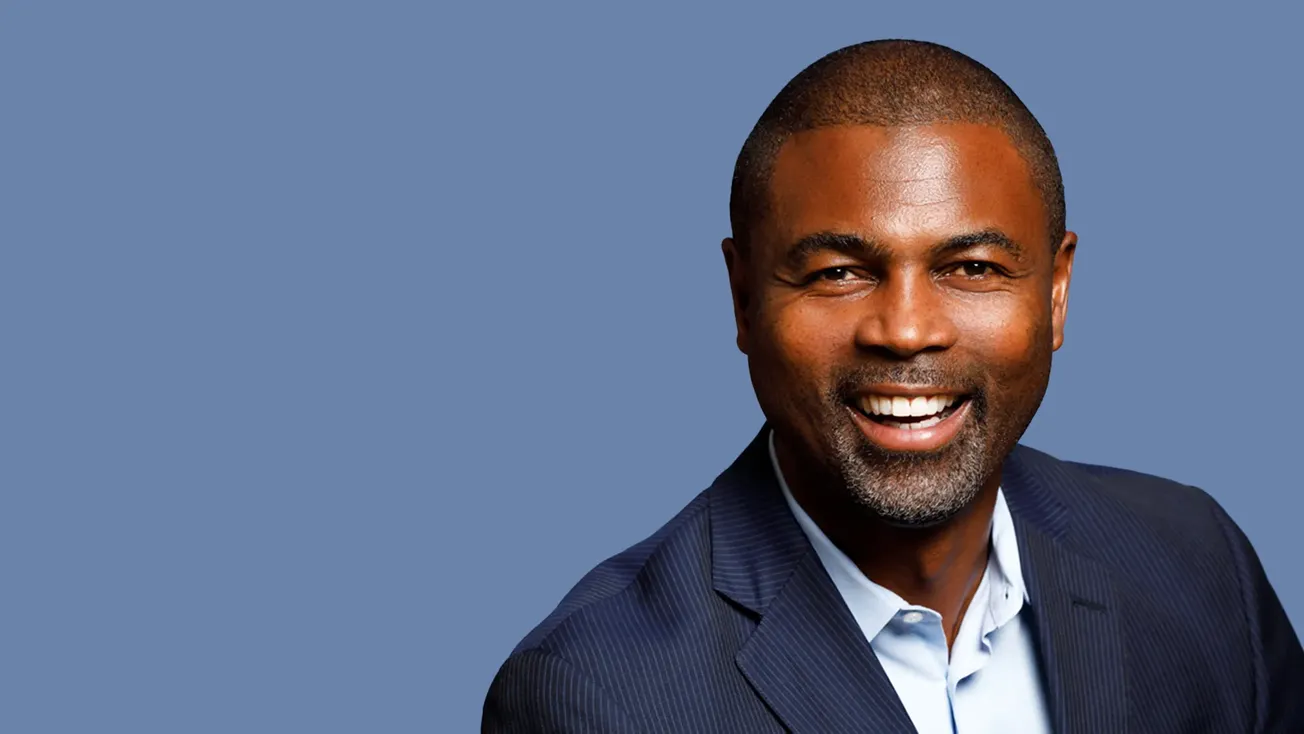
Malcolm K. Oliver, Ph.D., MPA, is dean of the John S. Watson School of Public Service at Thomas Edison State University in New Jersey. His work focuses on public service leadership, ethics, and the formation of institutions committed to human dignity, the common good, and responsible stewardship.