St. John the Baptist gave us one of the boldest examples of proclaiming truth when moral evil abounds. He was willing to confront King Herod Antipas and Herodias for their unlawful marriage, and instead of cowering in fear of authority or speaking in a way that veils the truth, John was unwavering in his commitment to God. He held the moral law as the standard to address sin. Due to John’s fiery preaching, ultimately Herodias had him beheaded.
John the Baptist joins the long tradition of prophets like Isaiah, Daniel, Elijah, Micah, and so many more who challenged injustices with the words of God. This holy and bold witness isn’t limited to the pages of Scripture but is something we can access through our baptism. In the sacrament, we too share in the threefold ministry of prophet, priest, and king. This heavenly call demands not just assent to faith but a lived witness to God’s truth even (or especially) when political and social evil abounds. The clergy, who share most deeply in this ministry, can communicate a bold witness of truth, naming sin and calling for conversion in a way that amplifies the mission of Jesus.
The Catechism of the Catholic Church names as “structures of sin” those systems that both mirror and perpetuate individual transgressions. Church leaders betray the gospel's call to the truth and repentance when they refuse to name those linked to power, laws, and institutions that champion injustice.
In the wake of grave injustice and assaults on human dignity, statements are at times released by the U.S. Catholic bishops as a collective, or by bishops who lead a given diocese or a relevant committee or institution. They typically do a good job of stamping the importance of Catholic social teaching, but they often refuse to name and challenge who or what sustains the inequality in question. Many will say this is an attempt at neutrality, but this feeds into avoidance, which allows abuses of power to continue to thrive.
Furthermore, when our clergy refuse to directly confront and name those in authority or systems they protect, they forfeit their prophetic responsibility to call out the oppression of historically neglected and marginalized groups. This type of ecclesial omission has to change so that moral leadership is ensured.
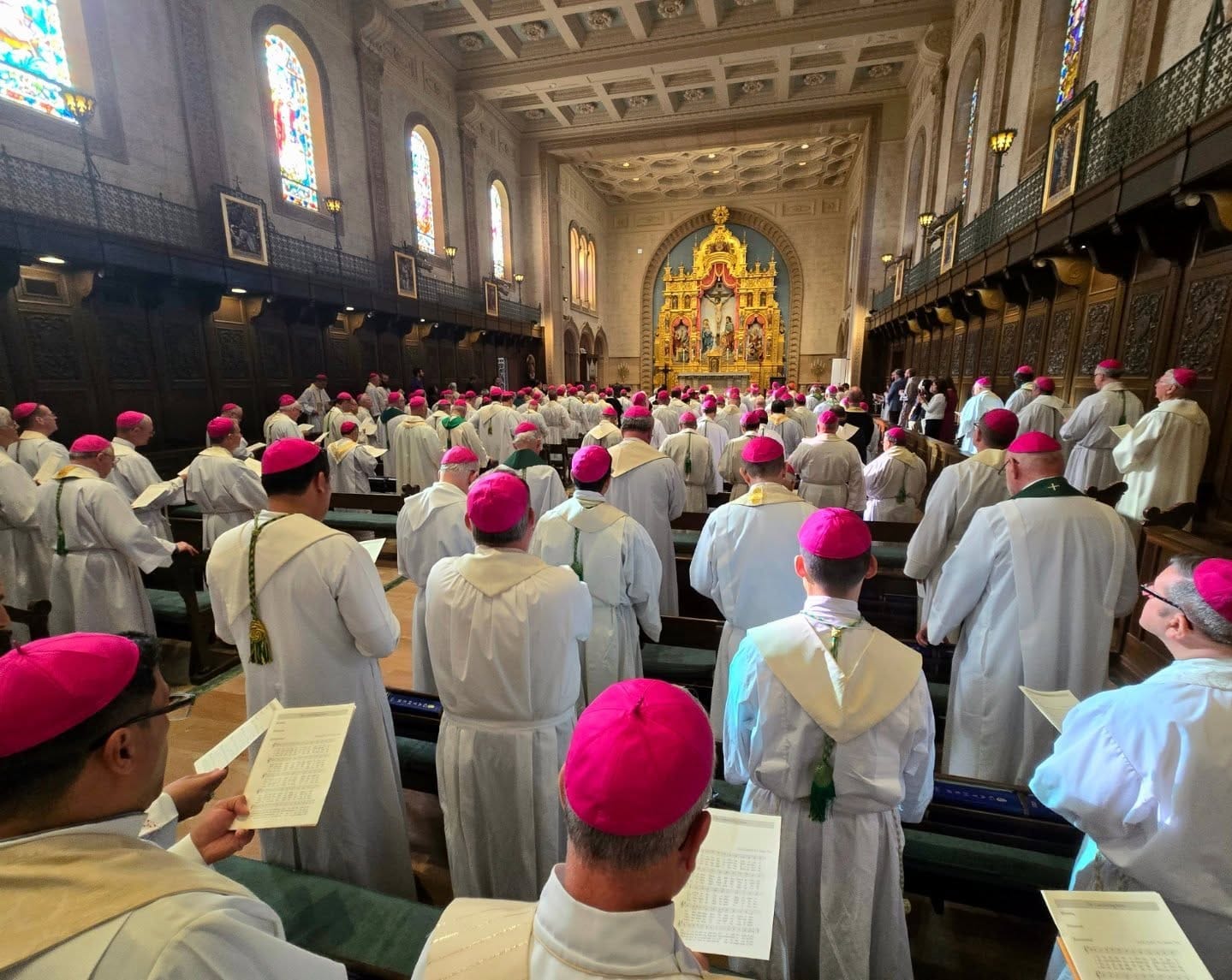
Every year on Dr. Martin Luther King Jr. Day, we can expect Republicans to elevate a colorblind depiction of King. For their part, Democrats emphasize his greatness as a commitment to service, unity, and symbolic acts of love. Meanwhile, many in the Catholic Church opt for a false middle ground that touches on justice but fails to name the injustices that King fought against. This pattern was evident when Archbishop Paul Coakley of Oklahoma City, president of the U.S. Conference of Catholic Bishops, shared a message that minimized the urgency of King’s prophetic witness and the systemic injustices he worked to dismantle.
Reflecting on King’s famous “Drum Major Instinct” sermon, Coakley offers strong exhortation for works of mercy:
“What does it mean to be ‘a drum major’ in our own communities? Dr. King’s sermon encouraged people to be leaders in the priorities that Christ gave us: to feed the hungry, give drink to the thirsty, welcome the stranger, clothe the naked, care for the sick, and visit those in prison.”
Coakley’ recommendations for charitable works are noble, but hardly capture the essence of King’s call to justice. Not only would King have wanted the conversion of hearts from hate to love, but he would have opposed the criminal justice system that perpetuates mass incarceration of Black Americans, as well as the corporations and the rich who use capitalism as a means to widen the inequality gap.
The archbishop’s elevation of King stresses a typical, charity-driven call to action that expects individual power to triumph against racism instead of direct confrontation of policies, institutions, and figures that uphold the status quo. Coakley, like many others, fails to embrace the bold Black radical and anti-capitalist vision that King gave his life for, preferring to use language that leans more into self-reflection for individual conscience while structures of sin go unchecked.
Moreover, Coakley, in his reflection, does mention the “sin of racism,” but to what end? Does he point out the policies that further the chasm preventing access to resources, the realities of the disparities highlighted, or the Republican and conservative rhetoric that perpetuates dehumanizing images? Coakley and the many other Catholic clergy who treat the sin of racism as an abstract problem in our nation allow institutions and figures to remain unchallenged while moral credibility is lost, which ensures injustices are never addressed. Believing that racism is more an individual problem than an intertwined system makes living out King’s call for direct action impossible.
Earlier in January, the global community watched as the Trump-Vance administration invaded Venezuela with a large-scale military operation to capture President Nicolás Maduro and his wife on U.S. federal charges of narco-terrorism and other offenses. The military interference in another sovereign country, a move that many viewed as a sidestepping of international law, was met with strong condemnation from Democrats and many Republicans.
Weeks later, Cardinals Blase Cupich of Chicago, Robert McElroy of Washington, and Joseph Tobin of Newark also responded, condemning America’s broader foreign policy in a joint statement:
“The events in Venezuela, Ukraine, and Greenland have raised basic questions about the use of military force and the meaning of peace. … Our country’s moral role in confronting evil around the world, sustaining the right to life and human dignity, and supporting religious liberty are all under examination.”
Further, they stated:
“We renounce war as an instrument for narrow national interests and proclaim that military action must be seen only as a last resort in extreme situations, not a normal instrument of national policy.”
Their message is a timely reflection but fails to address the Trump-Vance doctrine of using historical imperialist practices over nations to control resources. Without naming the culprits that control the American military and the kinds of corporations that will benefit from U.S. imperialism, the cardinals refuse to properly place accountability, which abdicates moral responsibility in our foreign policy and military activity.
The cardinals spoke broadly about “national interests,” but the underlying systems connected to President Trump’s desired $1.5 trillion military budget need to be addressed. Sidestepping the ever-growing military-industrial complex and the belief that America needs to continue being the military leader of the world, their joint letter fails to call out the powers that fuel our policymaking. Already at nearly $1 trillion, U.S. military spending outstrips all other nations and is more than the next nine countries combined. This alone should have spurred the cardinals to condemn American militarism and the perceived necessity to project global power—both of which are ever-present threats to the dignity of human life.
Pope Leo XIV also expressed strong moral judgement against the invasion of Venezuela, adhering to Catholic social teaching but failing to name the American militarism at play. While avoiding partisan alignment, Leo didn’t address the Trump-Vance foreign policy directly in a moment that demands accountability, leaving his statement absent of confronting U.S. militarism and interventionism.
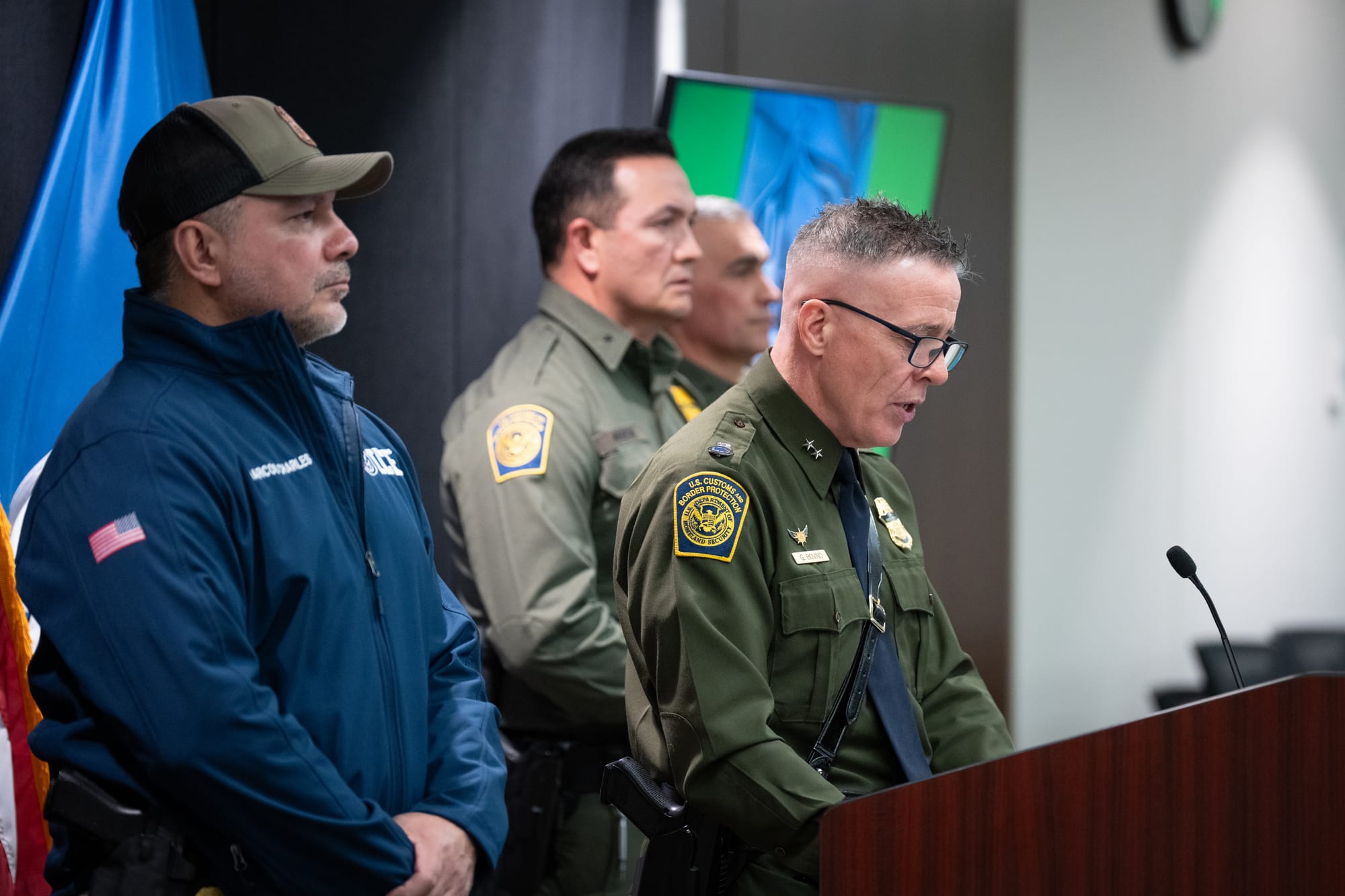
Since the Trump-Vance administration took office in 2025, its immigration crackdown has intensified across the nation with paramilitary operations in several cities. We’ve seen the fatal shootings of Keith Porter Jr., Renée Good, and Alex Pretti, which have caused more scrutiny of the operations and their methods.
Archbishop Bernard Hebda of Saint Paul and Minneapolis released statements on both Good and Pretti that use typical Catholic language of introspection, prayer, and healing:
“While we rightly thirst for God’s justice and hunger for his peace, this will not be achieved until we are able to rid our hearts of the hatreds and prejudices that prevent us from seeing each other as brothers and sisters created in the image and likeness of God.”
Though Hebda stresses personal reflection on how to move forward after these massacres, he strays without identifying the practices of immigration enforcement that have increasingly become confrontational, hostile, and even fatal. Moreover, his plea for lowering the “temperature of rhetoric” assigns accountability not only to federal agencies and Republican policymakers—whose actions have caused the hostile climate—but also to protestors and other advocates for justice. As with other clergy, Hebda’s strongly worded moral plea falls short of placing blame at the feet of those who actually caused the deaths of Porter, Good, Pretti, and so many others killed in federal custody under Trump.
Many Catholics will say regarding the bishops, “Politics isn’t their game.” However, the cost of being neutral is damage to the Church, with many still looking to it as a source of objective moral truth, guiding us to a better display of justice and goodness. If that light goes dim or only speaks with selective moral outrage, the Church’s leaders will have failed to be faithful shepherds amid wolves on the attack.
Therefore, when issuing these statements on tragedies, Catholic leaders must have both the willingness to explicitly name evildoers and the moral and spiritual language that grounds our Church as a beacon of light in the world. Bishops must shepherd the flock by calling out policies, figures, and institutions placing so many Americans and the global community in peril. Failing to do so makes silence a normal response while perpetrators and their policies continue to sow seeds of unrest, division, and disruption.
The willingness to break partisanship is necessary when issuing morally sound judgments on policy. This isn’t new territory, because the bishops have leaned in to criticize many domestic proposals in the past. If they are willing to condemn policy and name names when it comes to Democrats, they must equally confront our current leaders and policies that advance state power to enable abuse, racism, and other forms of unjust treatment.
Every threat to justice, human dignity, and full participation in society deserves more than calling for moral reflection. It requires the resolve to speak with courage against the pull of neutrality. Yet with each letter from our top clergy, we see an absence of a prophetic challenge. John the Baptist didn’t speak in abstract ways to address the evil in his time, nor did he offer only good-sounding moral language from afar to confront Herod and his wife. Instead, he faced evil head-on and called sin a sin without both-sidesing, which ultimately cost him his life.
We must look back as a Church to the selfless power of John and revere him as a marvelous prophet who proclaimed truth at all costs. In the same way, our Catholic bishops today need to reclaim their moral authority in a world plagued by racism, militarism, conflict, and other forms of oppression. The Gospel that we believe demands not only eloquent words but also a courageous witness.
Efran Menny is a husband, father, and regular contributor to BCM. His work is informed by his experience as an educator and his studies in social work. He has a passion for elevating topics on justice and theology for Black Catholics.